







































Science and Culture Today Discovering Design in Nature
Topic

naturalism

NorthpoleofMercury--NASA
Photo: Mercury's north pole, by NASA, Public domain, via Wikimedia Commons.

Bayesian Methodology and the Fine-Tuning Argument

To use Clark Glymour’s example, Einstein's general theory of relativity explained the anomalous precession of Mercury's perihelion. Read More ›
pia11777orig
Photo: "Celebrating NASA’s Mars Reconnaissance Orbiter’s 20th Anniversary: Crater Near Sirenum Fossae," by NASA/JPL-Caltech/Univ. of Arizona.

Sean Carroll and the Counter-Evidence Considered

My present concern is to articulate and confront Carroll's charge that the fine-tuning argument engages in some evidential shenanigans. Read More ›
capture-the-essence-of-collective-consciousness-through-digi-888916819-stockpack-adobestock
Capture the essence of collective consciousness through digital connectivity by visualizing it in a dynamic and visually striking manner from a worms-eye view Create a design that symbolizes
Image Credit: jinna - Adobe Stock

Conscious AI, You Say? Here Are Six Models of Consciousness
Integrated Information Theory (IIT) is a mathematically founded emergence model. Michael Egnor and I recently published a paper critiquing IIT. Read More ›
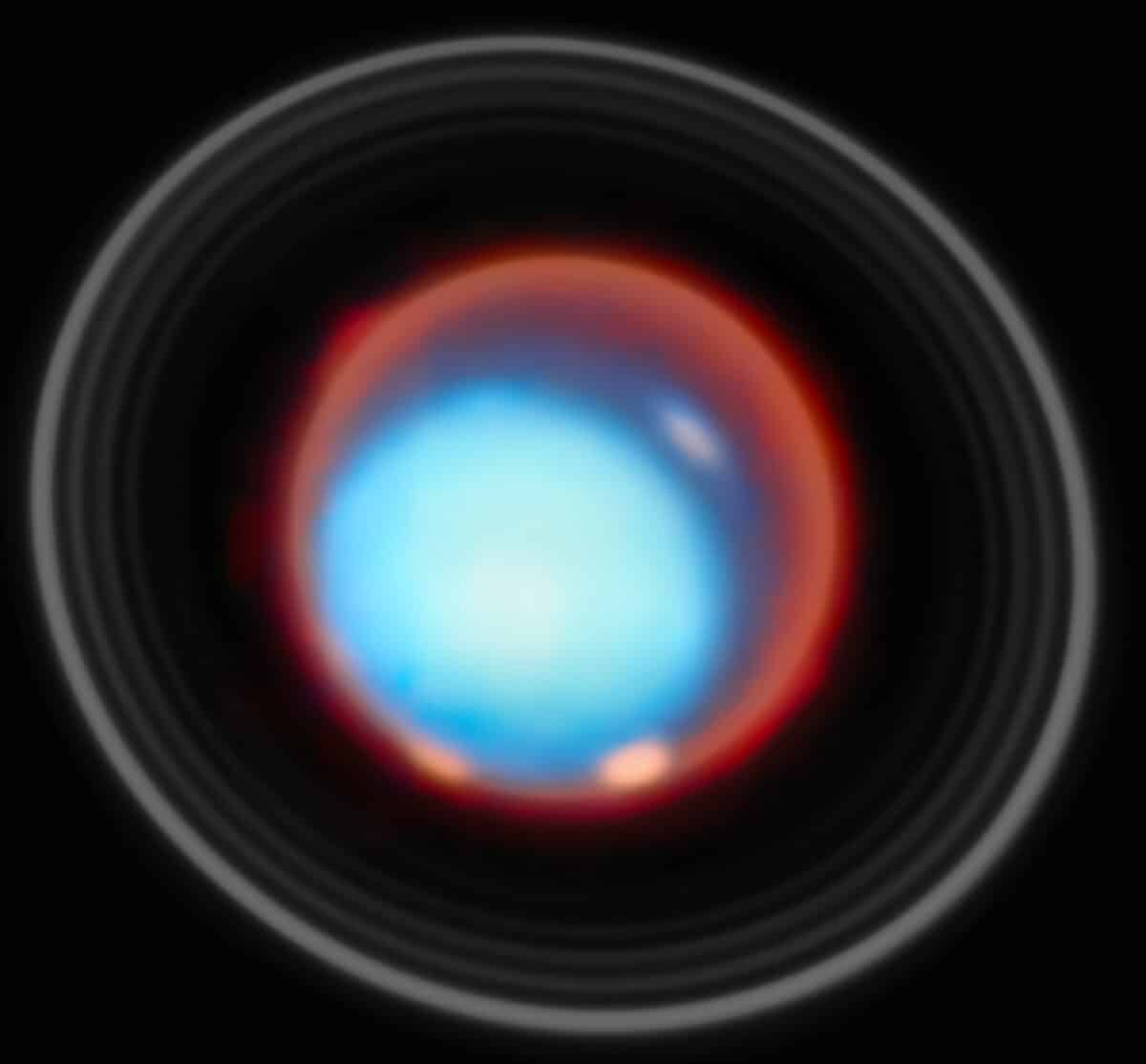
Uranus
Photo credit: ESA/Webb, NASA, CSA, STScI, P. Tiranti, H. Melin, M. Zamani (ESA/Webb).

Fine-Tuning and the Infinite Multiverse

An endless multiverse is a context in which every outcome occurs infinitely many times, rendering calculations of probability ill-defined. Read More ›
jsc2024e038397
Photo: "Crystals Grown in Space," by Redwire, via NASA.

Origins, Destiny, and Intelligent Design

Apart from an intelligent designer, “…we are forced to believe that nucleic acids eventually acquire awareness of their own existence when they are mixed.” Read More ›
3456px-DavidbyMichelangeloJBU14
Photo credit: Jörg Bittner Unna, CC BY 3.0 <https://creativecommons.org/licenses/by/3.0>, via Wikimedia Commons.

Introducing Ultimate Engineering: A Conversation with Stuart Burgess

Evolutionary theory, unlike intelligent design, predicts a living world crowded with substandard designs. Read More ›
InnardsofaGSeifertmechanicalgoldwatch-b
Photo credit: Michel Villeneuve, CC BY 2.0 <https://creativecommons.org/licenses/by/2.0>, via Wikimedia Commons.

Wheelbarrows, Watches, and Designers: More on Sean Carroll
Describing luxury mechanical watches as “marvels of engineering and design” is not a religiously motivated claim. Read More ›
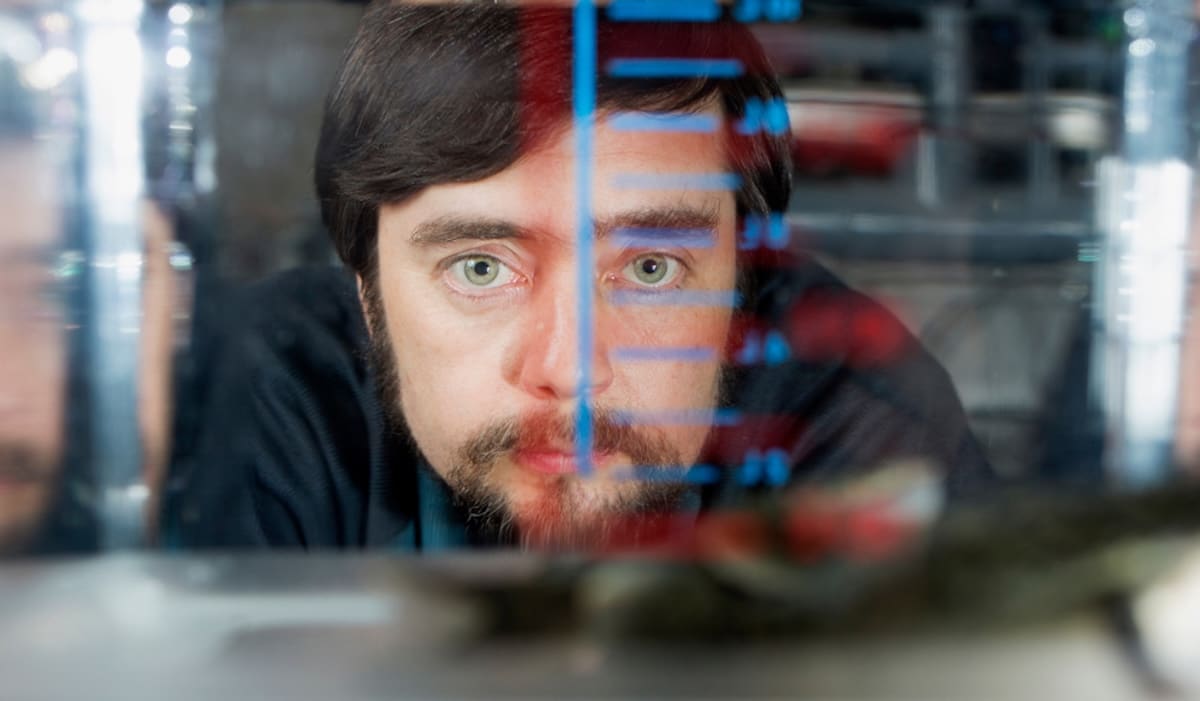
MichaelLevin
Photo credit: Kriegman, S., Blackiston, D., Levin, M., Bongard, J., CC BY 4.0 <https://creativecommons.org/licenses/by/4.0>, via Wikimedia Commons.

Michael Levin and the Philosophy of Intelligent Design

Levin is not a reflexive Darwinian materialist. Moreover, he touches on many themes that intelligent design theorists touch on. Read More ›
AchinstrappenguinPygoscelisantarcticusonDeceptionIs
Photo credit: Christopher Michel, CC BY 2.0 <https://creativecommons.org/licenses/by/2.0>, via Wikimedia Commons.

In Biology, Replacing Chance with Purpose Is the New Paradigm

The history of science begins largely in Western Europe with the overthrow of Thomistic Aristotelianism by René Descartes. Read More ›
Cyclamen-coum
Photo: Cyclamen coum, by Famberhorst, CC BY-SA 4.0 <https://creativecommons.org/licenses/by-sa/4.0>, via Wikimedia Commons.

Science, Purpose, and Michael Levin: The Discussion Evolves

A leading spiritually agnostic (at least, that is my impression) biology researcher, Michael Levin at Tufts, is himself a proponent of teleology in nature. Read More ›

© Discovery Institute