







































Science and Culture Today Discovering Design in Nature
Category

Biochemistry

highlighting-central-rod-shaped-bacterium-floating-under-mic-1944558309-stockpack-adobestock
Highlighting central rod-shaped bacterium floating under microscope, with flagellum and pili
Image Credit: Future Vision - Adobe Stock

On a Special Anniversary, the Biochemical Challenge to Darwin Stands Strong

By intelligent design, you might say, August 1996 was the same month that John West and Stephen Meyer founded the Center for Science and Culture. Read More ›
mousetrap-with-cheese-1753117324-stockpack-adobestock
mousetrap with cheese
Image Credit: olaa - Adobe Stock

Darwin’s Black Box, 30 Years On: A Seminal Contribution to Biology
It makes sense to think that the T3SS didn’t evolve into the bacterial flagellum, but that the bacterial flagellum shed some protein parts to become a T3SS.  Read More ›
ELEPHANTEYEEMOTION
Photo credit: Anmol Waychal, CC BY-SA 4.0 <https://creativecommons.org/licenses/by-sa/4.0>, via Wikimedia Commons.

Restoring Our Vision: Michael Behe and Darwin’s Black Box

What has always stirred me with a deep set of conflicting emotions is his reference to the “elephant in the room.”  Read More ›
RyanZimmerman51188103986
Photo credit: All-Pro Reels, CC BY-SA 2.0 <https://creativecommons.org/licenses/by-sa/2.0>, via Wikimedia Commons.

Mighty Darwin Has Struck Out: Thirty Years of Darwin’s Black Box

Most iconically of all, Behe gave us there the irreducibly complex bacterial flagellum. Right away, the flagellum hit the fan. Read More ›
DrLeroyCronin
Photo: Lee Cronin, by National Center for Advancing Translational Sciences, Public domain, via Wikimedia Commons.

Cronin’s Assembly Theory Continues to Perform Its Magic
Cronin and Walker know what is wrong with origin-of-life research. They’re just afraid of what may be right. Read More ›
ChatGPT-Image-Apr-29-2026-at-070344-AM
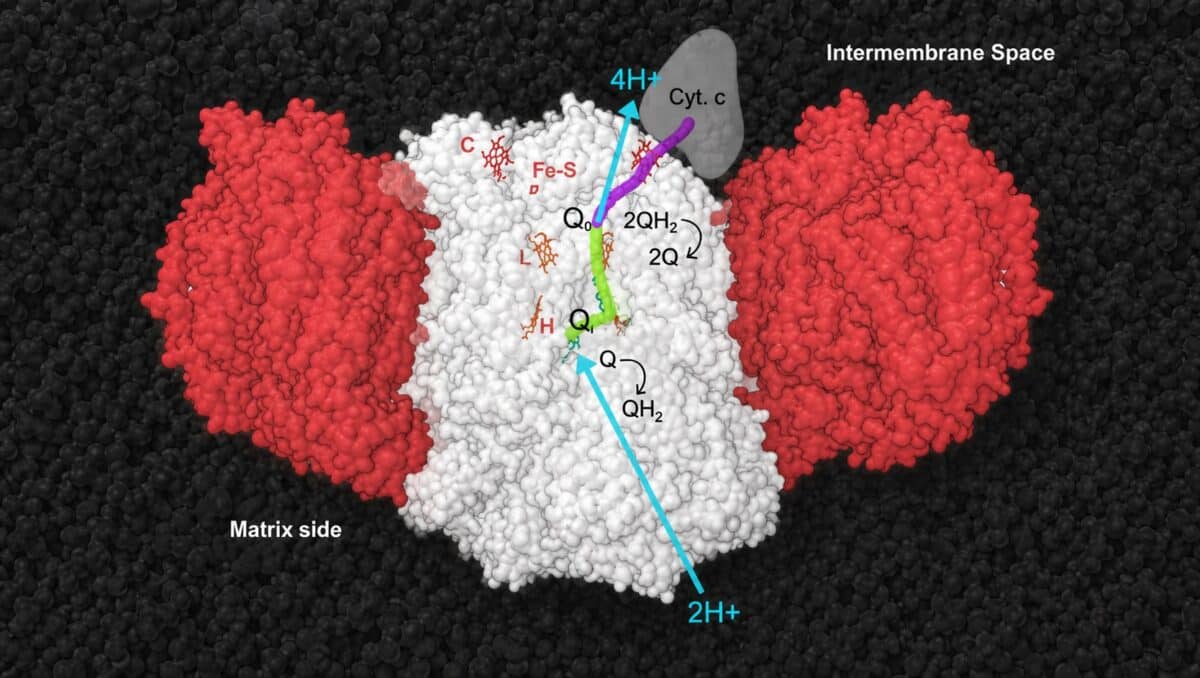
Image: Complex III from S. cerevisiae (PDB 6HU9), by Emily Reeves.

The Nanoscale Engineering of Complex III
If I put on my reverse-engineering hat, this enzyme looks like the work of a designer who deeply understood electrochemistry and quantum tunneling. Read More ›
glowing-flagellar-motor-at-the-base-of-a-bacterial-flagellum-1251695756-stockpack-adobestock
Glowing flagellar motor at the base of a bacterial flagellum visualizing the rotary motion and its energy source
Image Credit: EtherealArt - Adobe Stock

Can the Flagellum Get Any Better? Yes! Add Gears

The bacterial flagellum is more souped-up than even Michael Behe thought: it’s a gear-driven motor of motors! Read More ›
TempleofZeusinAthens079
Photo credit: Chris FlemingPermission = Creative Commons BY-SAOther versions of this file: none, CC BY-SA 2.5 <https://creativecommons.org/licenses/by-sa/2.5>, via Wikimedia Commons.

New Article from James Tour Undermines a Pillar of Origin-of-Life Theories

Proteins and RNA degrade at rates that render their spontaneous formation under natural, undirected conditions highly implausible. Read More ›
DallasScienceFaith2020-50-bradley
Photo (L to R): Stephen Meyer, Roger Olsen, Walter Bradley, and Charles Thaxton in 2020, by Chris Morgan.

Walter Bradley and Intelligent Design’s First Edition
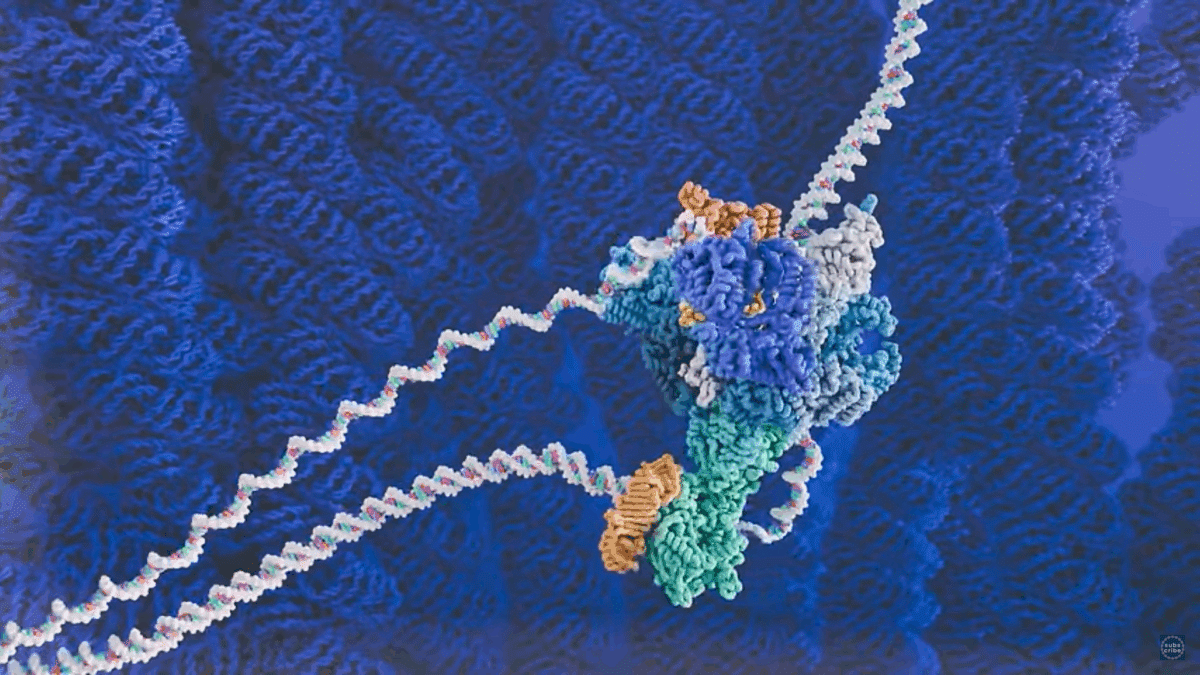
How does life emerge from that which is not alive? This mystery exercises a peculiar fascination, with the power to elicit remarkable feats of imagination. Read More ›
Screenshot-2025-05-13-at-21638PM-2
Image source: YouTube / Clockwork (screenshot).

Molecular Animations Reveal Exquisite Design

It is hard to watch these animations and not come away with the strong sense that these systems are the product of a conscious mind. Read More ›

© Discovery Institute