







































Earlier this month marked the 30th anniversary of the publication of Michael Behe’s intelligent design classic, Darwin’s Black Box. It created a sensation at the time, selling hundreds of thousands of copies (huge for popular science books), and eliciting widespread criticism from Darwinian naturalists, who did their best to pretend that there was nothing to see here — move on.
And yet, Behe and his book struck a nerve. Over time, many materialistic biologists have taken the firm policy not to engage with his challenge to Darwinian evolution. Ignore it. If asked, act as though it has long been discredited. If pressed, suggest that the person asking the questions is a creationist and a fundamentalist. And if that doesn’t work, walk away.
A Disclaimer About Intelligent Design
One group of Darwinian naturalists, however, that has not been able to walk away is Mike’s fellow biologists on the faculty at Lehigh University. Here is Mike, a full professor teaching without hindrance and doing his work to advance intelligent design. But silence from fellow biology faculty would here be interpreted as complicity with intelligent design by the wider biological world. And so, to this day you will find the following disclaimer about intelligent design — and specifically mentioning Mike — on the Lehigh University biology website:
The faculty in the Department of Biological Sciences is committed to the highest standards of scientific integrity and academic function. This commitment carries with it unwavering support for academic freedom and the free exchange of ideas. It also demands the utmost respect for the scientific method, integrity in the conduct of research, and recognition that the validity of any scientific model comes only as a result of rational hypothesis testing, sound experimentation, and findings that can be replicated by others.
The department faculty, then, are unequivocal in their support of evolutionary theory, which has its roots in the seminal work of Charles Darwin and has been supported by findings accumulated over 140 years. The sole dissenter from this position, Prof. Michael Behe, is a well-known proponent of “intelligent design.” While we respect Prof. Behe’s right to express his views, they are his alone and are in no way endorsed by the department. It is our collective position that intelligent design has no basis in science, has not been tested experimentally, and should not be regarded as scientific.
Frankly, the embarrassment here is not that Lehigh continues to employ Mike but in the disclaimer itself — genuflecting to Darwin, like offering incense to Caesar, being part of what it means to be a biologist in good standing.
My Experience at Baylor
When I was on the faculty of Baylor, my presence there inspired similar reactions. Thus, seven scientists at the school addressed a letter to the U.S. Congress declaring intelligent design not to be science, which was read into the Congressional Record. Today, Baylor’s biology department issues a statement pro-evolution, but it is careful to avoid reference to intelligent design or to any individual. The list of readings it uses to justify this statement, in light Baylor’s claim to be a Christian university, is instructive (it’s all theistic and non-theistic evolution).
I first got to know Mike at a 1992 SMU symposium that placed Darwinists and design theorists in dialogue (out of print proceedings here, but a new edition is coming out with Inkwell soon). At that symposium, I also got to meet for the first time Steve Meyer and Phil Johnson. Already at that symposium, Mike addressed the sorts of biochemical criticisms of Darwinism for which he would become famous. His key talk there symposium was titled “Experimental Support for Regarding Functional Classes of Proteins to Be Highly Isolated from Each Other.”
If Proteins Are Highly Isolated
By 2004, Douglas Axe would publish the definitive empirical study, in the Journal of Molecular Biology, on protein isolation. Just to be clear, if proteins are highly isolated, as research seems to show, it makes it that much harder to evolve among them because protein evolution, on Darwinian principles, must traverse continuous paths and thus cannot simply materialize from one place in the space to another. The more isolation, the harder it is to form such continuous paths.
Mike’s key concept of irreducible complexity and its application to molecular machines would come a year later, at least that’s how I remember it. Conferences and meetings of intelligent design’s original A-team (Phil Johnson, Mike Behe, Jonathan Wells, Steve Meyer, Paul Nelson, Doug Axe, and myself) ramped up in 1993 and the following years.
I recall at least two meetings with Mike in 1993, one at a private meeting in Pajaro Dunes, south of San Francisco, that June; and then a full-fledged American Scientific Affiliation conference later that summer at Seattle Pacific University (SPU). As I remember it, Mike was already making his irreducible complexity arguments in his talks at these events. I also remember stopping by at Mike’s dorm room at the SPU conference only to find that he was not taking part in the usual conference banter and diversions because he was working on a book — the book that became Darwin’s Black Box. I remember an intensity about Mike as he was writing the book — it was as though he was on a mission to get it out.
When the book did appear in August 1996, I was already well aware of the key arguments, so it took me a bit to see just how big an impact it was going to have. Familiarity on my part in a sense lulled me to its wider impact. “Sure, Mike’s book destroys molecular Darwinism; I’ve known that for three years now.” I was already a convert, but I didn’t know how many converts his book might make. But as events unfolded, Darwin’s Black Box proved to be a big, big deal.
Discontinuity in Living Forms
Phil had rekindled well-informed criticism of Darwinism with his book Darwin on Trial (1991). But he was a law professor, not a biologist, and his focus was on the internal contradictions of Darwinism and how it required dubious philosophical presuppositions to keep it afloat. Earlier, Thaxton, Bradley, and Olsen had critiqued materialistic origin-of-life studies in The Mystery of Life’s Origin (1984), but they had merely raised design/intelligence as a possible way to redress life’s information problem — they didn’t press the point too hard. The other key work in the lead-up to Darwin’s Black Box, Michael Denton’s Evolution: A Theory in Crisis (1985), had broached the discontinuity in living forms on which Mike Behe focused, but without the full concept of irreducible complexity.
Mike found that certain biochemical machines, such as the bacterial flagellum, had the property of irreducible complexity, which is to say, they consisted of multiple well-matched parts all of which were necessary for the primary function of the machine, and where the elimination of any part destroyed the function. Given that such systems existed in actual living cells, Mike asked how they could have evolved through a process of gradual molecular Darwinian evolution. All the parts were necessary, so how could they have come together gradually? If Darwin was right, there had to be a gradual molecular path to these systems. And yet, these systems seemed to defy the gradual evolution required of them.
“Four Glittering Examples”
Critics were swift to try to shut this argument down. Mike had claimed that there were no detailed Darwinian accounts of such systems. Ken Miller, the Brown University biologist, replied in Finding Darwin’s God that he could produce “four glittering examples” of Darwinian evolution producing irreducibly complex systems. Yet examination of these papers revealed that the systems Miller identified were not in fact irreducibly complex (see my response in No Free Lunch, p. 269).
But to really refute Mike, Miller then went further to claim that none of the biochemical systems Mike himself considered, such as the bacterial flagellum, was in fact irreducibly complex. Miller justified this outrageous claim by redefining irreducible complexity. Miller claimed they were not irreducibly complex because all these systems could lose parts and then still serve some other function (thus, by Miller’s redefinition, they were in fact reducibly complex). But that was, of course, Mike’s point — that these systems couldn’t lose parts and still perform their original function. I can, for instance, remove the spring, hammer, holding bar, and catch from a conventional mousetrap and then use the remaining wooden base as a doorstop. But what’s left won’t any longer catch mice.
Honest biologists, who nonetheless were not fans of Mike’s conclusions, admitted that he had offered a serious challenge to molecular evolution. James Shapiro, a molecular biologist at the University of Chicago, wrote: “There are no detailed Darwinian accounts for the evolution of any fundamental biochemical or cellular system, only a variety of wishful speculations. It is remarkable that Darwinism is accepted as a satisfactory explanation for such a vast subject — evolution — with so little rigorous examination of how well its basic theses work in illuminating specific instances of biological adaptation or diversity” (National Review, September 16, 1996). A few years later, cell biologist Franklin Harold wrote a book for Oxford University Press titled The Way of the Cell (2003). In virtually identical language, he noted: “There are presently no detailed Darwinian accounts of the evolution of any biochemical or cellular system, only a variety of wishful speculations.”
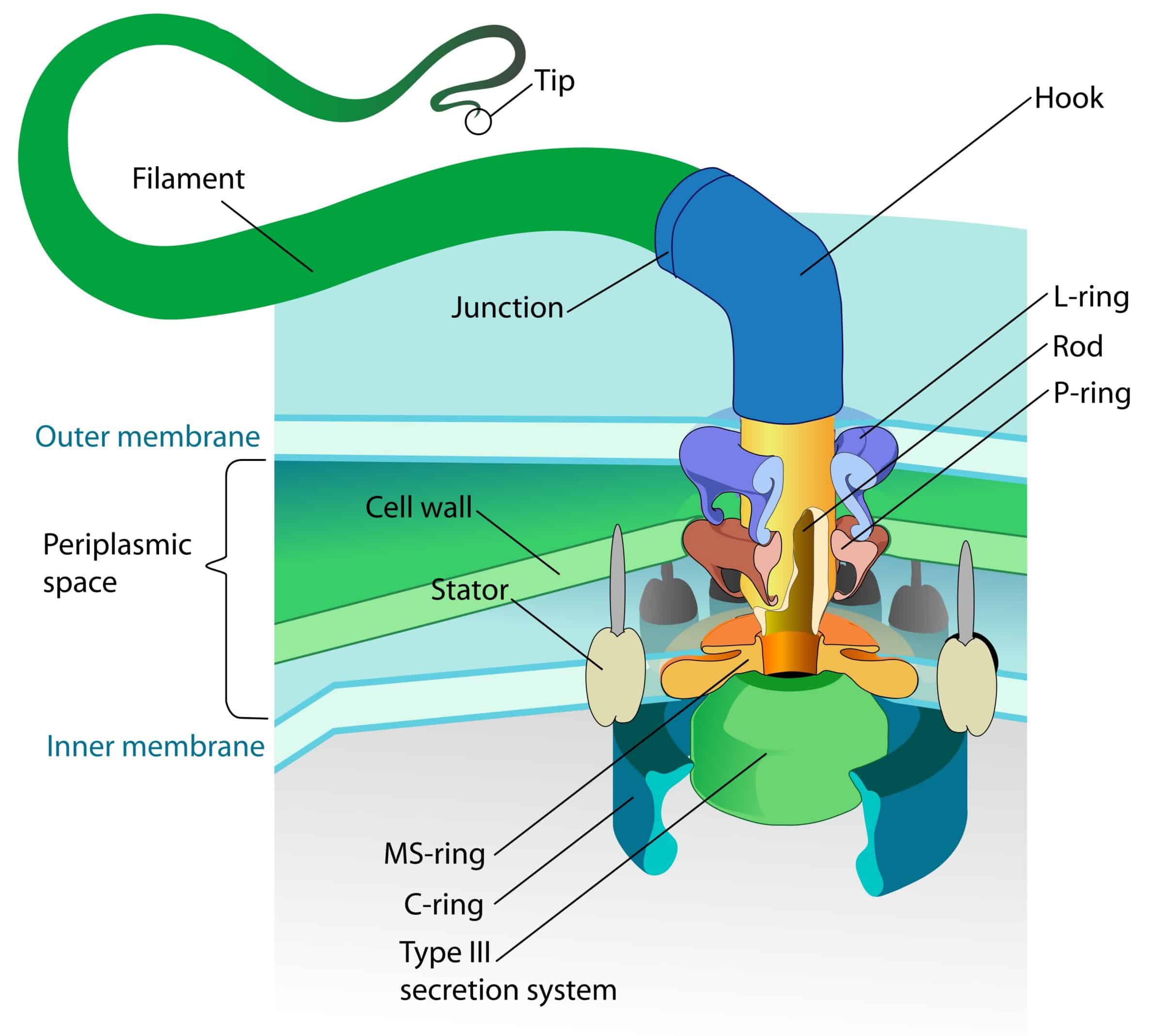
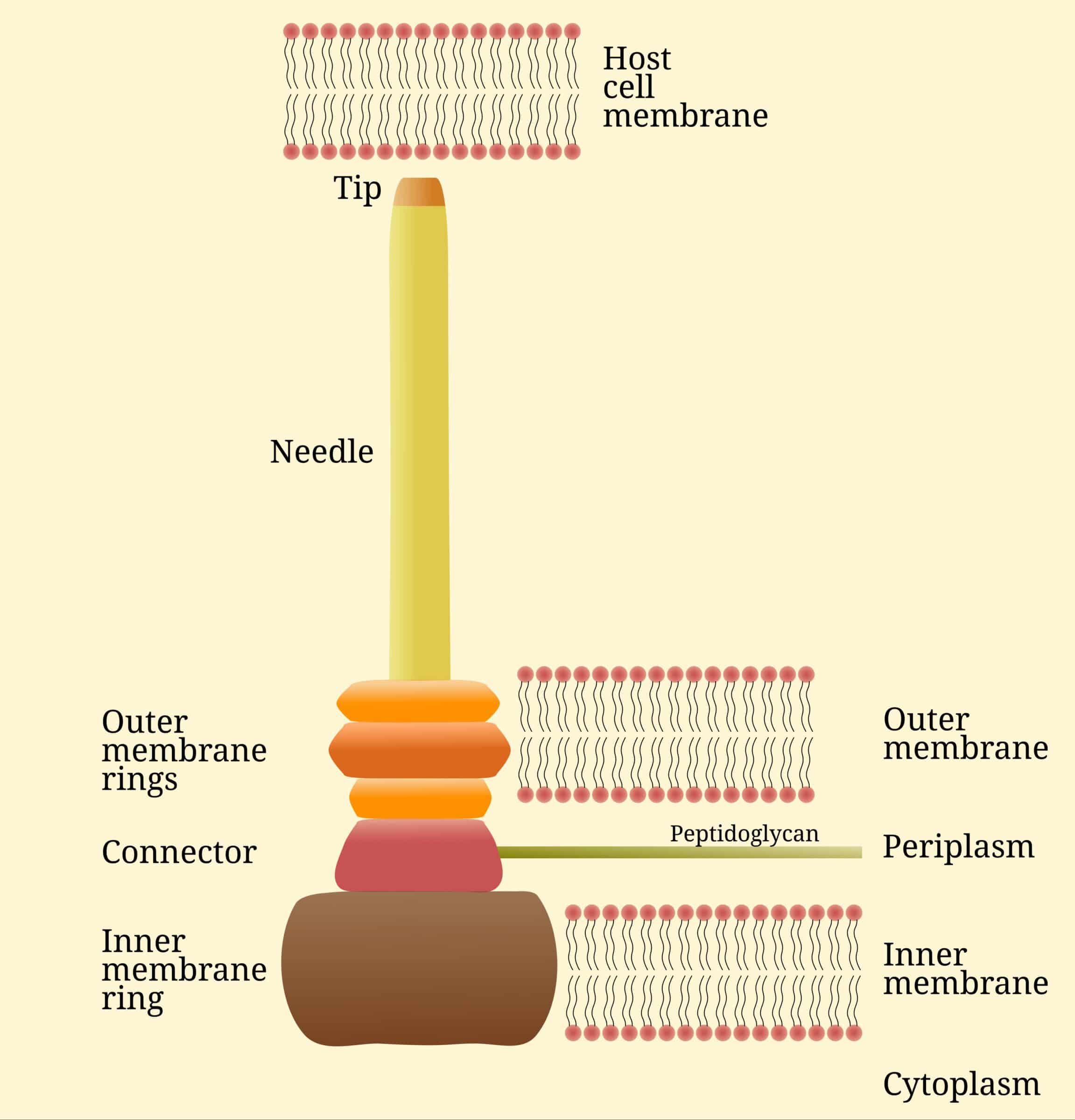
The challenge of irreducible complexity to the evolution of biochemical machines remains as disconcerting today (if anything, the challenge in the intervening years has become even more painful for Darwinists) as it did in the decade following the publication of Darwin’s Black Box. With the bacterial flagellum, the biochemical machine to get the most attention in Mike’s work, critics pointed to the type 3 secretory system (T3SS) as a system embedded in the bacterial flagellum that could perform its own function, and thus serve as a possible evolutionary precursor to the flagellum. But the flagellum consists of at least 10 more protein parts. So what was the path from the T3SS to the flagellum? How did those additional parts gradually get folded into an evolving T3SS to form the flagellum?
The Co-Option Argument
A little bit of autobiography may be illuminating at this juncture. When I saw such arguments from Darwinists for the evolution of the flagellum, I couldn’t at first believe that they took this approach to the evolution of such systems seriously. As a result, in some of my initial responses defending Mike’s book, I didn’t address the co-option argument to which Darwinists were, and always have been, committed in explaining away systems like the flagellum.
According to this co-option argument, systems like the flagellum can evolve from the T3SS by a kind of ratcheting effect in which structures and functions change step by small incremental evolutionary step. It would be like evolving kitchen appliances as follows: start with a toaster, add a part, and now you have a microwave oven; add another part, and now you have a regular oven; add another part, and now you have a dishwasher; add another part, and now you have a refrigerator; and so on.
I didn’t at first adequately address this co-option criticism of Behe because, as I said, I couldn’t believe that anyone could take it seriously. But Darwinists did. Thus, they were not just saying that the T3SS is a precursor to the flagellum, but also that there is a whole series of gradual steps in which a new part gets added and the function changes, then another part gets added and the function changes again, and so on until evolution takes us to a full-fledged flagellum.
How Implausible Is That?
The flagellum was considerably more complicated than the T3SS. So there had to be, on evolutionary grounds, a gradual set of intermediates between the two. Citing the T3SS as an evolutionary precursor of the flagellum struck me, to change the metaphor from kitchen appliances to motorcycles, like invoking a motor as a precursor to a motorcycle. A lot of intermediate steps, all functional, would be needed to gradually evolve one into the other, and yet none of these intermediate steps have ever been plausibly identified for irreducibly complex biochemical systems (or for human artifacts for that matter). With the T3SS evolving into the bacterial flagellum, no plausible path was identified when Behe published his book in 1996, and they remain as unidentified today as then.
Interestingly, the bacterial flagellum is a motility device for bacteria to propel them through their watery environments. It therefore makes sense to see flagella as existing since the dawn of bacteria. The T3SS, also known as an injectisome, on the other hand, serves as a poison delivery system for a bacterium to infect and injure an animal host (Yersinia pestis, the bubonic plague bacterium, uses it). Animals have been around for a much shorter duration than bacteria in the standard chronology of life on earth. So, if anything, it makes sense to think that the T3SS didn’t evolve into the bacterial flagellum, but that the bacterial flagellum shed some protein parts to become a T3SS.
It’s always easier to remove things to get something functional than to add new things to something already functional to achieve a new function. The new things added require coordination with the old. Dropping things from the old to form a new simpler system is not so sensitive to this coordination problem. This idea of evolution proceeding from complexity to simplicity became a theme in Mike’s subsequent thought and research, such as in Darwin Devolves (2019). There Mike argued that the primary trajectory of Darwinian evolution has been not from simplicity to complexity, but rather from complexity via evolutionary pruning to simplicity.
It’s been an honor to have been with Mike from the start of his work on irreducible complexity in advancing intelligent design and refuting Darwinism. His is a seminal contribution to biology notwithstanding the continued opposition to his views and argument from Darwinian naturalists. Despite, and in part because of, that opposition, his ideas about irreducible complexity have gained widespread attention. Moreover, he has over the years ably defended his ideas, notably in A Mousetrap for Darwin: Michael J. Behe Answer His Critics (2020), a book of over 500 pages that cogently answers all his critics both with grace and steel.
Congratulations Mike on keeping the faith and a job well done!