




























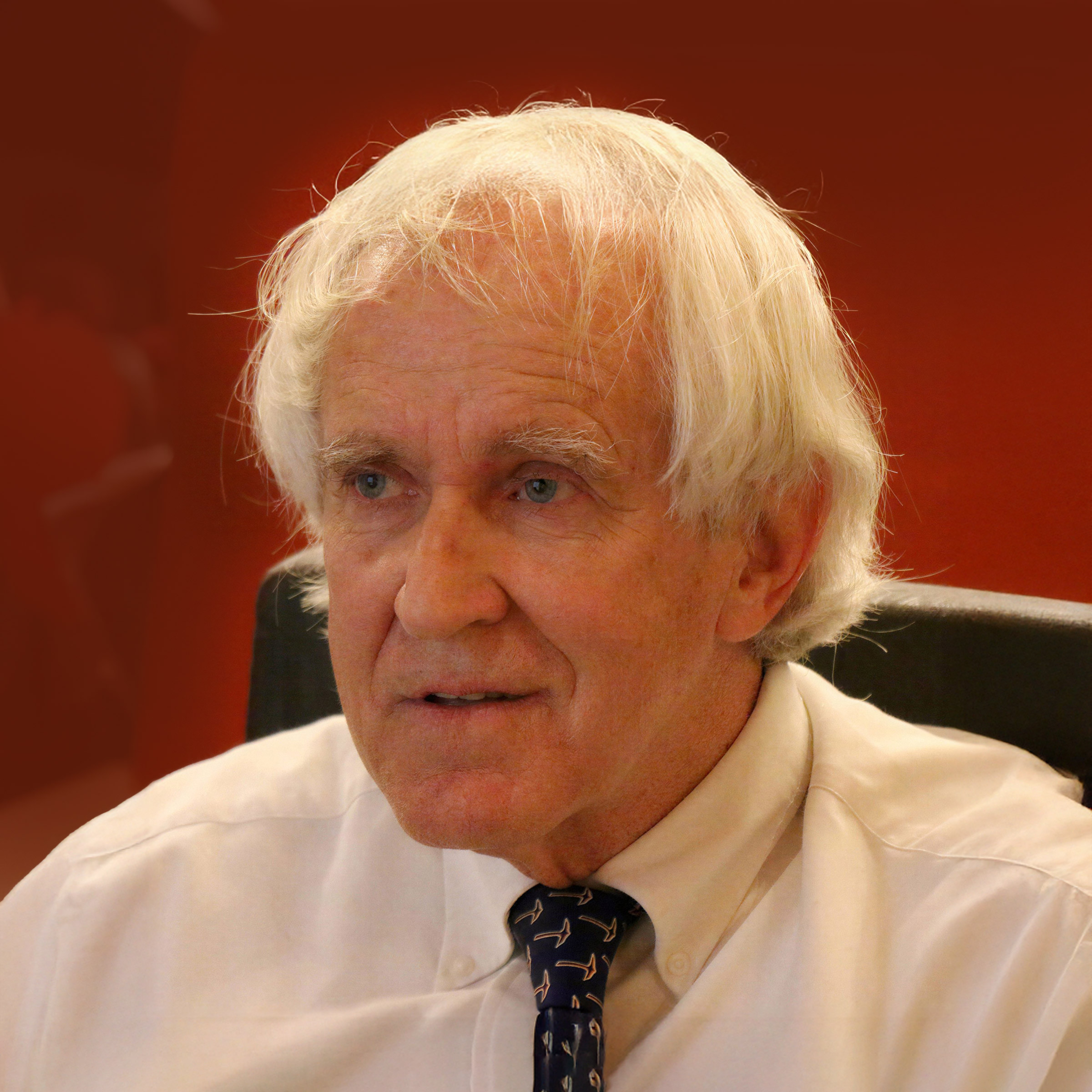










On the heels of the 20th anniversary of The God Delusion, it’s now been 50 years since the bright young evolutionary biologist, Richard Dawkins, hit the heights in science writing with his book The Selfish Gene (1976). In it, he argued that evolution is not driven by individuals or species but by genes. That is, selfish genes use the bodies of life forms to ensure that they survive and propagate.
How Could Selfish Gene NOT Be a Bestseller?
Dawkins’s book made selfishness the fountain of creativity. Besides, its materialist thesis located purpose in something that is not even a living entity (only part of one). Thus it rendered fundamental questions like free will moot. In a literal sense, everyone could say “My genes made me do it.”
The thesis has also benefited from the boost created by Dawkins’s better known popular works touting atheism. And Dawkins himself was teamed with Charles Darwin as one of the beacons of a new enlightenment.
Five decades later, the mood has certainly dampened. The assessments at both Scientific American and Nature are much more negative.
At Scientific American, It’s “Complicated”
British science writer Philip Ball acknowledges, “The book arguably did more than any other since Charles Darwin’s On the Origin of the Species in 1859 to make evolutionary biology a hot topic of cultural conversation,” advancing the thesis that “What looks like altruistic behavior, then, is merely in the service of our genes’ selfishness.”
But Ball asks questions that did not come up much in the 1970s. First, there is no consensus at present as to what exactly a gene even is:
To a developmental biologist, such a gene is a resource that cells use to make and maintain the organism. But to an evolutionary biologist, a gene is like a little agent that develops strategies over the course of evolution to ensure its own persistence.
Dawkins tried to paper over the conflict by implying in The Genetic Book of the Dead (2024) that genes were really “co-operative” after all.
But Ball won’t let him get away with that. He asks, “if a word works as well as its antonym, what explanatory work is that metaphor actually doing?”
He sums the legacy of The Selfish Gene as “complicated” and quotes one developmental biologist’s worry that “it has sown confusion about what our genes are really up to.”
This is not the march through the triumphal arch that we might have anticipated for Dawkins’s scientific Summa.
At Nature, It’s Worse; “Time for an Update”
Johns Hopkins historian of science Nathaniel Comfort told Nature, “the determinism baked into the ‘gene’s-eye view’ in the book troubles me, as does the passivity of the organism in Dawkins’s telling.”
His article there is titled “The Selfish Gene, 50 years on — it’s time for an update.” He continues:
Back then, The Selfish Gene seemed pretty harmless. Dawkins’s ideas tracked with mainstream sociobiology. It was a popular book that covered exactly the sort of ideas that my lecturers were already teaching.
Re-reading it now, with decades of scholarship in the history of biology under my belt, it seems less benign. The determinism baked into the “gene’s-eye view” in the book troubles me, as does the passivity of the organism in Dawkins’s telling — a “vehicle”, a mere “replicator”. The implication: that traits such as aggression are hard-wired into people. Fortunately, over the past couple of decades, new tools, fresh models and scholars in many disciplines have begun to embrace the complex reality of biology. Readers in search of an understanding of life on Earth today would do better to reach for books that take a broader view.
He stops just short of saying that Dawkins’s ideas should be pensioned off, along with himself.
Comfort notes that modern evolutionary theory (the modern synthesis) blends neo-Darwinian evolution with Mendelian genetics, both of which assume that the gene solely determines heredity. But he says,
Both halves reached essentially universal acceptance well before Dawkins came along — the spit and swagger of the field’s proponents keeping challenges and alternatives at bay.
To a historian, this universal acceptance sounds close to ideology. Fortunately, since The Selfish Gene was published, scientists’ understanding of the basic mechanisms that drive evolution has changed drastically.
Spit and swagger? Ah yes, the power to destroy dissenters’ careers.
He goes on to point out, among other things, that the favored newer approach focuses on the small number of directions that living organisms can evolve in. And that life has generally evolved towards increasingly complexity — which shows that it is not a random walk. He denies that this is a “teleological” approach.
Not teleological? That could be debated. What’s clear is this: Dawkins’s Selfish Gene was a pillar of modern Darwinism. If it is tottering, there will be plenty of mopping up — and room for new ideas.
Cross-posted at Mind Matters News.