

































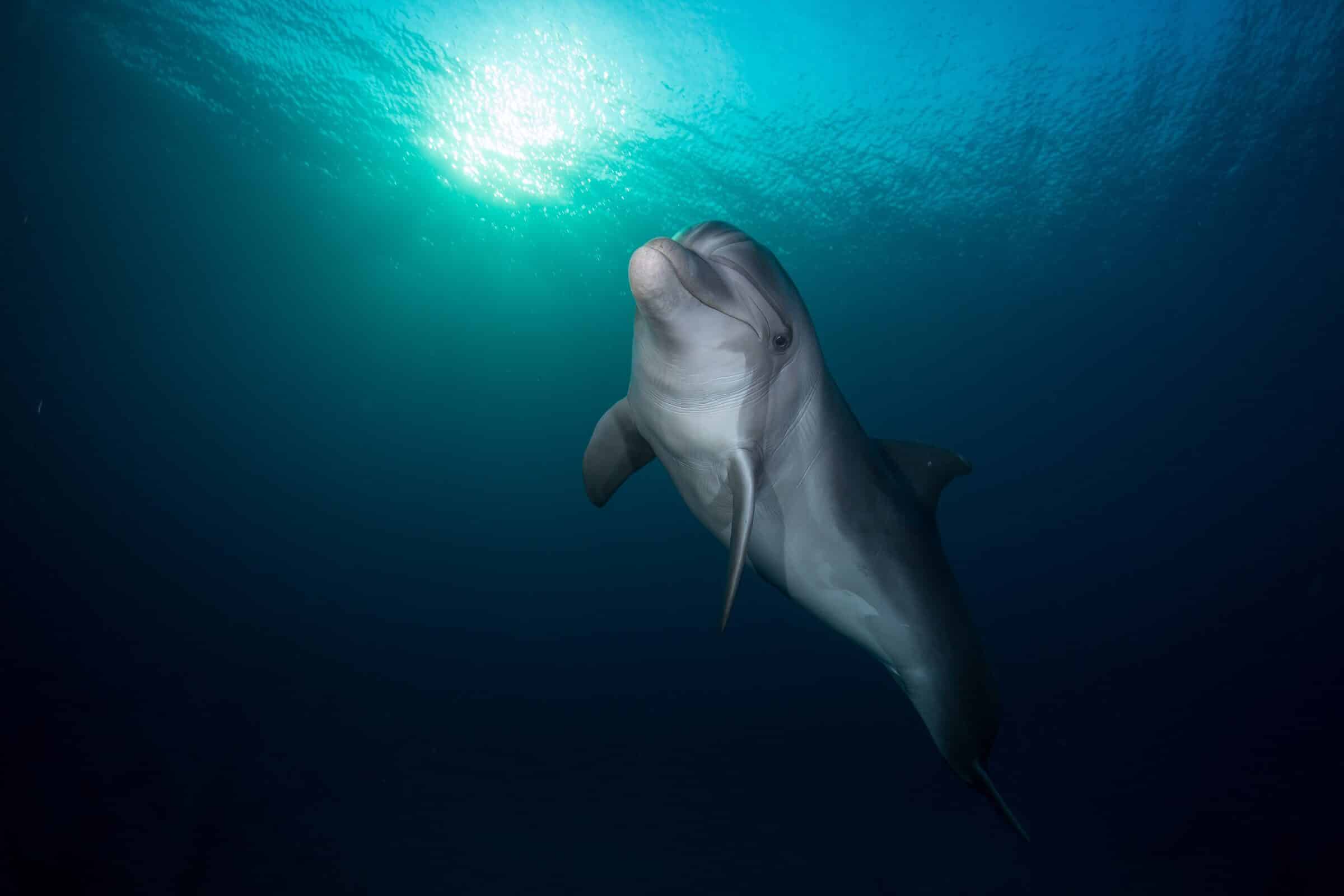
“Life continues to create itself,” “evolution is entirely built on these tiny little mistakes,” “evolution is the story of how we’re connected to all the things that used to live, and that live among us today.”
Tonight at 6 pm Pacific you can see the opening episode, “Evolution: Brain Power,” of the new five-part NOVA series on PBS, Evolution. Do, as we learn there, “tiny little mistakes” really add up to “all the things that used to live, and that live among us today”? That would be a lot of mistakes. The series has already aired on BBC Television, and evolutionary biologist Richard Buggs gives it a critical review on his blog. He begins with a very appropriate introduction.
Writes Dr. Buggs:
‘Evolution’ is a new BBC Television series that is likely to influence the beliefs of millions of people around the world. It is presented by the British wildlife broadcaster and campaigner Chris Packham, filmed in seas, deserts and forests. Production values are high, and include 79 minutes of photoreal CGI, imagining what 20 different extinct creatures looked like. It started to air in Britain last week and will be shown globally; for example in the USA as a NOVA series on PBS.
This is a major series that will have a long shelf-life. No doubt it will be shown in science lessons in many schools. It has opened to excellent reviews in the British press.
In the five episodes, Packham tells evolutionary stories for four mammals and one bird. One might imagine this would be largely the same story five times, but each animal is used to provide a loose focus on different aspects of evolution. For example, LUCA (“last universal common ancestor”) in the episode on the elephant, sex in the episode on the ostrich, and intelligence in the episode on the dolphin. The narrative meanders through topics in an anecdotal and engaging manner that entertains the viewer, sometimes at the cost of precise information and complete explanation.
Here, I will provide a multi-part critical review of the series, from the perspective of an evolutionary biologist who is also a Christian. I will deliberately focus on areas of weakness, as I would if I were providing peer review for a fellow scientist on a grant or a journal manuscript. If that seems unfair to you, given that Packham is himself not a scientist, please bear in mind that the series had access to considerable scientific support. As the BBC state in their media pack for the series:
“The scientific research underpinning Evolution involved collaborating more than 600 scientists worldwide, contributing expertise to the storytelling, scripts and visual effects, in addition to guidance from Series Academic Consultant Professor Peter Holland FRS and a long‑standing collaboration with The Open University.”
This is a scientific programme, with scientific credentials, so it should be held to scientific standards.
I know how hard it is to communicate evolutionary biology to the public in a way that is simple but yet accurate. I have been interviewed for BBC audiences several times about my own research, and it is not easy to be both simple and accurate. I therefore appreciate the difficulty of the task that Chris Packham and his writing team have taken on. But this challenge cannot be an excuse for misleading claims, or statements that present a scientific method’s presuppositions as if they were conclusions derived from scientific results.
This is going to be interesting. Watch here tonight, and read the rest at “A critical review of BBC ‘Evolution’ with Chris Packham — Introduction.”