









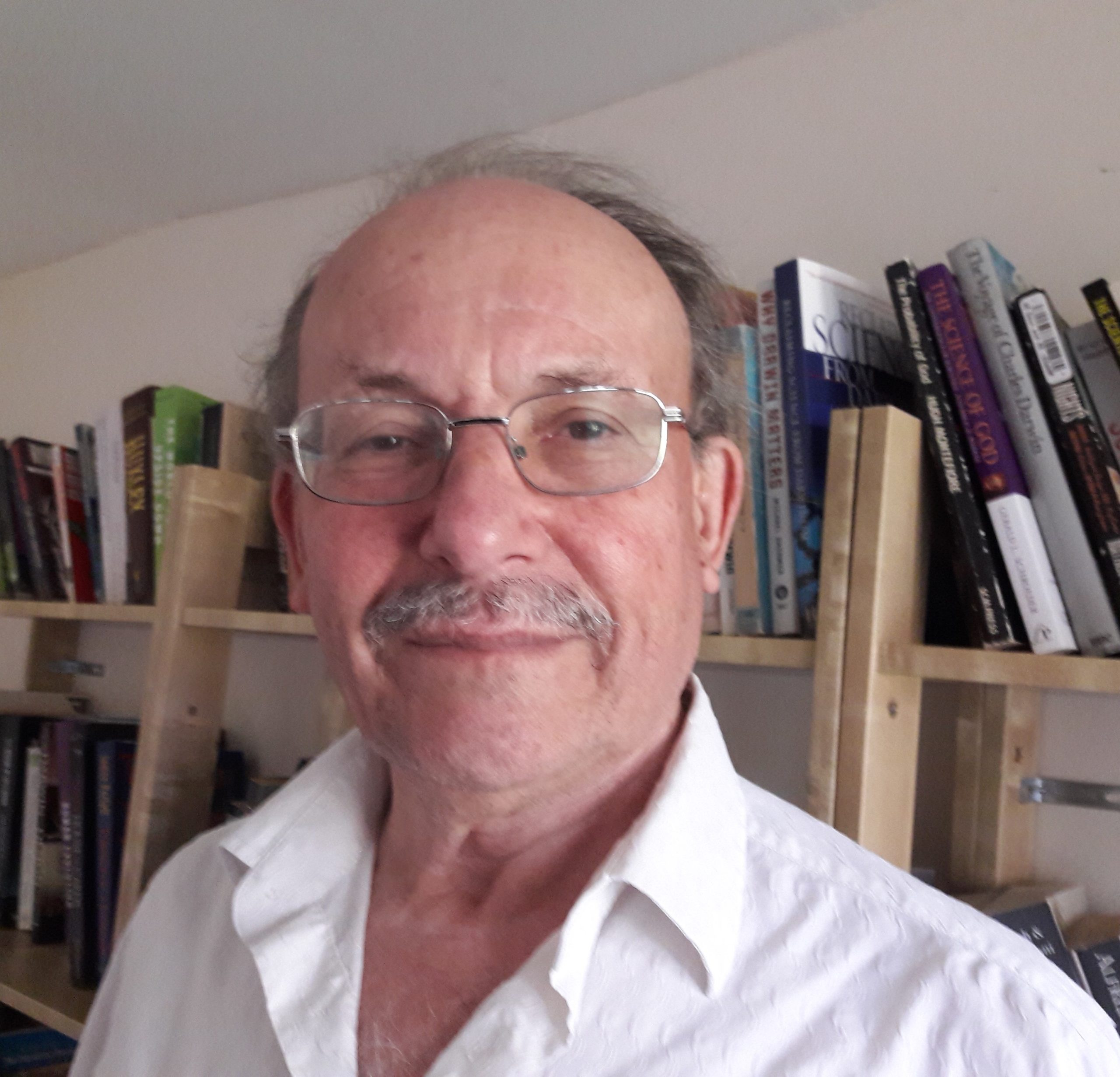
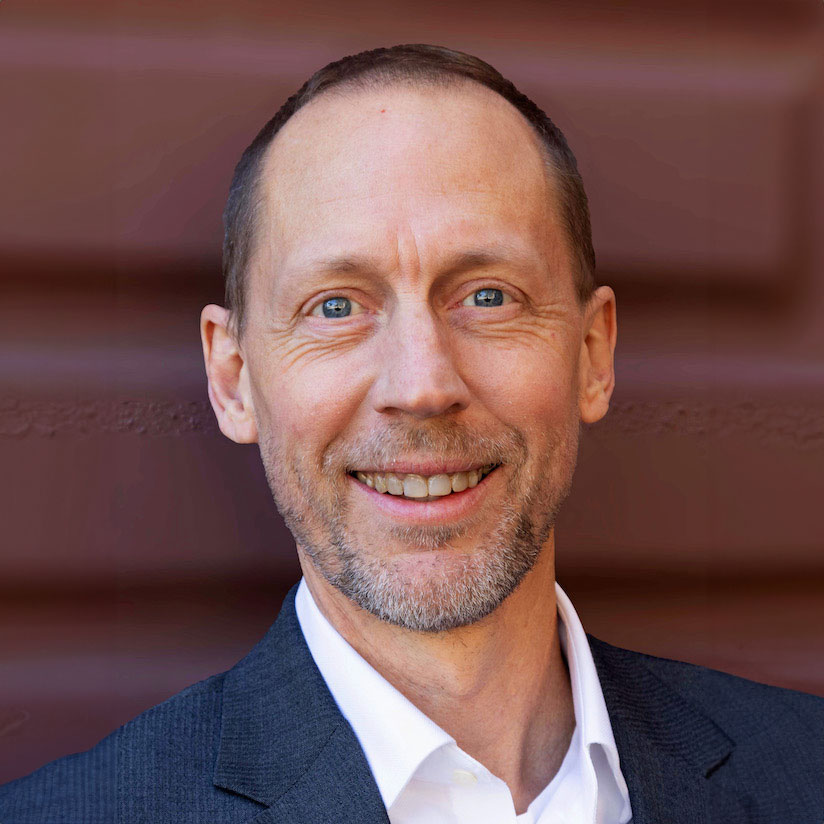
Growing up in North London, Martin Kentish had every reason to think faith in God was a little silly. The sole comment about religion that he ever heard from his parents was his mother’s declaration that she never wanted anything to do with it. What’s more, everyone knew about how nature was the product of materialistic processes, how life began in a pond of slime, and how humans evolved from ape-like ancestors. Christianity was for grey-haired old fogies with their heads stuck in the sand.
At the University of East Anglia where he enrolled for molecular biology, Martin’s circle consisted of atheists and agnostics. Whether learning from a professor or chatting with a fellow student over coffee, he never ran into anyone to challenge his naturalistic worldview. But since he had no need for God, that suited him just fine.
No Punching, Only Cursing
In fact, Martin describes himself back then as a miniature Richard Dawkins, religiously devoted to atheistic evolution. He loved to bash Christians if they came up to him in public. At times he wished he could have punched one or two, but he restricted himself to cursing.
But during one extraordinary weekend when he was 34, Martin was deeply moved to find out that a previously atheistic friend had come to faith following a miraculous healing of his unborn child. Not only that, but an evangelist’s prayers on Martin’s behalf led tellingly to his financial situation righting itself. After multiple “coincidences” over the course of a few days, Martin was struggling with persistent feelings that “God loved him.”
These unexpected, even unwelcome, sensations of divine love shocked Martin. After all, he’d held adamantly to evolutionary atheism his whole life, and his entire worldview would have to take a 180-degree turn. He was full of questions. In his heart, he hoped that digging for answers would lead him back to atheism. But quite the opposite happened.
“Isn’t the World Just Atoms?”
He started attending church. Unfortunately, no one at his church could answer his questions. “How am I supposed to believe God created life when we know it started by chemical evolution? Isn’t the world just atoms? How can I put any trust in spiritual claims?” But even as his questions pressed him more closely, Martin found his business friends backing away from him. To his surprise, attending church had lost him his credibility.
An intellectually driven man with no one to answer his questions, Martin picked up Total Truth by Center for Science and Culture (CSC) Fellow Nancy Pearcey. For the first time, Martin found a framework for interpreting the world around him, one that aligned fully with reality. It gave him a framework for evaluating methodological materialism and evolution afresh.
Soon after, Martin found Darwin’s Black Box by CSC Senior Fellow Dr. Michael Behe. This was something he could sink his teeth into. The biochemical case for irreducible complexity in living organisms surprised him with its thoroughness. Rather than doubting God, now he could confidently know that the world around him demanded an intelligent designer.
He began to devour books and videos on intelligent design by CSC scholars like Drs. Stephen Meyer and William Dembski, along with John Lennox and others. Why had he never encountered their arguments before, not even in his studies? As he learned from Expelled: No Intelligence Allowed, academic censorship suffered no one to promote research showing a designer. His eyes opened to the blatant hostility towards intelligent design, not only in the culture, but also in trusted universities.
Free Access to the Evidence
It’s a situation that needs to change. When people can’t draw evidence-based answers from their professors, friends, or fellow church members, they are left with stock Darwinism. Handwaving from either scientists (“Everyone knows how life started from random amino acids”) or lay believers (“Why is evolution untrue? Well, the Bible says so!”) is insufficient for thinkers like Martin. For people to build well-grounded worldviews, they need to have uncensored access to the evidence.
Martin believes there’s a change coming. Having lived it himself, he senses the culture tiring of the materialistic malady. He believes people are hungry for truth even if it leads away from the flat world of Darwinism.
And that’s why the CSC exists, committed to making that change. We’re delighted to hear stories like Martin’s, and we wish to thank our donors for enabling our life-changing programs.