




































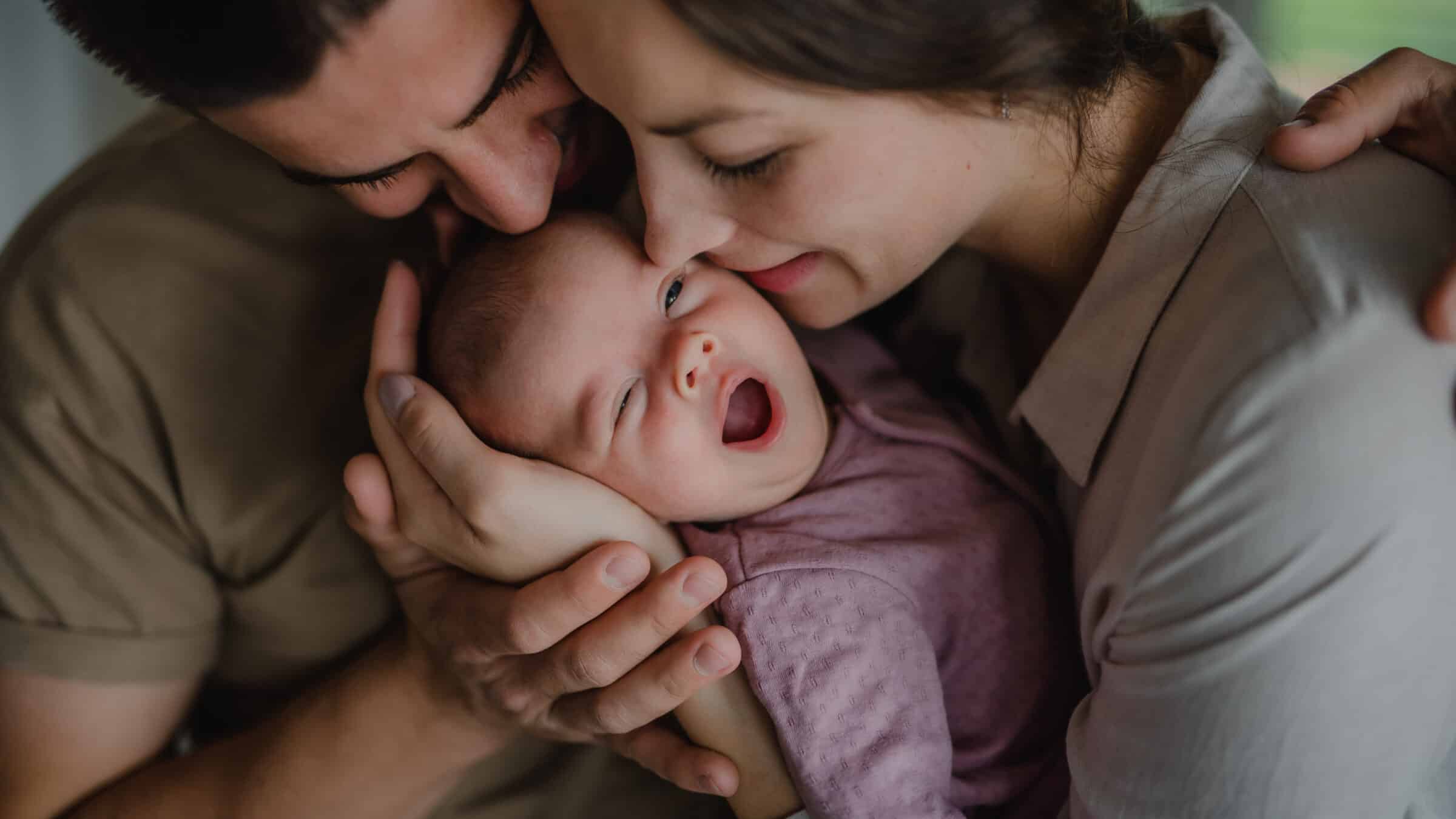
The New York Times asks a question with, it would seem at first glance, an indisputable answer: “Are Babies Conscious?”
Indeed, there’s an active scientific debate over whether newborns possess consciousness. Resolving it could help solve one of science’s most stubborn mysteries: what consciousness is, how it emerges and how we can know if another being possesses it.
Defining Terms
If there an “active scientific debate” about it, then could it really be that the answer isn’t so clear? Pediatric neurosurgeon Michael Egnor, co-author with Denyse O’Leary of The Immortal Mind, ought to know. He confirms that the clear answer is the correct one:
Of course, the first question to be asked is, “What do we mean by consciousness?” Without defining it, no discussion of consciousness has any meaning.
Consciousness is the capacity to have experience. Experiences include perceptions, emotions, memories, concepts, desires, etc. Complexity is not the issue. Any experience presupposes consciousness.
Babies are obviously conscious. Their consciousness is different in content from adults — I think that they experience pain differently than adults (newborns scream bloody murder when their heel is pricked with a pin — they feel pain more intensely than adults do). Six-month-olds laugh uproariously at a silly face — they experience humor more intensely than adults do. The list goes on — babies are intensely conscious, and have more intense, albeit less complex and sophisticated, experiences than adults do. Fetuses also are obviously conscious — during abortions, ultrasounds show the baby screaming, withdrawing from the instruments in agony, etc.
How do we know that another being is conscious? Two criteria: he reacts like we do, and he or she has a biological substrate that can plausibly underlie conscious experience. Thus, babies are obviously conscious, as every parent knows.
Perhaps the most obvious scientific argument that babies are conscious is our medical experience with children with hydranencephaly, which is a condition in which children are born without brain hemispheres at all. There are at least 15,000 people globally with this condition. I’ve taken care of these kids professionally. They only have a brainstem and a diencephalon, but no brain tissue above their ears. These children are very disabled, but they are obviously conscious. They smile, cry, interact with their families and strangers, and show a broad spectrum of obviously conscious behavior. Healthy babies have much more sophisticated brains than these kids, so healthy babies are conscious as well.
I think that this ridiculous question “Are babies conscious?” is just another facet of our demonic movement to deny humanity to people at the margins of life. Unborn children, mentally handicapped people, people with dementia or mental illness, unwanted children, and now young babies are being dehumanized because they are inconvenient or expensive or simply unwanted. Call it the “Lindsay Clancy Syndrome” — mothers are even killing their own children after birth (with decades of desensitization to killing them before birth).
Dr. Egnor concludes with some striking images: “You can smell the sulfur. Mayan-type human sacrifice is making a comeback. We are rushing headlong into a dark void.”