






































Editor’s note: In The Telegraph, Stephen Meyer wrote yesterday about the 20th anniversary of the publication of Richard Dawkins’s The God Delusion. See, “Meyer: Twenty Years Later, Debate with New Atheists Is Over.” The article generated an enormous number of responses from readers. Our physicist colleague Bruce Gordon replied to some of them in the comments box. His reply is reproduced below:
There are a lot of commenters refuting arguments that Meyer never made. He is not offering a “God of the gaps” argument from ignorance that says “we can’t explain X, therefore God did it.” What he is offering is what philosophers of science call an abductive inference, that is, an inference to the truth of the best explanation. This is the reasoning pattern followed by geologists, evolutionary biologists, and forensic scientists, for instance, when they explain past effects by reference to causes now in operation (uniformitarianism). He is arguing that we have clear present knowledge of what intelligent agents can do as opposed to what undirected nature can accomplish. We have mathematical ways of structurally characterizing objects and processes for which intelligence is the only known cause sufficient to their production, most notably, in terms of highly improbable outcomes that are capable of independent specification with regard to their meaning and significance. We have countless examples of minds producing such things, but none of unguided chemistry doing the same on anything approaching the level required even by the simplest cell. The question is not being begged here, since the base rate comes from cases where the causes are independently known, and it is falsifiable by finding a genuine counterexample. What is not falsifiable is the pie-in-the-sky claim that science will eventually find a purely naturalistic explanation.
The Case of Dark Matter
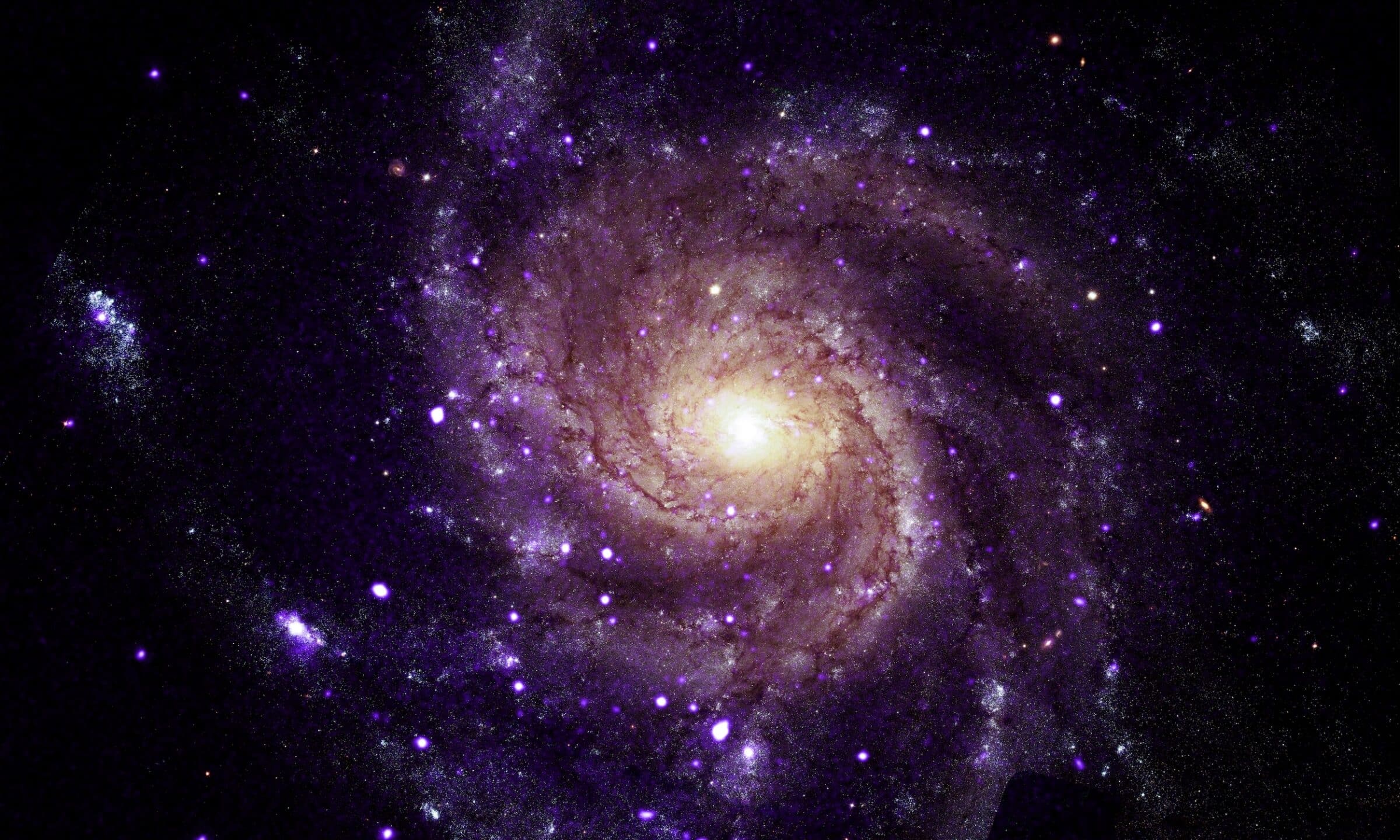
Compare this situation to the role asserted for dark matter in cosmology. In both cases, the inference to design and the inference to the existence of dark matter, an unseen cause is inferred from its effects and placed against rival explanations — undirected chemistry in the first case, and modified gravitational theories in the second. Which brings us to another objection that misfires: “Who designed the designer?” There are two problems here, one regarding the very nature of explanations, and the other regarding a category mistake in philosophical theology. Taking up the first problem, is it not clear that an explanation need not itself be explained fully before it can be accepted? For example, an archaeologist who credits the Rosetta Stone to ancient scribes owes no account of the provenance of the scribes, does he? With regard to the second problem having the nature of a category mistake, the argument from a universal beginning concerns only what begins to exist, not what doesn’t. God is classically conceived as the necessarily existent timelessly eternal Creator of time itself and as the necessary being who grounds the existence of a contingent universe. The very contingency of our universe, on pain of the metaphysical incoherence and self-defeating skepticism that emerges from the embrace of brute factuality, viz., from affirming that some things happen for no reason at all, requires an explanation for its existence and for its contingent lawlike structure.
The Demarcation Problem
Another common opinion expressed in the comment feed is that “science can only use natural explanations” and design must therefore be excluded from consideration. It should be clear that this is merely a contestable definition of “science,” not a discovery about what can and cannot be explained, let alone a discovery about the nature of reality. Philosophers of science classify attempts to provide necessary and sufficient conditions for the definition of science the “demarcation problem.” Every proposed criterion, including the current one, has failed. The problem was pronounced dead by Larry Laudan back in the early 1980s in responding to the polemics associated with the Arkansas creation trial. And last, and most certainly least, there are an inordinate number of comments in the feed that try to cast aspersions on Meyer by pointing at his employer or his private motivations for making his argument, and so on. None of these things address the merits of his argument or whether it is sound. They are just sad examples of the state of public discourse, where ad hominems, genetic fallacies, and red herrings abound as the refuge of those who have nothing to contribute to the discussion.