






































In an article yesterday in a developing series, I began to engage with YouTuber Dave Farina’s low-quality response to me from a few years ago, lamenting Farina’s failure to acknowledge substantive mistakes on his part in his previous video. Here, I will revisit the Lenski experiment, and evaluate Farina’s comments in relation to my previous article engaging with this topic.
Revisiting the Lenski Experiment
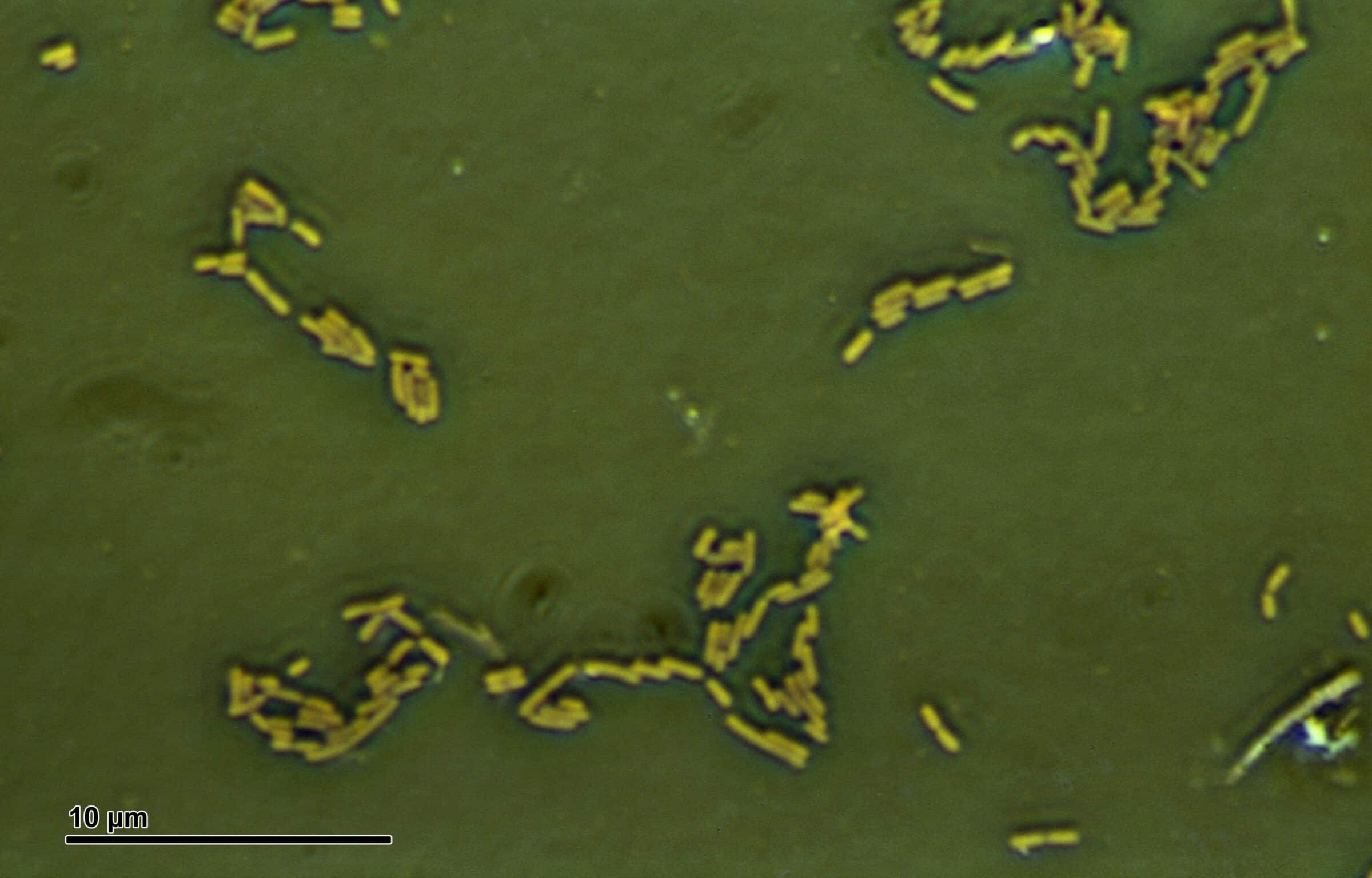
Farina offers the Lenski experiment as a purported counterexample to irreducible complexity. In Richard Lenski’s long-term evolution experiment (LTEE) with Escherichia coli, it was famously observed that, following some 33,000 generations (15 years), bacterial cells evolved the ability to grow on citrate under aerobic conditions. The genetic basis for this is that E. coli already possesses the ability to grow on citrate under anaerobic conditions, facilitated by a citrate transporter protein encoded by the gene citT. A 2,933-base-pair stretch of DNA, containing the citT gene, underwent duplication. The result was that a copy of the hitherto unexpressed citT gene was placed under the control of the promoter of the adjacent gene, rnk, which as a consequence drove expression under aerobic conditions.
Farina contends that,
A particular strain evolved an attribute that qualifies as irreducibly complex according to Behe’s own definition… This experiment produced a strain of bacteria that was able to digest citrate in an aerobic environment, and in order to do this it required multiple mutations in both the dctA gene and citT gene, and a duplication of the citT gene into a new region of the genome. All of these changes were required, and none of them can have been selected for individually. In fact, the critical duplication is actually deleterious on its own without the other mutations. So according to Behe’s own definition, it is irreducibly complex, yet we watched it evolve.
While multiple changes are required for the efficient Cit+ trait, biologist Scott Minnich and colleagues showed that the process is stepwise, conferring a selective advantage at each stage. An initial weak benefit is realized by amplification of citT via gene duplication. This allows limited citrate uptake during aerobic conditions. Aerobic expression of citT is then strongly activated by promoter capture, yielding a functionalCit+ phenotype. Subsequent refinement of the dctA gene yields a further advantage by bringing succinate back into the cell that was leaking out. Farina’s claim that “none can have been selected individually” is factually incorrect.
Misapplying Irreducible Complexity
Farina also misapplies biochemist Michael Behe’s definition of irreducible complexity. According to Behe, “By irreducibly complex I mean a single system composed of several well-matched, interacting parts that contribute to the basic function, wherein the removal of any one of the parts causes the system to effectively cease functioning.”1 In such a system, no stepwise paths exist in which each intermediate stage confers a selective benefit. This standard is not met by the Cit+ trait. As shown in the Minnich paper, each stage confers a selective advantage. Moreover, the Minnich paper explicitly states that “No new genetic information (novel gene function) evolved.” This is merely an example of repurposing pre-existing transporters, not the origins of a novel irreducibly complex system.
Farina continues,
How is Jonny gonna deal with this one? Surprise, surprise, he lies. He pretends that the only change was duplication of the citT gene. A “relatively simple change that does not require multiple co-dependent mutations to bring it about.” Except it does, Jonny.
No, I did not assert that “the only change was a duplication of the citT gene.” In fact, I specifically noted that “the ability of the cells to grow on citrate under aerobic conditions was optimized by several other mutations.” The key point of the Minnich paper, however, was that this adaptation does not require a series of prerequisite neutral mutations as Lenski and his colleagues had assumed.
Misunderstanding the Minnich Paper
Farina continues,
The first paper that demonstrated the complexity of the Cit+ trait was “A case study in evolutionary contingency” by Zachary Blount, published in 2016, which showed that additional mutations occurred in the history of the Cit+ line that allowed the Cit+ trait to actually occur. But ironically, as we mentioned in the Behe debunk, a lot of the details of the Cit+ trait were fleshed out in another 2016 paper, called “Rapid Evolution of Citrate Utilization by Escherichia coli by Direct Selection Requires citT and dctA,” co-authored by one of Jonny’s DI colleagues, Scott Minnich. In this paper, Minnich and his co-authors identified a set of specific mutations that are necessary for the Cit+ trait to evolve. Minnich and other DI hacks tout this study to try and undercut the weight of what the LTEE demonstrated, claiming “Hey, it’s actually really easy to evolve Cit+ under the right conditions, so it’s no big deal!,” when what they’ve actually done is show just how readily irreducibly complex traits can evolve, completely demolishing the biggest argument in their pathetic arsenal.
Farina’s representation of the Minnich paper is extremely misleading. The whole point of the Minnich paper is that the LTEE result was an artifact of experimental conditions rather than a rare event. The prior neutral mutations are not necessary for potentiation — the only requirement is citT amplification. As Minnich and his colleagues showed, this can happen in as few as 12 generations.
Farina further says,
He [McLatchie] even references the Minnich paper only to completely contradict himself, outright stating that three steps were highlighted, the first involving neutral mutations which are necessary for the later actualization event.
That’s how confident he is that nobody reading has a clue what he’s talking about.
The self-contradiction is blatant. So when you pretend that it was just a duplication of the citT gene and nothing else, that’s called a lie. You know, those things that liars tell? You’re a liar, Jonny.
But it is Farina, not me, who is mistaken. I did not claim that “nothing else” happened (in fact, I said the opposite). When I discussed the three steps of potentiation, actualization, and refinement, this was specifically in the context of describing Lenski’s original interpretation. Lenski’s group believed that as many as 33,000 generations were required for the trait to evolve due to the need for the rare prior neutral mutations (i.e., the potentiation step). The Minnich paper argued, contrary to this interpretation, that the prior potentiating mutations are not required. Rather, gene amplification, via duplication, of the citT gene yields a benefit immediately, without preceding contingent mutations.
In the third installment in this series, I will evaluate Farina’s discussion of the Vpu protein in HIV-1 as a counterexample to Behe’s thesis in The Edge of Evolution.
Notes
- Behe M J. Darwin’s Black Box: The Biochemical Challenge to Evolution. Simon & Schuster UK. Kindle Edition.