

















Science and Culture Today Discovering Design in Nature
Topic

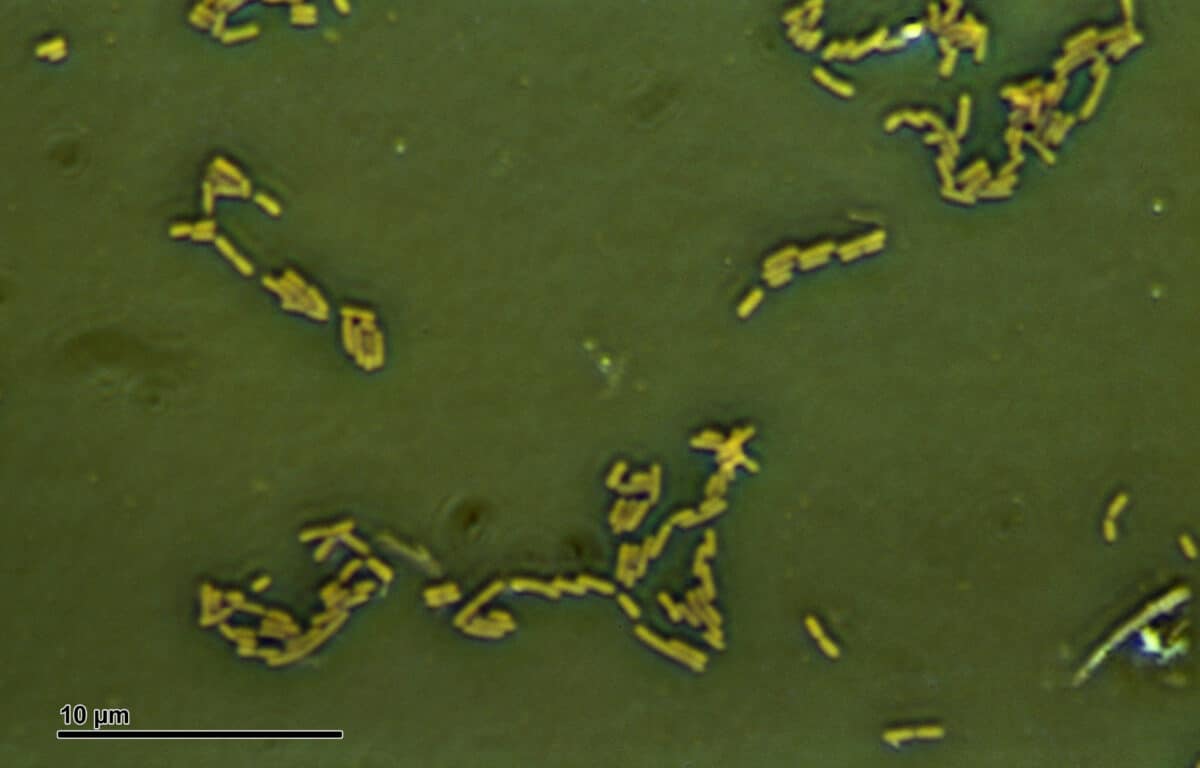
Escherichia coli

www.mantis.cz/mikrofotografie
Photo: Escherichia coli, by Doc. RNDr. Josef Reischig, CSc., CC BY-SA 3.0 <https://creativecommons.org/licenses/by-sa/3.0>, via Wikimedia Commons.

Answering Dave Farina on the Lenski Experiment

Farina offers the Lenski experiment as a purported counterexample to irreducible complexity. Read More ›
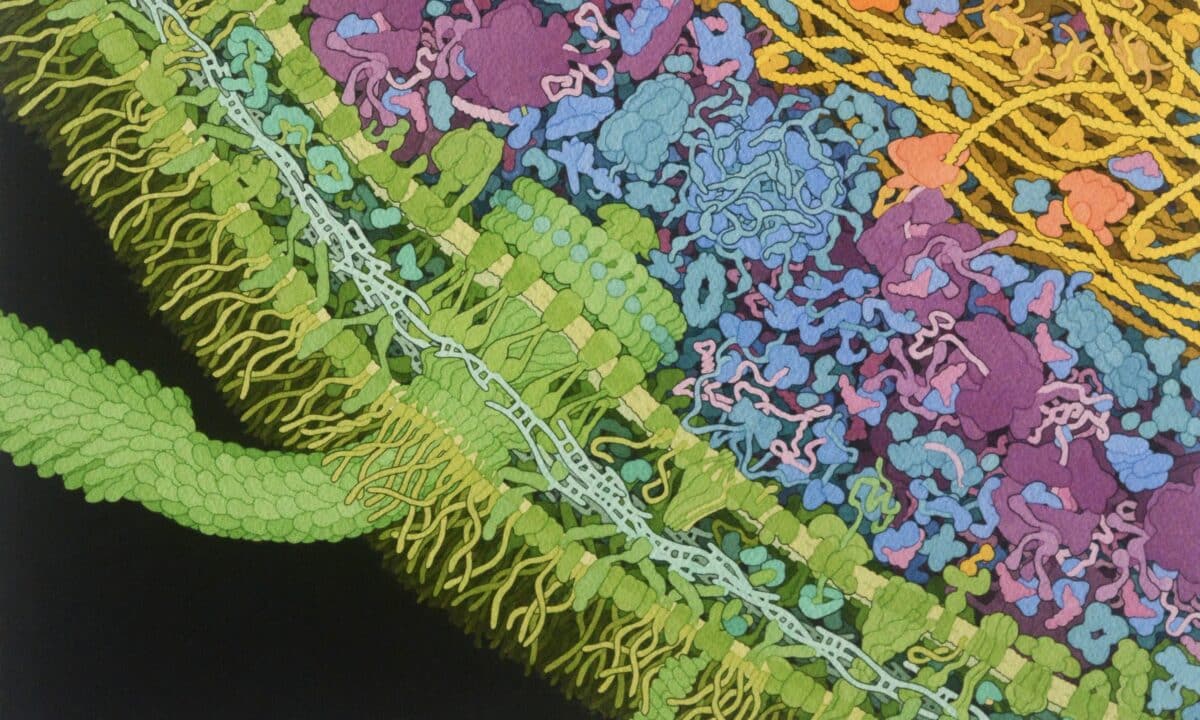
Escherichia-coli-bacterium1tif
Image credit: David S. Goodsell, RCSB Protein Data Bank, CC BY 4.0 <https://creativecommons.org/licenses/by/4.0>, via Wikimedia Commons.

Irreducible Complexity: A Reply and Challenge to Daniel Stern Cardinale
I invite Stern Cardinale to attempt to provide a plausible evolutionary explanation of the origins of a complex system such as DNA replication. Read More ›
EscherichiacoliEMB
Photo: Escherichia coli, by Gene Drendel, CC BY 4.0 <https://creativecommons.org/licenses/by/4.0>, via Wikimedia Commons.

“Rewriting Code of Life” Sounds a Lot Like Intelligent Design
Modifying the genetic code is easy. Right? It would have to be, under an evolutionary understanding. Read More ›
Lenski’s terrific LTEE
distinctions
Photo: Richard Lenski’s LTEE, by Brian Baer and Neerja Hajela [CC BY-SA 1.0], via Wikimedia Commons.

Answering Farina on Behe’s Work: Irreducible Complexity
The first exhibit is Lenski’s long-term evolution experiment, in which, after some 33,000 generations, bacterial cells evolved the ability to grow on citrate. Read More ›
flagellum
irreducible complexity
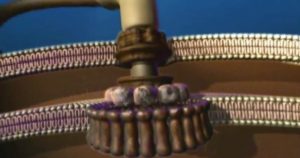
Image: Bacterial flagellar motor, from Unlocking the Mystery of Life, Illustra Media.

Harvard Biophysicist Howard Berg, Flagellum’s Discoverer, Lives On

More than any other scientist, he brought to light the intricate biophysics occurring at the molecular scale in living organisms. Read More ›
Clifton Suspension Bridge
Photo: Clifton Suspension Bridge, by Nic Trott, CC BY 2.0 <https://creativecommons.org/licenses/by/2.0>, via Wikimedia Commons.

Tricks of the Cell Trade

Cell processes are quick and efficient. They can even solve geometry problems in the dark without eyes or brains. Read More ›
DNA
Image credit: PublicDomainPictures from Pixabay.

DNA Storage Goes Biological

DNA is already known to be an ideal storage medium. Why not use cells to do the hard work? Read More ›
DNA
intelligent design
Photo credit: xaviercanserra, via Pixabay.

Missing the Point: Codes Are Not Products of Physics (Updated)
Elaborate schemes to explain the origin of the genetic code from the laws of physics and chemistry miss the whole point about codes. Read More ›
blue-whale

Whales, Bees, and Viruses: Intelligent Design from Biggest to Smallest 
What’s bigger than a blue whale? Smaller than a virus? At the extremes and everywhere in between, life shows ingenious design. Read More ›

Campylobacter jejuni bacteria
Campylobacter jejuni bacteria 3d render illustration closeup
Image: Campylobacter jejuni, a leading culprit in causing stomach upset, by De Wood, Pooley, USDA, ARS, EMU. [Public domain], via Wikimedia Commons.

Diarrhea and Design: A Response to Jerry Coyne

I respect Coyne’s position, but, lacking his faith, I interpret this evidence more naturally as pointing to an ingenious mind. Read More ›

© Discovery Institute