






































As noted here yesterday, Matthew Haber at the University of Utah proposes “the rejection of absolute biological history, the idea that there is an invariant, privileged biological history against which other histories are measured or deviate from.” Our comment, “If one says that something isn’t real, and yet we can know it — not far down that road lies utter incomprehension.” Haber calls it “biology’s Einstein moment,” but it feels more like a surreal state.
Now along comes a new video from New Scientist instructing us that “The Human Family Tree Has No Beginning.” No biological history and no biological beginning: are you seeing the trend? Both seem to be responses to being battered by evidence undermining ideas of universal common descent and gradual rather than abrupt human origins.
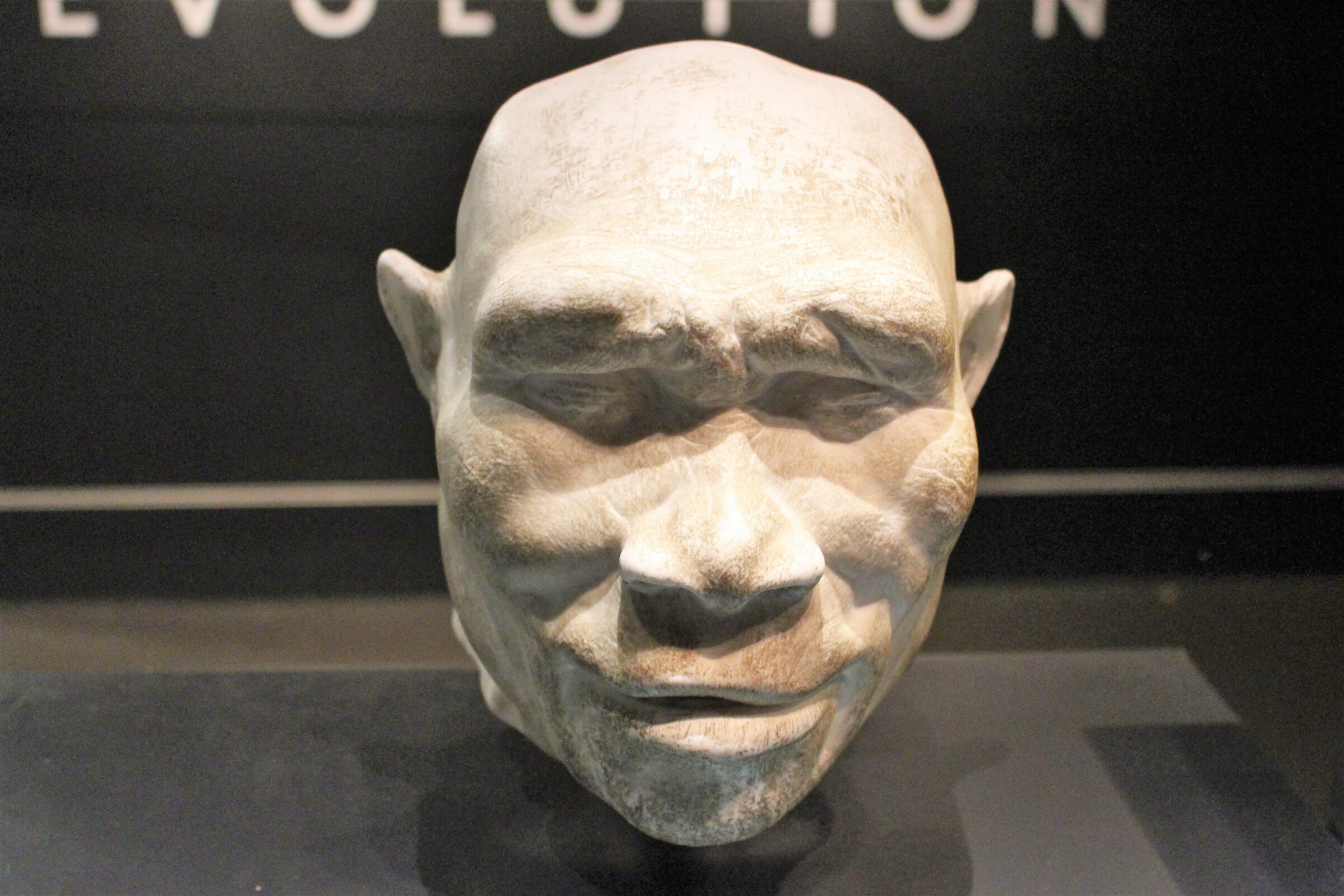
This video gets surreal starting around the 19- or 20-minute mark, where the host, paleoanthropologist Ella Al-Shamahi, basically concedes that there’s a massive anatomical gap between Lucy’s species and Homo erectus (pictured at the top), as we have emphasized many times. Then what follows is a truly strange discussion of rainbows, gradualism, and abrupt change. It’s riddled with contradictions, but all delivered with the ease and confidence of a philosopher cinching an argument with an airtight syllogism.
For a reality check, see Casey Luskin’s chapters in Science and Human Origins, making a strong case that there is a genuine not just apparent big break between ape-like creatures and Homo erectus. Also, if you missed it, watch the Science Uprising episode on “Human Evolution”: