






































Science and Culture Today Discovering Design in Nature
Topic

computation

MichaelLevin
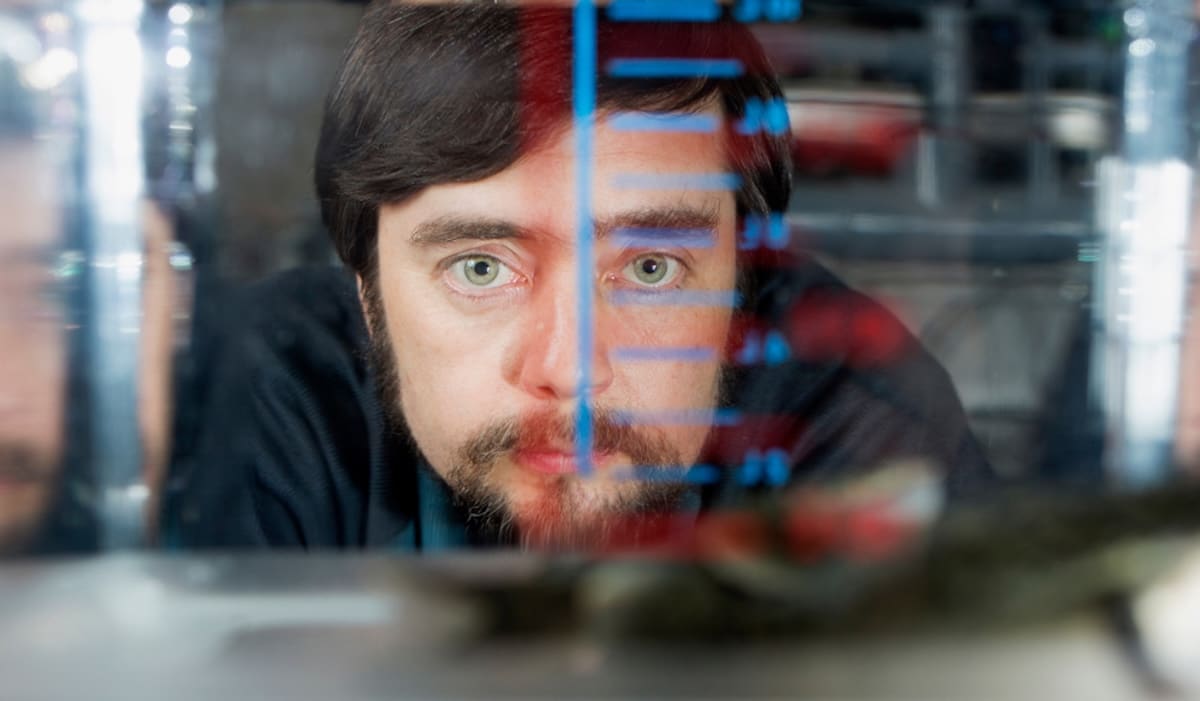
Photo credit: Kriegman, S., Blackiston, D., Levin, M., Bongard, J., CC BY 4.0 <https://creativecommons.org/licenses/by/4.0>, via Wikimedia Commons.

Michael Levin and the Philosophy of Intelligent Design

Levin is not a reflexive Darwinian materialist. Moreover, he touches on many themes that intelligent design theorists touch on. Read More ›
futuristic-data-encryption-and-secure-coding-practices-stock-1169549838-stockpack-adobestock
Futuristic Data Encryption and Secure Coding Practices
Image Credit: Fauzerene - Adobe Stock

Life as Computation: An AI Researcher’s (Unwitting) Argument for Intelligent Design

How many computer geniuses did it take in order to produce even a tiny fragment of this complexity? And how great must be the mind that designed all this! Read More ›
the-interior-of-ancient-buildings-in-the-qin-and-han-dynasti-432809584-stockpack-adobestock
The interior of ancient buildings in the Qin and Han dynasties of China
Image Credit: gui yong nian - Adobe Stock

John Searle (1932–2025): A Titan Passes

Searle’s most famous argument is undoubtedly the Chinese Room argument, first presented in his essay “Minds, Brains, and Programs” (1980). Read More ›
empty-classic-red-chinese-room-stockpack-adobe-stock-753536499-stockpack-adobestock
empty classic red chinese room
Image Credit: sema_srinouljan - Adobe Stock

Farewell to John Searle, Philosopher of Mind and Language

His Chinese Room thought experiment, an argument for why computers can seem clever without having minds, was widely understood among the lay public. Read More ›
mathematics
Photo credit: Benjamin Lizardo via Unsplash.

Science for Insight or Science for Power?

What are the core purposes of science and math? Evaluating the idea of "knowledge as power" in the computer age. Read More ›
Singularity
Photo credit: Trey Ratcliff, via Flickr (cropped).

Marks: Non-Computable You Won’t Achieve Immortality Through an AI Machine

Dreams of achieving immortality by having your consciousness uploaded, merging man and computer in the predicted 2045 “Singularity,” are just that — dreams. Read More ›
martin-sanchez-703925-unsplash

MIT’s Rizwan Virk on Simulation Theory, AKA Intelligent Design

Egnor: “If we are living in a computer simulation, we couldn’t think to ask the question.” Read More ›
robot

Human Computation — A “Practical Application” of Intelligent Design

As Denyse O’Leary asks, “Why is it comparatively easy to develop a program to play chess, as opposed to teaching a robot to walk freely?” Read More ›
Kissinger 3

Kissinger: A.I. Machines Won’t “Think”

Transhumanists and other anti-human exceptionalists have been arguing of late that artificial-intelligence machines are destined to become so sophisticated that they will become “self-aware.” Read More ›

© Discovery Institute