






































Science and Culture Today Discovering Design in Nature
Topic

Edward Feser

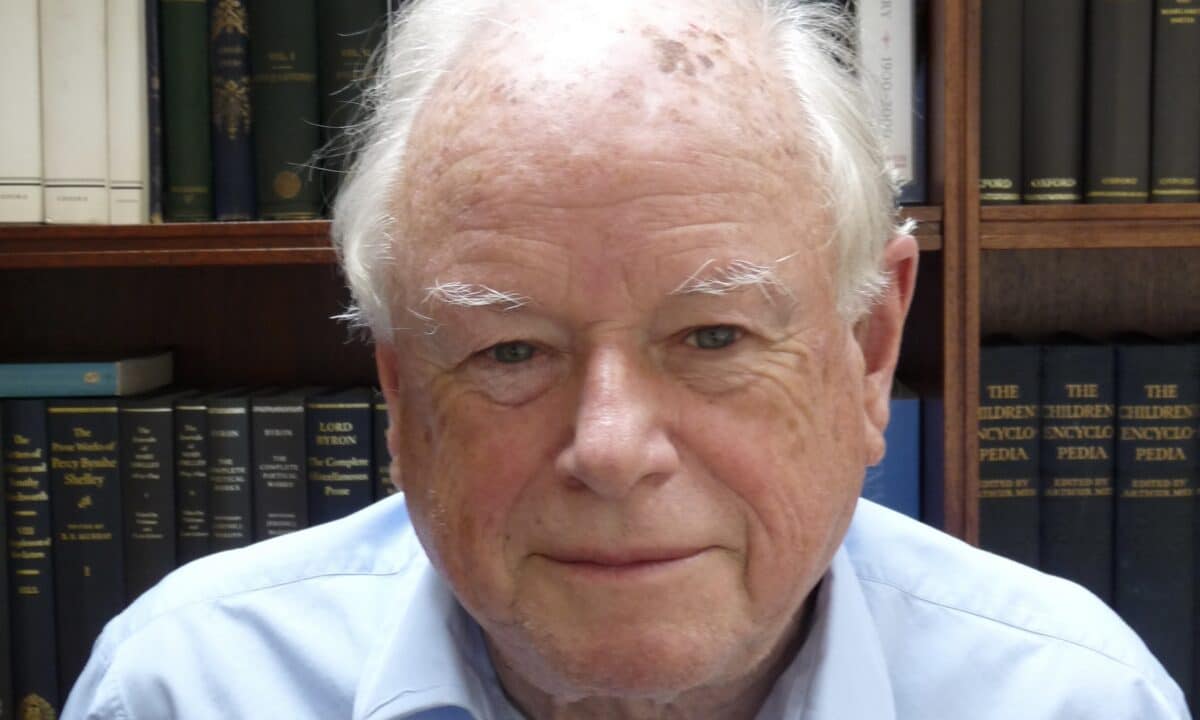
AnthonyJohnPatrickKenny
Photo credit: Nancy Caroline Gayley, CC BY-SA 4.0 <https://creativecommons.org/licenses/by-sa/4.0>, via Wikimedia Commons.

Haunted by God: Remembering Sir Anthony Kenny

Kenny still appreciated a good church service and even did readings from the breviary. Unusually, he argued there was no reason why an agnostic shouldn't pray. Read More ›
PartofabookshelfcontainingbooksbyAristotle1
Photo credit: Roman Eisele, CC BY-SA 4.0 <https://creativecommons.org/licenses/by-sa/4.0>, via Wikimedia Commons.

Designer Science Misrepresents Aristotle and Ignores Church History

C. W. Howell contrasts intelligent design with what he believes is Aquinas’ and Aristotle’s understanding of teleology (purpose) in nature. Read More ›
TriumfofThomasAquinasfresco224157
Photo credit: Zde, CC BY-SA 4.0 <https://creativecommons.org/licenses/by-sa/4.0>, via Wikimedia Commons.

Designer Science Repeats Common Misunderstandings of Thomas Aquinas

Aquinas argues that intelligence is recognized precisely because unintelligent entities achieve purposeful ends only when directed by an intelligence. Read More ›
Cyclamen-coum
Photo: Cyclamen coum, by Famberhorst, CC BY-SA 4.0 <https://creativecommons.org/licenses/by-sa/4.0>, via Wikimedia Commons.

Science, Purpose, and Michael Levin: The Discussion Evolves

A leading spiritually agnostic (at least, that is my impression) biology researcher, Michael Levin at Tufts, is himself a proponent of teleology in nature. Read More ›
pismis-24
Photo credit: NASA, ESA and Jesús Maíz Apellániz (Instituto de Astrofísica de Andalucía, Spain); Acknowledgment: Davide De Martin (ESA/Hubble).

French Authors Say Science Points to God; Scientists Listen

Computer engineer Michel-Yves Bolloré, a lifelong Catholic, and Olivier Bonnassies, who came late to faith, argue that the universe must have had a creator. Read More ›
empty-classic-red-chinese-room-stockpack-adobe-stock-753536499-stockpack-adobestock
empty classic red chinese room
Image Credit: sema_srinouljan - Adobe Stock

Farewell to John Searle, Philosopher of Mind and Language

His Chinese Room thought experiment, an argument for why computers can seem clever without having minds, was widely understood among the lay public. Read More ›
ToriipathwithlanternatFushimiInariTaishaShrineKyot
Photo credit: Basile Morin, CC BY-SA 4.0 <https://creativecommons.org/licenses/by-sa/4.0>, via Wikimedia Commons.

What (If Anything) Physics Can Say About Consciousness

What about objects? If we want to argue that they have consciousness too, we need to define the term differently from the experiential way we usually do. Read More ›
neural-landscape-with-densely-packed-neurons-selective-focus
Image credit: EC Tech - Adobe Stock.

The Logical Basis of the Immaterial Mind

The indeterminacy of matter precludes brain states from forming the basis of abstract thought. Simple logic points to this truth. Read More ›
Venus_Flytrap_showing_trigger_hairs
Photo: Venus flytrap, by Noah Elhardt, CC BY-SA 2.5 <https://creativecommons.org/licenses/by-sa/2.5>, via Wikimedia Commons.

Plant Consciousness and the Darwinian Project

The forces Darwinism unleashed were surely bound to head in this direction. It was only a matter of time. Read More ›
goat
Photo credit: Madison O'Friel via Unsplash.

Researchers: Goats Can Read Basic Human Emotions

Readers may wonder at first whether this research was worth doing, but hang on. It turns out that goats can understand basic emotions by voice alone. Read More ›

© Discovery Institute