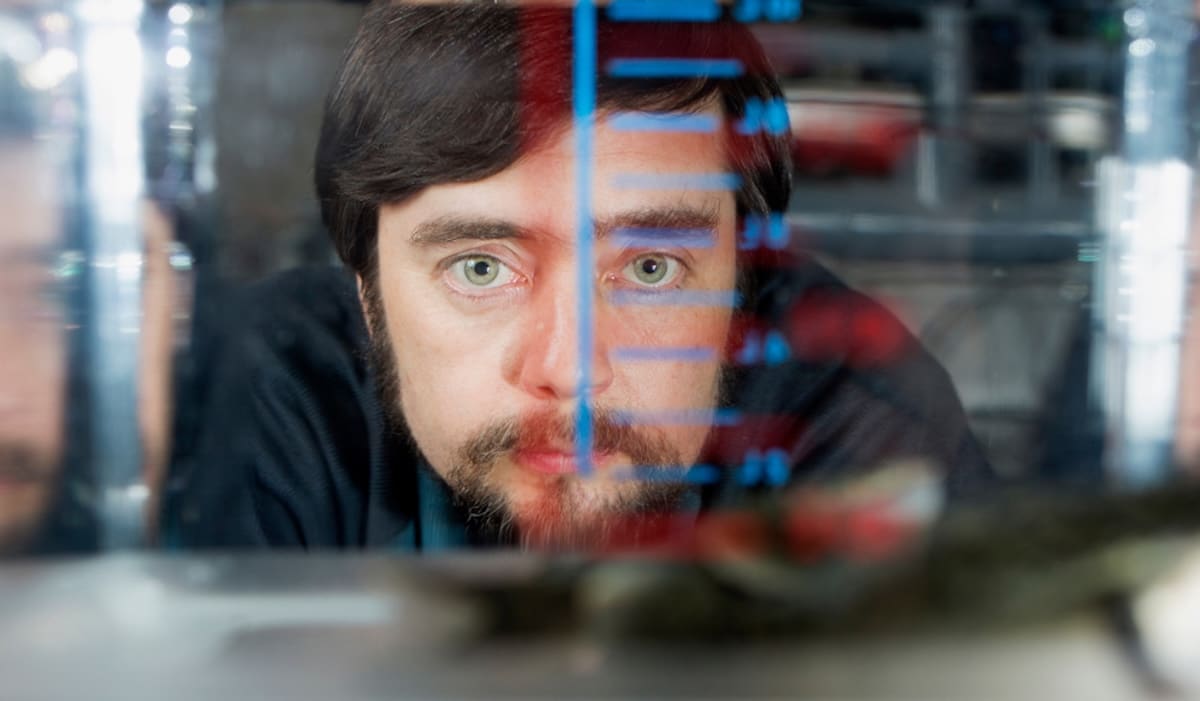
MichaelLevin Type post Author William A. Dembski Date January 20, 2026 CategoriesIntelligent DesignPhilosophyPhilosophy of Science Tagged , AI Overview, archaeology, art, Bas van Fraassen, biology, ChatGPT, complex specified information, computation, computer science, Conservation of Information, control, cryptography, Darwinian theory, Discovery Institute, Ernest Nagel, experiment, fecundity, Forensics, function, gnana yoga, Grok, Hinduism, ID 3.0 Research Program, Imre Lakatos, information, intelligent design, James Tour, James Woodward, Karl Popper, large language models, Larry Laudan, law, Lex Fridman, living things, materialism, mathematics, mechanism, methodological naturalism, Michael Levin, Nancy Cartwright, naturalism, ontology, origin of life, patterns, Paul Feyerabend, philosophy, Pierre Duhem, Plato, Platonic space, pseudoscience, Richard Dawkins, Sandra Mitchell, scientific theory, SETI, steganography, Stephen Meyer, testability, testing, thermostats, Thomas Kuhn, Tufts University, Willard Van Orman Quine Michael Levin and the Philosophy of Intelligent Design William A. Dembski January 20, 2026 Intelligent Design, Philosophy, Philosophy of Science 37 Levin is not a reflexive Darwinian materialist. Moreover, he touches on many themes that intelligent design theorists touch on. Read More ›
andrea-de-santis-YD_h3vSkyFI-unsplash Type post Author William A. Dembski Date July 15, 2024 CategoriesEvolutionIntelligent DesignTechnology Tagged , Aristotle, chance, Chance and Necessity, Francisco Ayala, Greek, information, intelligence, intelligent design, Irreducible Complexity, Jacques Monod, Jay Richards, Marcos Eberlin, matter, Michelangelo’s David, Nancy Cartwright, naturalism, nature, possibilities, probability, Richard Dawkins, Search for ExtraTerrestrial Intelligence, specified complexity, systems, The Blind Watchmaker, Thomas Aquinas, William Shakespeare Building a Better Definition of Intelligent Design William A. Dembski July 15, 2024 Evolution, Intelligent Design, Technology 41 Definitional change in science is par for the course: As paradigms shift because of scientific advances, textbook definitions change. Read More ›
physics Type post Date October 23, 2022 CategoriesPhysical SciencesPhysicsScience Tagged , Cambridge University Press, general relativity, Nancy Cartwright, pop psychology, social psychology, Texas, University of Durham Can Physics Account for Our Whole Reality? Science & Culture October 23, 2022 Physical Sciences, Physics, Science 4 Mathematician turned philosopher Nancy Cartwright says no; reality is ultimately too complex for that. Read More ›