






































Science and Culture Today Discovering Design in Nature
Topic

First Rule of Adaptive Evolution
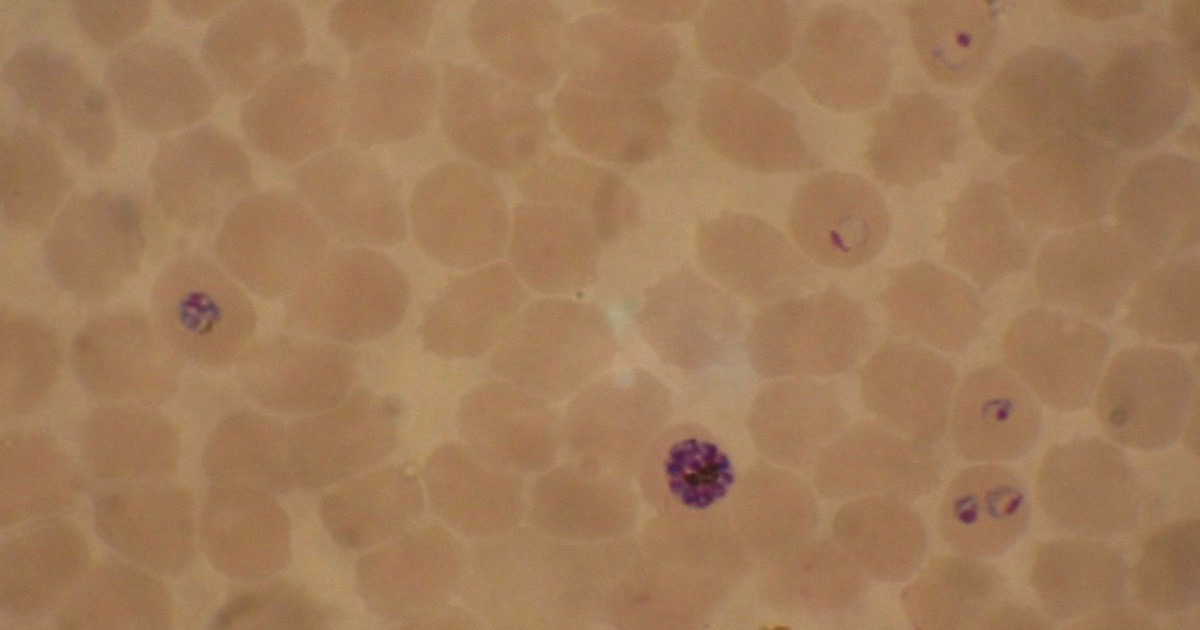
Plasmodium falciparum
Photo: Plasmodium falciparum, by Lukas.S at English Wikipedia(Original text: Lukas 05:24, 5 October 2006 (UTC)), Public domain, via Wikimedia Commons.

Devolution Watch: Malaria Gnaws Off a Leg
The most frequently used diagnostic test kit checks for the presence in the patient’s blood of either of two similar malarial proteins, called pfhrp2 or pfhrp3. Read More ›
Lenski's_12_long-term_lines_of_E._coli_on_25_June_2008

New Papers Explore the Utility of Active Information

William Dembski and Robert J. Marks developed the concept of active information to measure the extent to which a search function appears pre-programmed to find some target. Read More ›
Behe Dallas

Judge Michael Behe’s Case for Intelligent Design Yourself
“Darwin’s mechanism is dominated by ‘Poison-Pill’ mutations: positively-selected, loss-of-function mutation.” It “squanders genetic information for short-term gain.” Read More ›
Saccharomyces_cerevisiae_400x_img428

Fake Darwinism in an International Test of Experimental Evolution 

It’s fine to search through random results for an outcome you’re aiming for. Just don’t call it Darwinian evolution. Read More ›
bacterial flagellum 2

Darwin Devolves, Again: Study Finds Bacteria Eject Their Flagella to Avoid Starvation

This finding fits Michael Behe’s book Darwin Devolves perfectly. It’s easier to throw cargo overboard than to create it. Read More ›
Kevin Williamson

Science and Its Consequences: Kevin Williamson Versus Intelligent Design, Again
The question before us was whether anyone but journalists and other amateurs take the science of ID, “daft rube-bait” according to Kevin, seriously. Read More ›
forest for the trees 2

In His Latest Review of Behe’s Darwin Devolves, Nathan Lents Misses the Forest for the Trees

Evolutionists now increasingly believe that major adaptations are driven by neutral mutations. Read More ›
Richard-Lenski
Richard Lenski, by Zachary Blount [CC BY-SA 4.0], from Wikimedia Commons

Thanks, Professor Lenski, the LTEE Is Doing Great!

Lenski agrees that the beneficial mutations seen in his Long Term Evolution Experiment are overwhelmingly degradative or loss-of-function ones. Read More ›
1280px-Lehigh_University_Mountain_Top_Campus

A Response to My Lehigh Colleagues, Part 2

Lang and Rice cite a number of articles to show that loss-of-function mutations are just a small minority of those found in studies of organisms. Read More ›
Lehigh-University
Photo: Lehigh University campus, by Joseph Giansante '76 [CC BY-SA 3.0], via Wikimedia Commons.

A Response to My Lehigh Colleagues, Part 1

Their review pretty much completely misses the mark. Nonetheless, it is a good illustration of how sincere-yet-perplexed professional evolutionary biologists view the data. Read More ›

© Discovery Institute