






































In a series of articles I have been asking, “When can I trust what scientists say?” And specifically, when can I trust them about evolution? Find the full series here. We have reviewed six criteria for assessing the level of confidence we may attach to a scientific claim and we found that the most commonly cited evidence in favor of universal common ancestry fails to meet all six. Here, we will review contrasting evidence that meets all six criteria, providing high confidence about evolution: namely, that it is a very constrained process.
In a pair of YouTube videos,1 Rice University chemist James Tour and I reviewed more than ten recent studies of experimental evolution. These studies include prospective experiments with direct measurement of changes in DNA, repeatedly observed in large replicate populations of organisms. Let’s consider three of these experiments.
Broken Production of Tryptophan
In the first study,2 a gene was modified in the bacteria E. coli, intentionally damaging an enzyme to produce tryptophan. The mutant E. coli was then placed in solution with limited tryptophan, setting the stage for a prospective test of evolution: can random mutations and natural selection fix a damaged gene and achieve a significant fitness gain?
In two separate experiments, a single nucleotide was modified (two different nucleotides), both resulting in damage to production of tryptophan. In both cases, the E. coli was able to repair the damage after about 100 million E. coli were grown in the solution. This likely resulted from a random mutation that restored the enzyme’s function.
However, in a third experiment, the researchers simultaneously modified two nucleotides (both of the previously tested single mutations), resulting in the inability of the E. coli to produce tryptophan. When this mutant was placed in solution with limited available tryptophan, repair of the gene did not occur, even after 9,300 generations and about a trillion total organisms were produced. Not only did evolution fail to repair the gene, but the gene was either deleted or suppressed to conserve available tryptophan. In other words, evolution took a short cut, preferring the minor fitness benefit of conserving tryptophan rather than wasting tryptophan by producing broken enzymes while striving to repair the gene.
Evolution’s failure in this study is remarkable. The full operon to produce tryptophan includes seven genes (five enzymes), and about 6,800 nucleotides of DNA code. The study showed that damage to only two of these nucleotides was enough for evolution to abandon the entire assembly line. Yet we are expected to believe that the same evolutionary process that failed to repair, and even abandoned, a system that was 99.97 percent intact was responsible for producing the entire tryptophan operon from scratch?
It is also remarkable that, unlike evidence from homology and the fossil record, this evidence meets all six of the criteria for high confidence: the results are repeatable, the results were obtained through direct measurement of changes in DNA, the experiment was prospective, bias was minimized, assumptions were minimized, and the claims made by the study were reasonable, directly supported by the data.
Broken Production of Adenine
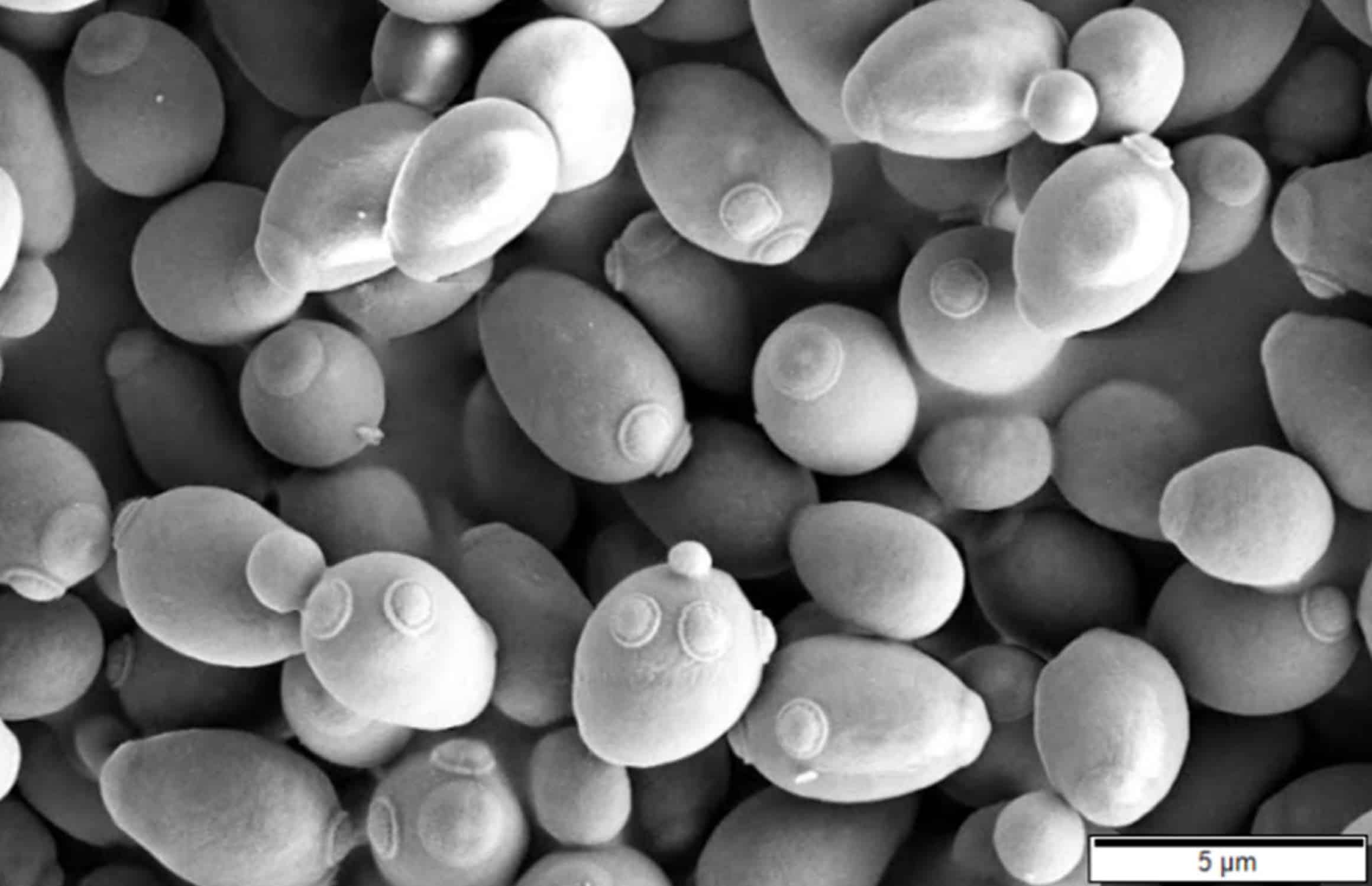
In the second study,3 researchers uncovered a similar limitation of evolution, by accident. They studied 205 populations of the yeast S. cerevisiae over 10,000 generations in the laboratory, with direct measurement of DNA changes. The strain of yeast that they selected (W303) was known to be incapable of manufacturing adenine, a fundamental building block of life, because of a single point mutation in one gene. The gene was part of a well-known 11-enzyme assembly line to produce adenine — far more complex than E. coli’s assembly line for production of tryptophan. The researchers found that 6 of the 205 replicate yeast populations were able to fix the one mutation and return to producing adenine (a higher-fitness genotype). However, once an additional (second) mutation occurred upstream of the known mutation in this 11-enzyme assembly line (a lower-fitness genotype), the entire process was unrecoverable. As the investigators stated:
We do not observe any populations that move from the lower fitness genotype to the higher fitness genotype even after 10,000 generations of evolution.3
So again, how could evolution produce such a complex metabolic pathway from scratch, when two simple errors can render the whole assembly line unrecoverable? When tested prospectively, evolution through random mutations and natural selection is a highly constrained process. And this is the result of high-confidence evidence, which should be prioritized over the dramatically low-confidence evidence from the fossil record and homology.
Making Use of Random DNA
In the third study,4 researchers tested whether evolution could turn a random sequence of DNA into something useful: a promoter for gene transcription. E. coli has genes for metabolizing lactose, but they are only used when needed. The investigators replaced the promoter region for these lactose genes with random sequences of 103 nucleotides of DNA. A functional promoter for this operon needs to include a specific sequence of about six nucleotides, but several varieties are acceptable (i.e., the sequence is not very specific). They determined if mutant E. coli with random sequences evolved a successful lactose promoter by applying selective pressure: growing the bacteria in a solution with lactose. If the bacteria could evolve to metabolize lactose, they would prosper.
Out of the 40 random sequences of DNA that they tested, four already contained an acceptable promoter sequence without any changes — by random luck. E. coli with another 23 of these random sequences evolved to metabolize lactose because the bacteria had one nucleotide change in this promoter region (presumably by random mutation). So far, so good. Of the remaining 13 sequences, 11 also evolved to metabolize lactose. Because we’ve already summarized the cases that needed zero or only one point mutation, it makes sense to expect that these remaining 11 sequences must have required two or more point mutations to make a useful promoter.
However, we learned from the previous two experiments that random mutations and natural selection are very unlikely to provide a set of two required mutations when the first mutation does not confer a benefit. Indeed, that was the case. The remaining 11 sequences accomplished the task of metabolizing lactose by taking short cuts rather than by evolving a sequence of two point mutations. In six cases, the E. coli relocated a promoter from another location, and in five cases, the E. coli deleted an upstream termination sequence — a sequence of DNA that separates the upstream operon from the lactose operon. This represents a loss of control and a loss of information, but in this environment it was beneficial.
A Clear Conclusion
The three experiments that we reviewed all meet the six criteria for high-confidence evidence, and they consistently show that evolution is very constrained in what it can accomplish. They explain a simple result of probability: obtaining two or more required mutations, when the first mutation conveys no fitness benefit, is so unlikely that destructive pathways that provide temporary fitness gains, such as deleting or disabling genes or regulatory control, are preferred. This has much in common with biochemist Michael Behe’s first rule of adaptive evolution: “Break or blunt any functional coded element whose loss would yield a net fitness gain.”5
We are expected to believe that the great quantity of innovative functions that are required to produce the diversity of known life came about by evolution from a common ancestor, but only very low-confidence evidence supports this. The high-confidence evidence clearly shows that evolution is extremely limited. When evidence for evolution is properly prioritized according to the level of confidence that it provides, the conclusion is clear.
Notes
- https://youtu.be/kcCV0igIA0U?si=oWsQYxfaW1zwUHMx; https://youtu.be/OhLP-hqOnGw?si=fqC7z5jK8pk7M2-Q.
- Gauger AK, et al. Reductive evolution can prevent populations from taking simple adaptive paths to high fitness. BIO-Complexity. 2010; 2: 1–9.
- Johnson MS, et al. Phenotypic and molecular evolution across 10,000 generations in laboratory budding yeast populations. eLife. 2021; 10: e63910. DOI: https://doi.org/10.7554/eLife.63910.
- Yona AH, et al. Random Sequences Rapidly Evolve into de Novo Promoters. Nature Communications 2018; 9: 1530.
- Behe MJ. Experimental evolution, loss-of-function mutations, and “the first rule of adaptive evolution”. Q Rev Biol. 2010;85:419-45. doi: 10.1086/656902.