






































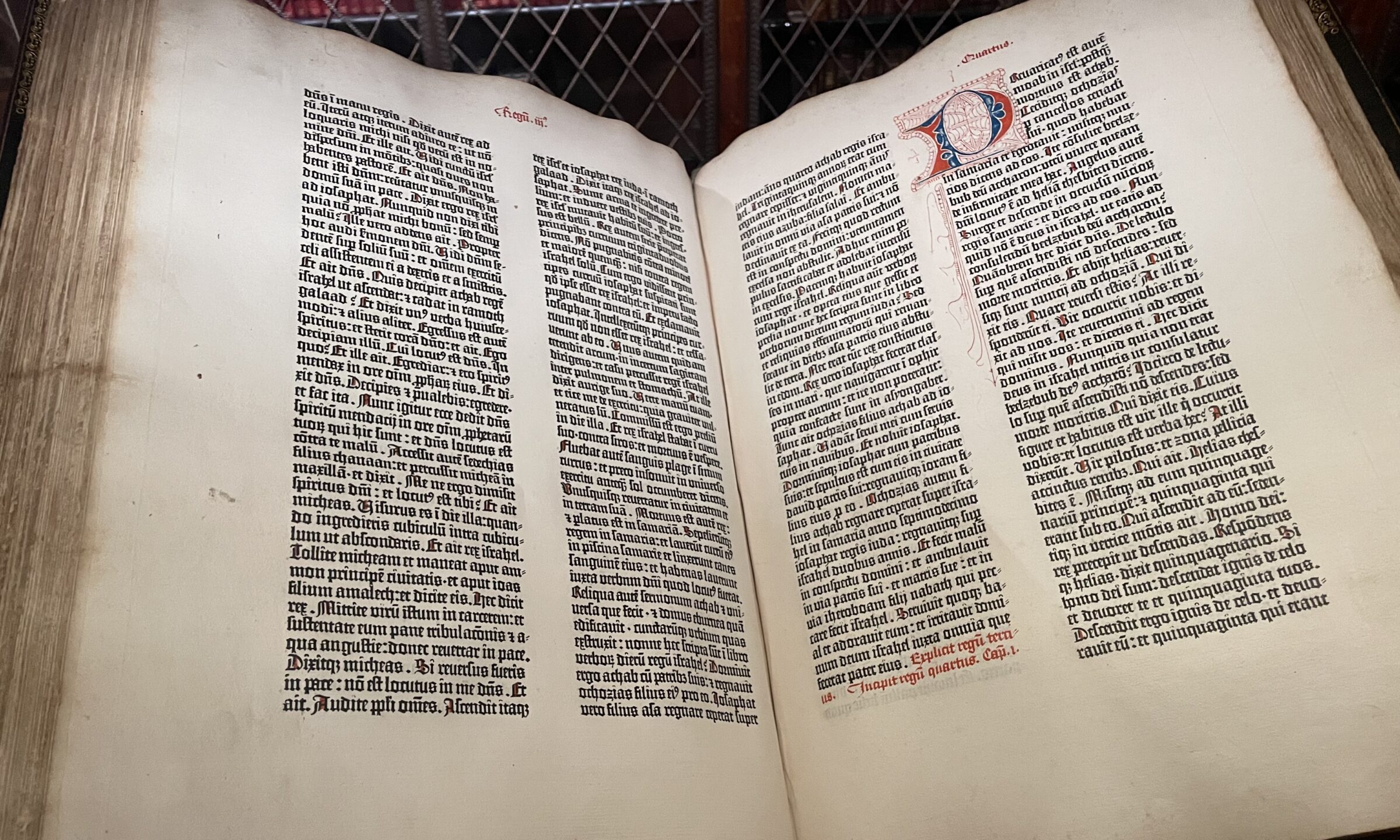
Peoples throughout recorded time have constructed narratives on parchment or on petroglyphs, fashioning symbols and pictorial representations intended to unlock the secrets of their origins. The sheer number of worldwide creation stories suggests that “human beings are made for meaning-making; we seek it out and when we don’t find it, we make it up ”1 — this being a habit which has persisted (although it is rarely acknowledged) into the modern world. For instance, more than a century before Charles Darwin came on to the scene, French thinkers envisioned the physical morphology of particular animal types evolving quite radically over vast tracts of time.
In his L’Homme Machine (1747), Julien Offray de la Mettrie argued that all animal forms had emerged from previous forms, so that for instance a mouse might be expected to transmute, albeit over vast tracts of time, to become a considerably larger and more complex animal. Or we might take the example of Denis Diderot who, anticipating conceptions later given wider (albeit controversial) currency by his countryman Jean-Baptiste Lamarck, mooted in his D’Alembert’s Dream (1769) the possibility of a creature evolving simply by dint of habitual functioning into another life form altogether — a very considerable macro-mutation in modern parlance.
Mythography or Philosophy?
- “The great questions of life cannot be answered with any certainty, and theories about such subjects are (in philosophical parlance) under-determined by the evidence.”2
- “Scientific theories cannot be said to ‘explain the world’ — only to explain the phenomena which are observed in the world.”3
Towards the end of the 18th century, Erasmus Darwin too was advancing speculations about the origin and development of life similar to those of his French confrères. However, the crucial difference between these post-Enlightenment thinkers in France and Britain and the scribes and etchers of more primitive times is that the modern thinkers styled themselves in more glorious terms as natural philosophers rather than as imagination-driven (or in some cases trance-driven) mythographers.
Whether we take the self-reports of our modern-era “philosophers” at face value must remain a moot point, but what is undeniably true is that the distinction between myth-making and factual reporting is from any heuristic perspective an important one, because it is clearly important to know how much truth value might properly be ascribed to any given claim or tradition. This was a subject which was analyzed at length by Henri Frankfort in his classic study, Before Philosophy.4 There Frankfort sharply contrasts the modus operandi of myth-makers in ancient civilizations (a process which he terms mythopoesis, i.e., the fashioning of myths), to that of the ancient Greeks, whose ground-breaking innovation was to introduce and give normative status and prestige to those processes of analytic reasoning which we call formal philosophy.
A critical difference between the mythographers of antiquity and those such as Erasmus Darwin, who embarked on the self-same quest to understand the origins of the world we live in, was, then, that habits of mind had changed radically by the 18th century. In the Enlightenment era, admiration for ancient Greek philosophy joined hands with a high respect for rational thought across the board. Erasmus, both as a natural scientist and medical practitioner, was very much a creature of the Enlightenment age into which he was born. It was in the light of that new cultural outlook that first Erasmus then later Charles Darwin conceived the ambition to replace the age-old genre of creation myth and put the matter of evolution on what they aspired to be a rational, scientific footing.
Genetic and Intellectual Consanguinity
There was then both a genetic and intellectual consanguinity between grandson and grandfather. Although Erasmus’s works were published before Charles’s birth in 1809, Charles in adult life was to define himself in considerable part as the proud continuator of the Erasmian legacy. Like his grandfather, Charles placed “language, reason and reflections proud”5 at the forefront of his thinking, a sentiment entirely congruent with the reigning enthusiasm for scientific and technological progress For instance, Erasmus’s hypothesis of small forms moving over the maritime mud seems to have been the direct inspiration for a letter that Charles wrote in later life where he speculated that life could have arisen from some unknown chemical reaction in a small warm pond.6 To take another example: what Erasmus, using an old alchemical term, called the transmutation of species was simply rechristened by Charles as descent with modification. A classic case, one might say, of old wine in new bottles.
This old wine however was of a somewhat different vintage to that supposed by the Darwins. For it can be argued that that the structural model underlying their thinking is closely derived from the most influential narrative of their day, that of the Book of Genesis. The kinship between Erasmus’s account of the development of life and Book 1 of Genesis is apparent from a brief analysis of the Creation in his Temple of Nature (1803, originally titled The Origin of Society):
Organic Life beneath the shoreless waves
Was born and nurs’d in Ocean’s pearly caves;
First forms minute, unseen by spheric glass [= microscope]
Move on the mud, or pierce the watery mass:
These as successive generations bloom.
New powers acquire, and larger limbs assume;
Whence countless groups of vegetation spring,
And breathing realms of fin, and feet, and wing.
Thus the tall Oak, the giant of the wood,
Which bears Britannia’s thunders on the flood;
The Whale, unmeasured monster of the main,
The lordly lion, monarch of the plain,
The eagle soaring in the realms of air,
Whose eye undazzled drinks the polar glare,
Imperious man, who rules the bestial crowd,
Of language, reason, and reflection proud,
With brow erect who scorns this earthy sod,
And styles himself the image of his God;
Arose from rudiments of form and sense,
An embryon point, or microscopic ens!7
Three Salient Parallels
What is most immediately noticeable in these verses is that Erasmus was not so much supplanting Genesis as paraphrasing it (albeit with all the verbal airs and graces of the Augustan age!). The ornate linguistic register he favored, however, cannot distract our attention from the similarities of the two accounts. A brief juxtaposition of the Biblical and Erasmian accounts shows up three salient parallels:
First, in both accounts we learn of the aquatic beginnings of sentient life: Erasmus conceives of sea creatures “piercing the watery mass” (The Temple of Nature, Canto I, line 4), while in Genesis 1:20, God ordains, “Let the waters bring forth abundantly the moving creature that hath life.”
Smaller animals are then, “as successive generations bloom” (line 5), joined by larger, more complex ones. Erasmus Darwin gives as prime example the whale, “unmeasured monster of the main” (line 11), which recalls “And God created great whales, and every living creature that moveth” of Genesis 1:20. The sequence of flood/plain/air in the extract above (lines 10, 12, and 13) also parallels the description in Genesis of life spreading from water to dry land (Genesis 1:20-25)
Finally, in both texts, “imperious man” is presented as the apex of animal life, ruling “the bestial crowd” of non-human animals (line 15). Through the gift of reason and speech, Man “styles himself the image of his God,” a self-proclaimed near-apotheosis of mankind that echoes God’s decision to make mankind in His own image (Genesis 1:26), though here with a secular twist.
While Erasmus is vague about the ultimate origins of life and does not formulate a theory of the mechanism underlying these developmental stages, it is apparent that he has largely calqued his account on Genesis, with at its heart the idea of divine Providence ensuring that the development of life forms is “good” and “very good” (Genesis 1:10, 12, 18, 21, 25, 31). In fact, the very concept of change resulting in increasingly complex and superior life forms relies on an implicit postulation of incremental progress, which implies a benign form of guidance.
Changing Hearts and Minds
There are doctrines which are believed to be scientific, but are not actually so[;] whose persuasiveness seems to be due to their serving some of the functions of a religion, even though they are seen by their promoters as being hostile to religion.8
It is not surprising that Erasmus’s effusions were not invariably received as being particularly iconoclastic or revolutionary. The radical change in Victorian hearts and minds had to wait for many decades to elapse before Charles, inspired by demographer Thomas Malthus, came up with the idea of what he termed “natural selection,” a process which purportedly needed no direction, be it divine or otherwise.
It may be worth mentioning here that there is some irony in the fact that people fell for the younger Darwin’s claims.
This is because natural “selection” does not select, as Darwin himself stated (and indeed insisted) against those who favored the idea of theistic evolution. According to Charles Darwin’s own conceptions there was no teleology involved — the process only preserves features already present and has no grand telos in mind. Although Darwin did not publicly foreground this point, such preservation is by definition wholly incapable of promoting any radical change of the sort necessary for significant macro-evolution to occur.9 The tension which was veiled in Erasmus Darwin’s poem becomes inescapable in his grandson’s thought; an entirely random process should as often as not result in regression, rather than incremental progress. This logical flaw does not seem to have been recognized by Charles Darwin, any more than it had been by his grandfather. In this respect, they both shared in a blind spot characteristic of the periods in which they lived.
Aftershock
Notwithstanding the fact that Charles’s big idea rests on questionable logic, it was his ability to sell an entirely secular theory of how life had evolved10 (all the while steering clear of first-cause thinking), which was to “give permission” to his countrymen and women to entertain thoughts which would heretofore have appeared heretical. For even before Darwin published his Origin of Species in 1859, some thinkers were beginning to conceive of the God of the Old Testament as a vindictive despot, an image projected all too precisely by his expulsion from Eden of our first ancestors, Adam and Eve. No sooner was that couple introduced to their arboreal paradise-on-earth than they apparently were summarily ejected from it without even being granted the chance to apologize for their disobedience or adduce the mitigating circumstance provided by the demonic serpent. Such seeming harshness, together with other examples of a punishing God in the Old Testament, spoke to a growing mindset of disaffection that encouraged people to throw in their lot with Darwin’s purely secular version of events.11
Yet our forebears did not thereby wish to turn against their specifically Christian heritage — their thinking was more nuanced than that. It was mostly the lack of harmony between the God of Love of the New Testament and the God of Wrath of the Old Testament which most perturbed Victorian intellectuals. Their predicament was not dissimilar to that of the early Christian era theologian, Marcion of Sinope, who went so far as to try to get the all-too sanguinary Old Testament excised from the Christian canon.12 Mary Midgley put the matter starkly:
The Bible, in spite of its grandeur, contains many things which conflict not just with science, but with morality, with history, with common sense or with each other. If there was a god who had dictated the whole of it, he would certainly not be one we ought to worship.13
Vanguard of the Industrial Revolution
This seems to encapsulate the view of most 19th-century intellectuals. Britain was by then in the vanguard of the Industrial Revolution, and the highest admiration was extended to precisely calibrated engineering marvels which permitted no deviation from engineering and/or mathematical laws. Any idea or notion lying outside those parameters were for many unacceptable in that era when science reigned supreme. Precision-engineering was clearly not a good fit when ranked alongside accounts found in ancient creation myths, whatever their provenance. Such accounts became for many something of an offence to the zeitgeist of the age. Added to which was the fact that the first half of the 19th century had witnessed a notable pincer movement where Sir Charles Lyell’s geological findings had directly contradicted the traditional chronology of Genesis and the German Higher Criticism had queried the literal veracity of many Biblical miracles and mythological features. Yet the stamp of myth in one form or another remained lodged in the thought processes of even the staunchest materialists.
Indeed, one may argue that myth still informs the metaphors underlying the formulation of some present-day scientific theories!14
Notes
- Jonathan Marks, Why Are There Still Creationists? Human Evolution and the Ancestors (Cambridge: Polity, 2021), p. 112.
- Alister McGrath and Joanna Collicott McGrath, The Dawkins Delusion? Atheistic Fundamentalism and the Denial of the Divine (London: SPCK, 2007), Introduction, p. xi.
- Alister McGrath, The Dawkins Delusion?, p. 14.
- Henri Frankfort, Before Philosophy [1949] (London: Penguin, 1968).
- Erasmus Darwin, The Temple of Nature, facsimile of 1803 edition (Aldershot, UK: Scolar Press, 1973), Canto 1, line 16.
- Ancient authors too had mooted the possibility of life having emerged from primeval slime, meaning that Charles had a twofold intellectual legacy to appeal to.
- Erasmus Darwin, The Temple of Nature, facsimile of 1803 edition (Aldershot, UK: Scolar Press, 1973), canto I, lines 1-20. Quotations from the Bible are taken from the King James translation, which is the version the Darwins would have been familiar with.
- Mary Midgley, Evolution as Religion [1985], revised edition (London and New York: Routledge, 2002), p. 14. One might cite “cold fusion” as just one such example (although the analogy is not perfect).
- A topic I will not belabor again here but do discuss in more detail in my recent False Messiah: Darwinism as the God that Failed (Seattle: Discovery Institute Press, 2025. Suffice it to state here that the Western world has been seriously misled for the better part of two centuries on this score simply because (strangely and anomalously) people have overlooked the illogic of Darwin’s claim that an impersonal process could choose to “select” anything at all.
- Although some few, such as Sir Charles Lyell and the maturer Wallace, were able to see though Darwin’s pretensions.
- See on this topic Stephen Greenblatt, The Rise and Fall of Adam and Eve (London: Bodley Head, 2017).
- See Donovan Pugh, Marcionism: A Beginner’s Guide: An Introduction to Early Christian Dualism, no publisher advertised, 2024. Although he was not successful in this endeavour, the spirit of Marcion in some sense still lingers on to this day so that even in our own century Michael Rae has written about God’s “hiddenness” as being “a challenge to faith.” See Michael C. Rea, The Hiddenness of God (Oxford: OUP, 2018), p. 30.
- Mary Midgley, Evolution as a Religion, p. 14.
- See Misia Landau, Narratives of Human Evolution (New Haven: Yale University Press, 1993) and, for further discussion of this point, my False Messiah, especially pp. 45-48. It might even be argued that the theory of scientist and priest Georges Lemaître (now known as the “Big Bang”) draws upon the image of the first light created by God in Genesis (1:8).