hubble-ngc7722-potm2601b Type post Author Bruce Gordon Date February 18, 2026 CategoriesCosmologyIntelligent DesignPhysics Tagged , Alex O’Connor, Bayesian reasoning, cosmology, fine-tuning, Hans Halvorson, Humean probabilities, likelihood ratio, Luke Barnes, mathematicians, metaphysics, monotheistic tradition, multiverse, Ned Hall, Nevin Climenhaga, personal beliefs, philosophers, philosophy, plausibility, podcasters, Presbyterians, priors, probability, psychological states, Robin Collins, Sean Carroll, spacetime, subjective inclinations, The Fine-Tuning Argument and Its Cultured Despisers (series), theism, theology, theoretical physicists, Thomas Bayes Framing a Finely Tuned Response to a Chorus of Critical “Carrollers” Bruce Gordon February 18, 2026 Cosmology, Intelligent Design, Physics 11 Using Sean Carroll’s criticisms of the fine-tuning argument as a general guide, I propose to address objections to that argument. Read More ›
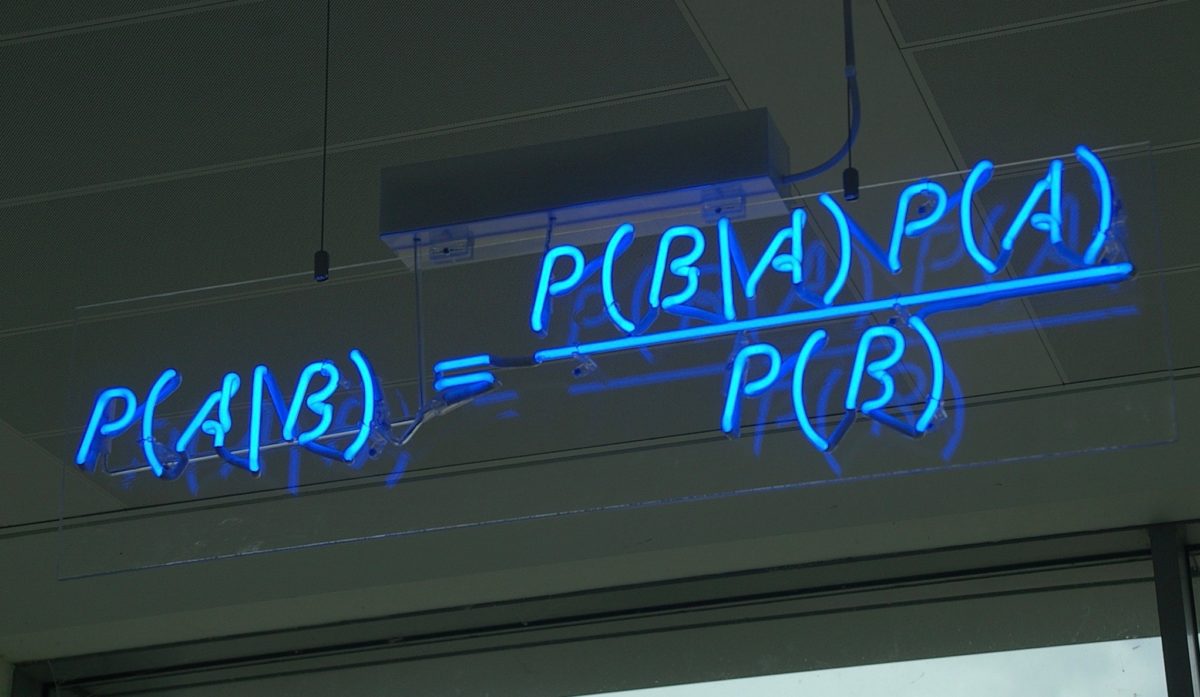
Bayes'-Theorem Type post Author Jonathan McLatchie Date February 11, 2025 CategoriesBiologyEvolutionFine-tuningIntelligent Design Tagged , atheism, Bayes factor, Bayes’s theorem, Bayesian reasoning, biological design, environmental fitness, Evolution News, ID the Future, intelligent design, physical constants, plausibility, podcast, prior probability, probabilities, theism When Building Our Case for Intelligent Design, How Should We Think About Prior Probability? Jonathan McLatchie February 11, 2025 Biology, Evolution, Fine-tuning, Intelligent Design 4 Bayes’s theorem is a tool for modeling our evaluation of evidences to appropriately apportion the confidence in our conclusions to the strength of the evidence. Read More ›
Covid Type post Author Wesley J. Smith Date August 29, 2023 CategoriesBioethicsMedicineMetascienceScientific FreedomScientific Trustworthiness Tagged , Anthony Fauci, censorship, COVID-19, embryonic stem cells, evidence-based medicine, Francis Collins, gender-affirming care, Great Barrington Declaration, Harvard University, ideology, medical establishment, medicine, Oxford University, p-hacking, plausibility, Politics, scientism, Stanford University, The Lancet, trust, Vaccines Shift from “Evidence-Based” to “Science-Based” Medicine Would Stifle Debate Wesley J. Smith August 29, 2023 Bioethics, Medicine, Metascience, Scientific Freedom, Scientific Trustworthiness 7 Trust must be earned, not imposed. Information gatekeepers can be wrong. The danger of censorship in the name of “science” is growing. Read More ›
origin of life Type post Date January 7, 2019 CategoriesEvolutionOrigin of Life Tagged , __k-review, ATP, Charles Darwin, chemical evolution, chirality, Darwinism, DNA, early Earth, enzymes, Georgia Tech, Joseph Hooker, Leslie Orgel, Nature Communications, nucleotides, plausibility, polymers, RNA, Steven Benner, Susan Mazur Latest Acts in the Origin-of-Life Circus Science & Culture January 7, 2019 Evolution, Origin of Life 12 Leading lights in origin-of-life research share their work and thoughts in a series of open-access articles about chemical evolution. Read More ›
Type post Author David Klinghoffer Date April 28, 2016 CategoriesEvolutionZoology Tagged , __tedited, Africa, biodiversity, biogeography, biological origins, circular causality, evolutionary assumptions, foxes, land mammals, monkeys, navigation, ocean, plausibility, rafting, rafting animals, scientific reasoning, Sherlock Holmes, South America, vegetation The Curious Incident of the Non-Rafting Foxes David Klinghoffer April 28, 2016 Evolution, Zoology 8 It should be the facts that drive startling conclusions, not the theory that's supposed to explain the facts. Read More ›