polar bear Type post Author Jonathan McLatchie Date June 28, 2023 CategoriesBiologyEvolutionIntelligent Design Tagged , adaptive mutations, Africa, Darwin Devolves, Dave Farina, de novo genes, evolution, evolutionary change, evolutionary theory, François Jacob, genes, hemoglobin, intelligent design, Long Term Evolution Experiment, malaria, Michael Behe, Nathan Lents, New York City, non-coding DNA, Professor Dave Explains, Richard Lenski, The Edge of Evolution, YouTubers Answering Farina on Behe’s Work: Darwin Devolves Jonathan McLatchie June 28, 2023 Biology, Evolution, Intelligent Design 9 Despite Mr. Farina’s smug condescension and patronizing demeanor, he fails to mount a credible critique of Dr. Behe’s thesis. Read More ›
sunflowers 2 Type post Date July 30, 2020 CategoriesEvolution Tagged , adaptive mutations, biologists, bioRxiv, E. coli, evolution, hybridization, intelligent design, natural selection, Nature (journal), Neo-Darwinism, paleobiology, peer review, Proceedings of the National Academy of Sciences, punctuated equilibrium, random mutations, redundancy, Scopes Monkey Trial, stem cells, Stephen Jay Gould, sunflowers, University of British Columbia, University of Southern California Five New Biology Papers Show Cracks in Darwin’s Foundation Science & Culture July 30, 2020 Evolution 8 Are there rumblings of discontent? Is it getting safer to question the claims of conventional neo-Darwinism? Read More ›
budding yeast Type post Author Ann Gauger Date November 26, 2018 CategoriesEvolution Tagged , __cedited, adaptive mutations, ants, bacteria, bacteriophages, BioEssays, Cell (journal), cetaceans, Darwin Devolves, Darwin's Black Box, deletions, Eugene Koonin, evolution, First Rule of Adaptive Evolution, geneticists, horizontal gene transfer, insertions, loss-of-function mutations, Michael Behe, mutations, polar bears, The Edge of Evolution, The Quarterly Review of Biology, viruses Bacteriophages, Budding Yeast, and Behe’s Vindication Ann Gauger November 26, 2018 Evolution 9 It’s been known for some time that bacteria evade antibiotics by mutating the target of the antibiotic, often at a cost to themselves. Read More ›
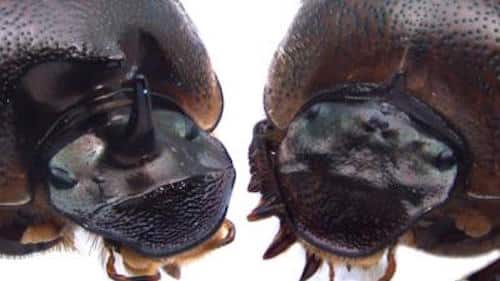
creatures Type post Author David Klinghoffer Date August 23, 2016 CategoriesEvolutionIntelligent Design Tagged , __cedited, adaptive mutations, beetles, evolution, Research, science, unguided evolution “Cyclops” Beetle Offers “Solution” to Evolutionary Problem that Wasn’t Supposed to Be There David Klinghoffer August 23, 2016 Evolution, Intelligent Design 4 Evolution is beset by chicken-and-egg problems: How to get A and B when A requires B and B requires A? Read More ›
giraffe Type post Author William A. Dembski Date June 22, 2016 CategoriesEvolutionIntelligent Design Tagged , __cedited, adaptive mutations, Irreducible Complexity, Nature, Science The Challenge of Adaptational Packages William A. Dembski June 22, 2016 Evolution, Intelligent Design 11 To generate an adaptational package requires not piecemeal change but integrated, systematic change. Read More ›
Type post Author Michael Behe Date May 12, 2016 CategoriesEvolutionGeneticsScience Reporting Tagged , __tedited, adaptive mutations, Barry Hall, citrate, contingency, dishonesty, E. coli, Elizabeth Pennisi, epigenetic change, genetic changes, hype, loss-of-function mutations, LTEE, media, motivated reasoning, peer review, public opinion, Richard Lenski, science journalism, Science News, science reporting, Scott Minnich, speciation Richard Lenski and Citrate Hype — Now Deflated Michael Behe May 12, 2016 Evolution, Genetics, Science Reporting 8 For more than 25 years, Lenski's lab has grown a dozen lines of the bacterium E. coli in small culture flasks. Read More ›
Type post Author David Klinghoffer Date March 23, 2016 CategoriesEvolutionIntelligent Design Tagged , __cedited, __image, adaptive mutations, Conversations with Michael Denton, intelligent design, science, video Non-Adaptive Order and Intelligent Design David Klinghoffer March 23, 2016 Evolution, Intelligent Design 2 In a video conversation welcoming his new book, Michael Denton asks whether a deadly challenge to Darwinism poses the same problem for ID. Read More ›