






































This is hardly what evolutionary theory would lead us to expect. At Phys.org, we learn an astonishing thing from prehistory: “Even ancient bacteria possessed intercellular communication structures like humans today, study finds.”
Higher eukaryotic cells — i.e., cells with a nucleus, such as those found in humans and all higher animals — possess structures that connect neighboring cells. It is known that, among other things, these structures facilitate fundamental communication processes between cells; without them, tissues such as the human heart could not function. Furthermore, nerve cells transmit the signals that control our bodies via these connecting structures. These structures and communication between cells are regulated through the exchange of calcium ions (Ca² ).
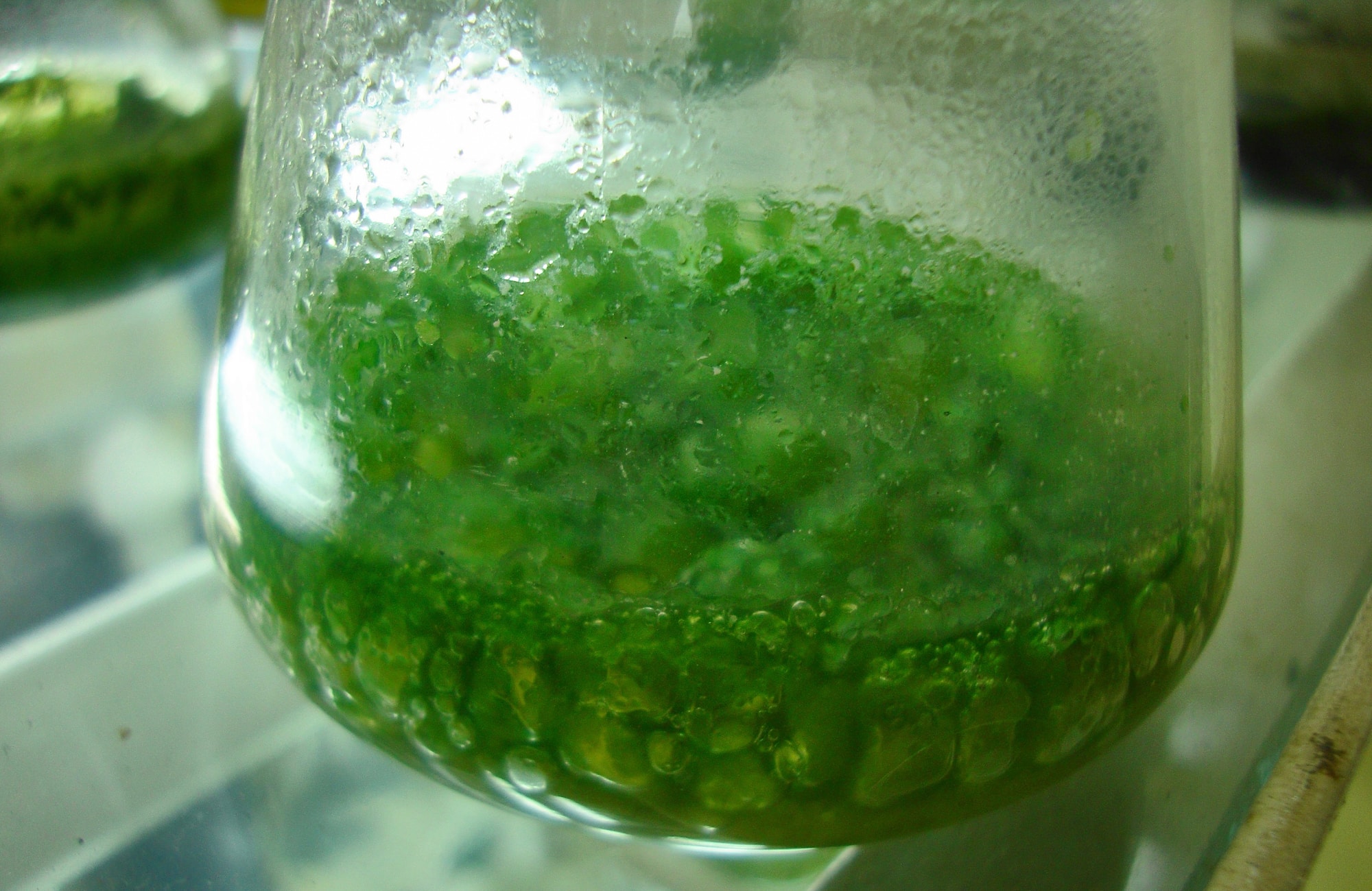
The research group from the Institute of Phototrophic Microbiology led by Junior Professor Dr. Khaled Selim has now discovered that similar communication processes and connecting structures in bacteria are also regulated by calcium signals. Bacteria, however, are simpler cells that lack a nucleus, so-called prokaryotes.
Researchers Recognize the Paradox
From Dr. Selim, “It came as a big surprise to us that one of the earliest life forms on Earth — evolutionarily older and simpler cells — had already developed communication structures regulated by calcium signals similar to those found in the cells of higher organisms, such as animals and humans.”
Clearly, the “simpler cells” aren’t as simple as researchers have supposed. And that raises the question that keeps coming up: If the development of complex cellular systems can be accounted for by natural selection acting on random mutation — that is, by orthodox evolution doctrine — was there really enough time for these older, simpler cells to develop it?
How much time is needed for purely random events to suddenly “click” so as to enable a complex communications structure?
For Now, the Talk Is of “New Insights”
It’s not a question researchers appear eager to ask directly:
Selim emphasizes, “Our research offers new insights into evolution. It suggests that the functional principles of higher organisms were already present in simple, multicellular bacteria that form tissue-like structures, meaning that these cellular connections date back a billion years — before the time when the evolutionary lineages of eukaryotes and prokaryotes diverged.”
Multicellular cyanobacteria have evolved sophisticated cell–cell communication machinery to exchange, synchronize, and coordinate the efforts of individual cells… Furthermore, these findings highlight calcium signaling as a conserved principle for regulating cellular junctions in organisms that diverged a billion years ago.
If life got started 3.5 billion years ago and cyanobacteria followed at 2.5 billion years ago, that’s now just 1 billion years for all the apparatus to hit on the lucky combination randomly.
Unless, of course, we start with certain underlying design principles in the universe.
Cross-posted at Mind Matters.