






































In four previous articles (find the full series here), I replied to YouTuber Dave Farina’s response to my defenses of biochemist Michael Behe’s work. In this fifth installment, I will engage with Farina’s critique of my comments on The Edge of Evolution.
Shifting Fitness Landscapes
Farina comments,
Moving on to number three, we go from Behe’s first garbage book, Darwin’s Black Box, to his second garbage book, The Edge of Evolution, and Jonny doesn’t do any better here. Remember that tactic from a minute ago, where he just repeats the critique, and then follows it with something completely unrelated? He does that again here. He quotes my explanation for how Behe butchers the concept of fitness landscapes, and then responds with this: “But for many complex adaptations, such as those described in Behe’s books, a fitness benefit is not realized until multiple co-dependent mutations have arisen.”
That is exactly what both Behe and Jonny get wrong about this. That sentence is only true if the fitness landscape doesn’t change.
While Farina’s point about shifting fitness landscapes is valid when discussing changing environments (what is disadvantageous in one environment might be beneficial in another), it does not refute Behe’s argument. Of course, fitness landscapes can change. However, for many complex features, adaptations require multiple coordinated mutations, even in dynamic environments. Farina essentially admits this when (as we saw in my second post) he argues that there were multiple neutral potentiating mutations required to evolve the Cit+ phenotype. He was wrong in that case to claim that the potentiating mutations were required for the Cit+ trait, but the point is Farina knows that there can be cases where multiple mutations are necessary before you gain any advantage. Thus, even Farina knows that Behe’s framing is not invalid.
Farina states,
For example, if a mutation makes an enzyme less stable, then it may become compatible with different substrates, since its structure will be more flexible. In an environment with only one target molecule, this would then be harmful. But if a second target becomes available, meaning if the fitness landscape changes, then that mutation may be beneficial under the new conditions. Pretty easy to grasp, huh? Just a quick reminder, Jonny has a doctorate in evolutionary biology. There’s no way he doesn’t understand this. He’s shilling for the DI for cash.
But in order for a complex feature that requires multiple specific co-dependent mutations, the landscape must change in precisely the right way at the right time — after the realization of the first mutation but before it is lost to genetic drift or purifying selection. And the same thing must happen again after the second mutation. And so on.
Vpu Revisited
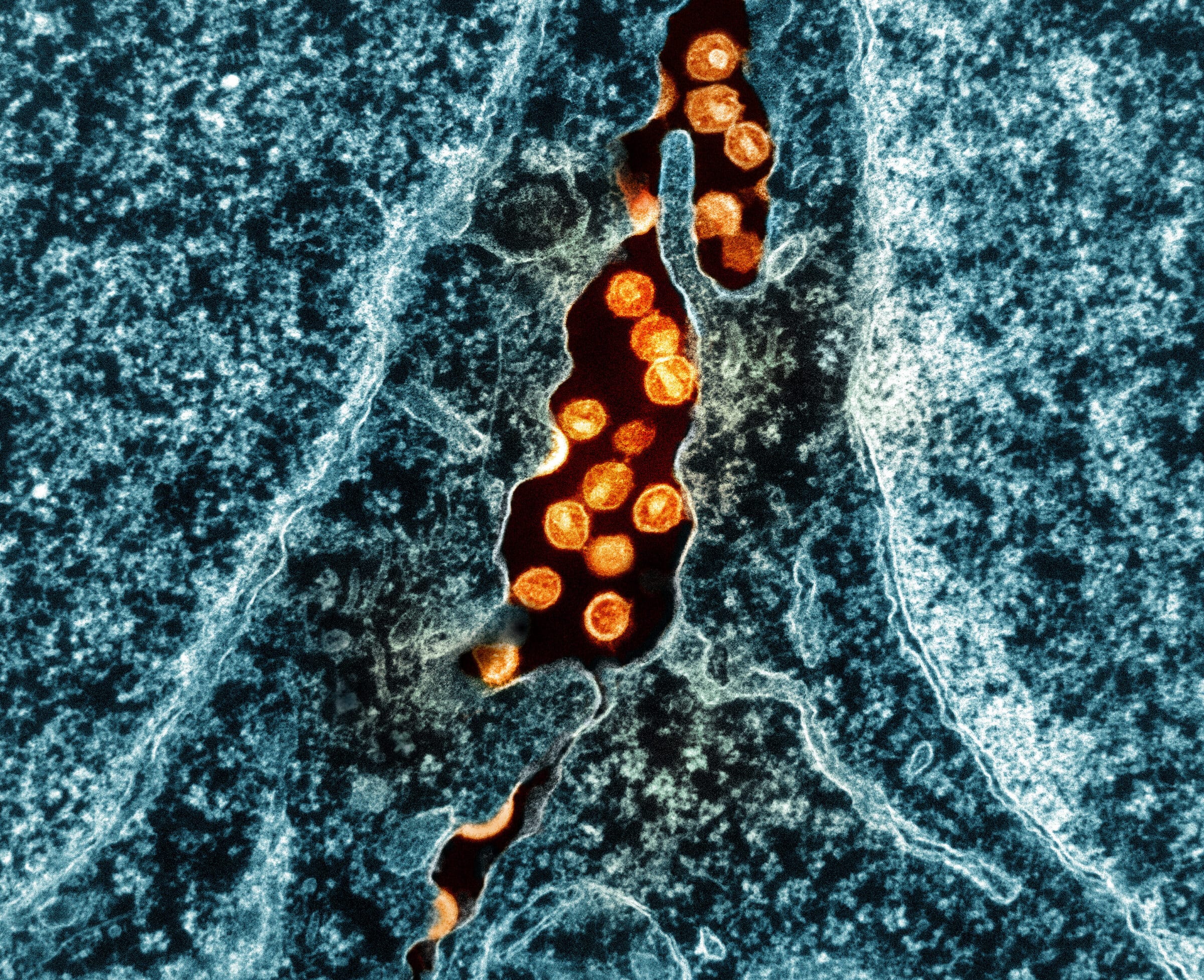
In my original article, I had noted that Farina cited the Vpu example as a counterexample to Behe’s claim concerning HIV that “there have been no significant basic biological changes in the virus at all” and “there have been no reports of new viral protein-protein interactions developing in an infected cell due to mutations in HIV proteins.” As Behe acknowledged years ago, this was in fact one example he had previously overlooked. I noted that this does not significantly impact Behe’s central thesis, since one may modify the statement to assert that “There have been hardly any reports…” Farina responds, “It’s actually pretty great that he admits this, because the difference between ‘none’ and ‘hardly any’ is the difference between Behe being right and Behe being full of sh*t.”
To my knowledge, this is the only instance that may be cited as a counterexample to Behe’s claim (if Farina or anyone else knows of another counterexample, then I would be interested to see it). This is particularly striking given how extensively studied and well characterized the HIV virus is. Since the 1980s, tens of thousands of scientific papers have been published on the HIV virus, and hundreds of thousands of HIV genomes have been sequenced from patients globally. If evolution is capable of producing complex molecular interactions, the place where we would most expect to find them is in viruses like HIV, with their massive population sizes, fast mutation rates, and rapid generation time. If it is difficult even in HIV to evolve a new protein-protein binding site, all the more is it a problem when it comes to bacteria and simple eukaryotes, let alone more complex organisms like mammals!
In the final installment in this series, I will engage with Farina’s critique of Behe’s most recent book, Darwin Devolves.