







































Recently I was grateful for the opportunity to speak at an ID conference in Budapest — which, by the way, is a beautiful city. That’s the Hungarian Parliament Building at the top, with the Danube in the foreground.
The meeting was titled “Intelligent Design: A Lively Scientific Conference.” And it really was lively! It was sponsored by ERTEM, a Hungarian ID group whose name has double meanings — it can be translated as “I Understand” or it can serve as an acronym in Hungarian for “Intelligent Design Movement.”
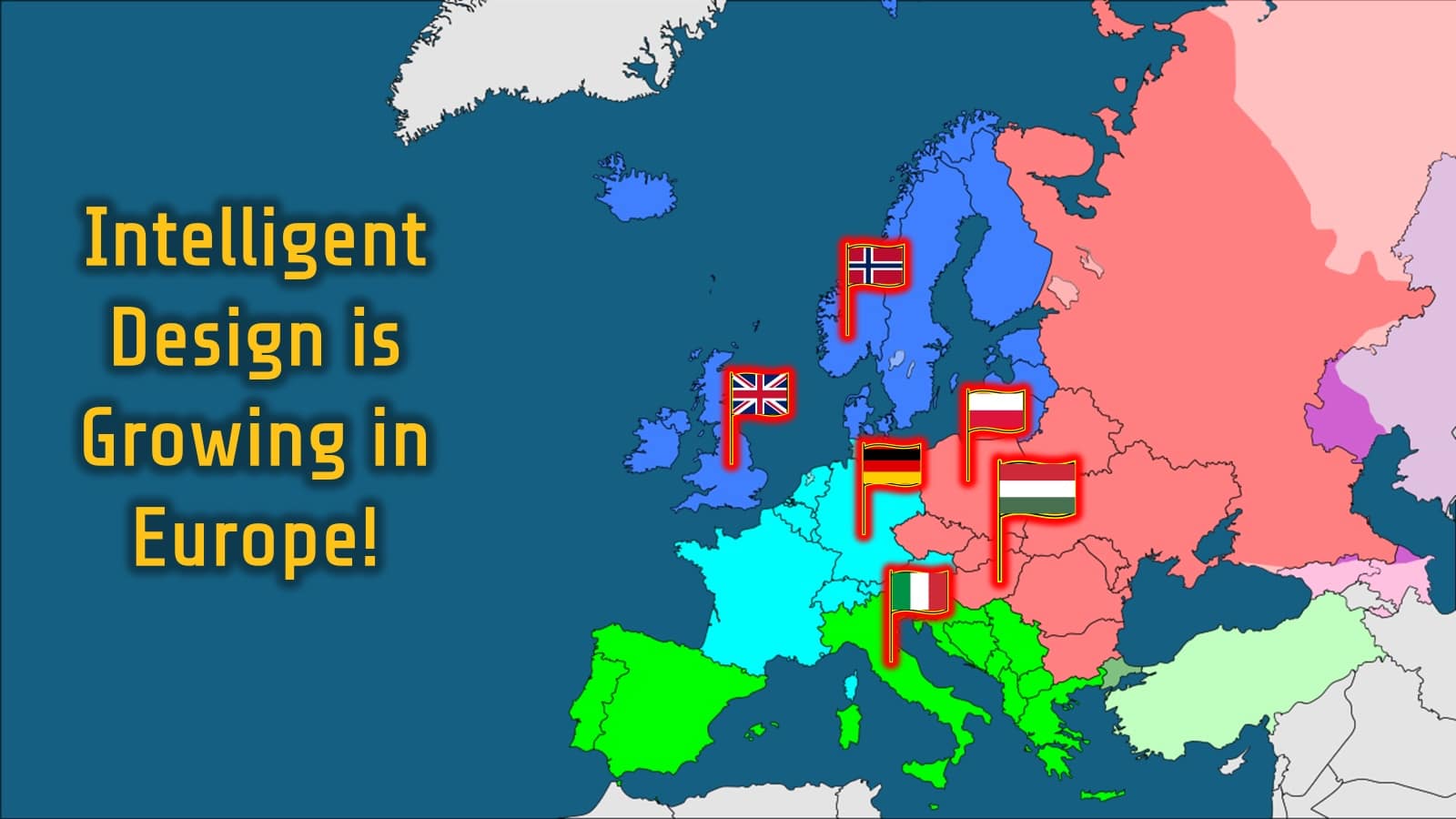
The conference was highly encouraging because it reflects how ID is growing in multiple countries across Europe. In fact, in my talk I displayed a slide showing six European countries with active ID groups — the UK, Poland, Norway, Italy, Germany, and Hungary:
Updates from ID Research
The conference felt like an ID seminar you could attend in the U.S. or anywhere. A biology teacher and theologian opened with a philosophical talk on the implications of Darwinism vs ID. A PhD chemical engineer spoke on information in biology and the origin of life. I then spoke on updates from the ID research program.
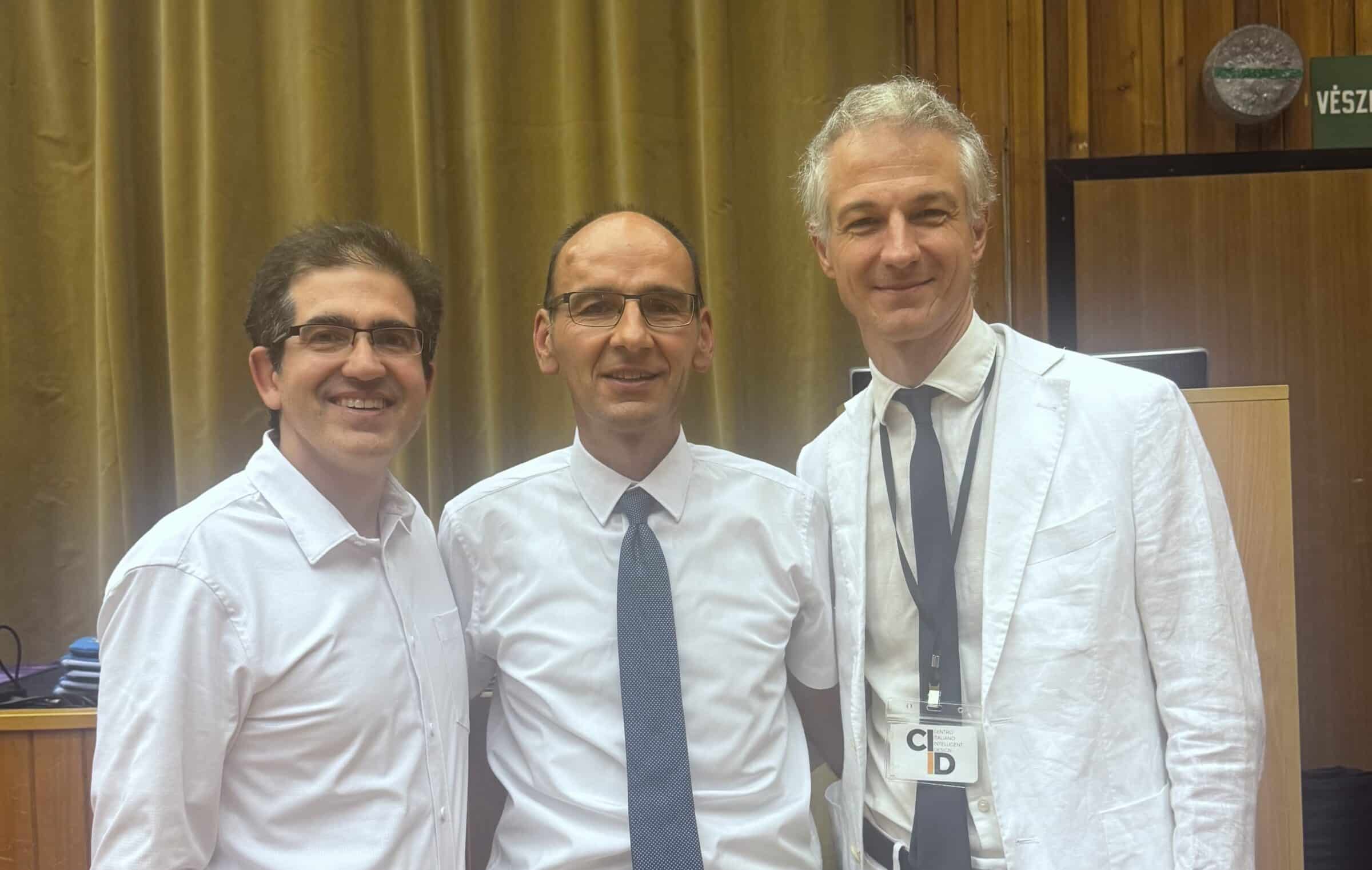
Following me was Carlo Alberto Cossano, head of the Italian ID group, CIID. He is a software programmer who told his personal story of getting into ID after recognizing computer-like aspects of cells. Then we heard a talk from a PhD cultural anthropologist about animal behaviors and whether they could have evolved in the absence of design. Finally, a medical doctor spoke on the complexity of cells, proteins, and the origin of life, citing Doug Axe’s research and pointing out that getting a single functional beta-lactase protein by chance would require a pile of proteins that would outweigh the earth! Three of the lectures were from graduates of our intelligent design student seminars. Here I am with a couple of them, Lehel and Carlo, the leaders of ID groups in Hungary and Italy, respectively:
The title of my talk was “On the Successful Research Program of Intelligent Design.”
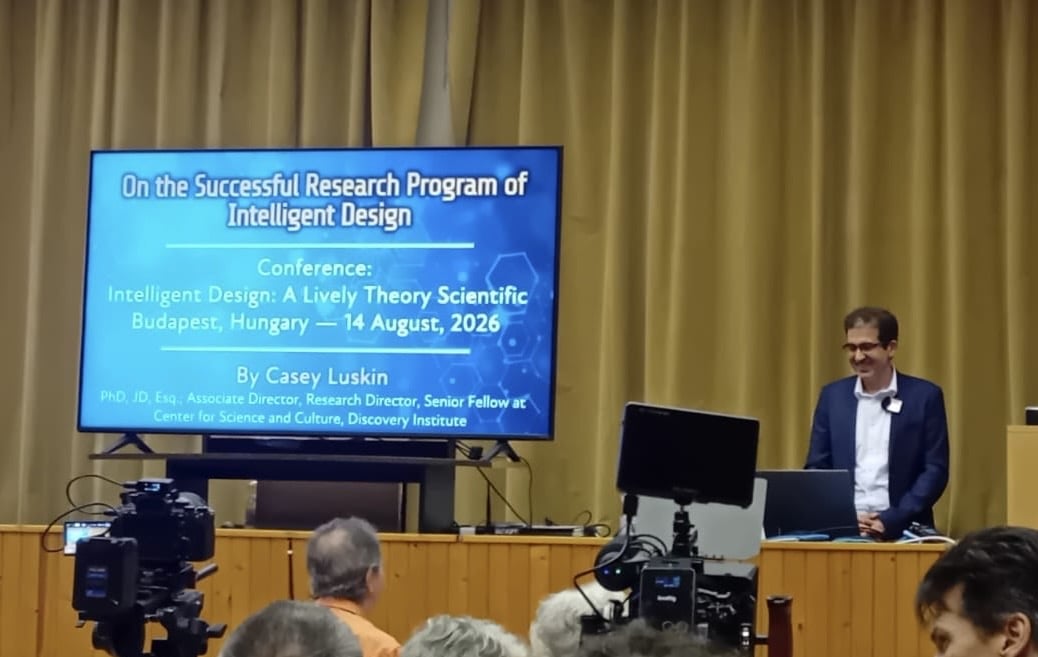
I started with a brief explanation of what ID theory is and how it works and then went through about a dozen examples of ID research, divided into six categories:
- Molecular machines
- Proteins, DNA, and other biopolymers
- The “Unexpected Genome”
- Biomedicine
- Engineering in biology
- Human origins
A Unique Language
The talk was well received, and afterwards I had conversations with local students, scientists, and others who were interested in ID. Hungarian is a unique language which made things a bit challenging as my talk had to be translated into Hungarian in real time. But even my translator was a graduate-level trained bioinformatician who has a very good understanding of orphan genes and intrinsically disordered proteins.
Suffice to say that there is a diverse and highly competent group of folks advancing ID in Hungary, part of broader trends we’ve seen in recent years with interest in ID growing across Europe. We’re very excited about these developments and hope to stay involved in the future.