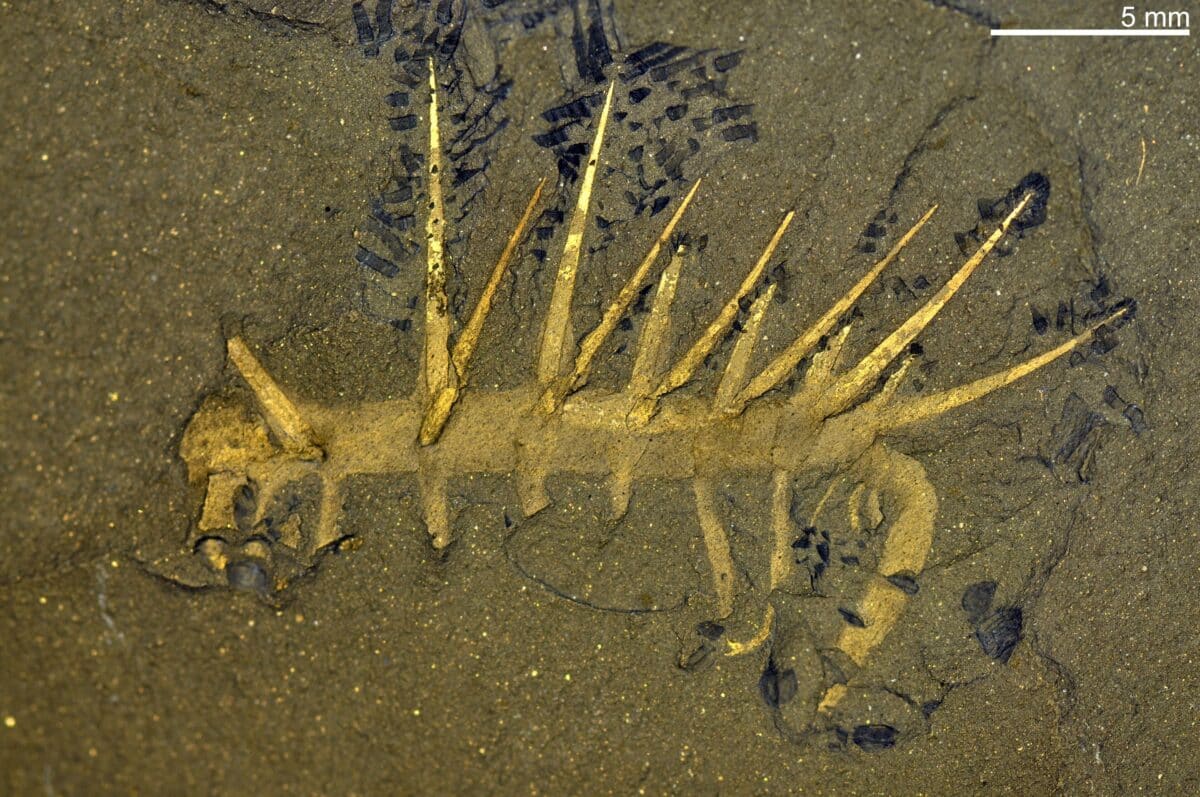
USNMPAL83935HallucigeniasparsaImage2 Type post Author David Coppedge Date June 5, 2026 CategoriesEvolutionIntelligent DesignPaleontology Tagged , bioRxiv, Bright Angel Shale, Burgess Shale, Cambrian Explosion, Cambrian News, Canadian Rockies, chelicerates, China, compound eyes, cosmos, Current Biology, Darwin's Dilemma, Douglas Axe, Ediacaran strata, fossil record, Grand Canyon, Hallucigenia, Illustra Media, Intelligent Design Collection, jellyfish, Jerry Harned, Jonathan Wells, Lad Allen, marine worms, Mark Edward Lewis, mites, Nature (journal), New York Times, olfactory organs, paleontology, Paul Nelson, PNAS, polychaetes, priapulids, Richard Sternberg, salmon, Science Advances, Science and Culture Today, scorpions, South Australia, spiders, stars, Stephen Meyer, The Origin of Species, The Privileged Planet, trilobites, Unlocking the Mystery of Life, Utah Cambrian Explosion Remains the Gift that Keeps on Giving David Coppedge June 5, 2026 Evolution, Intelligent Design, Paleontology 7 These representative papers show that the Cambrian Explosion remains a huge enigma for evolutionists. Read More ›
Samuel_Wilberforce_1805-George-Richmond Type post Author Rt. Revd. Samuel Wilberforce Date April 7, 2025 CategoriesBotanyEvolutionHistory of ScienceIntelligent Design Tagged , algae, animals, cats, Charles Darwin, Charles Lyell, descendants, Dogs, elephants, England, flies, grasses, Jean-Baptiste Lamarck, Joseph Hooker, Lucretius, mites, mosses, mushrooms, natural history, natural selection, On the Origin of Species, propositions, Quarterly Review, reasoning, Thomas Henry Huxley, variations, whales, worms “Into the Jungle of Fanciful Assumption”: Excerpts from Samuel Wilberforce on Darwin Rt. Revd. Samuel Wilberforce April 7, 2025 Botany, Evolution, History of Science, Intelligent Design 27 "We have objected to the views with which we have been dealing solely on scientific grounds." Read More ›
shower Type post Date January 2, 2021 CategoriesBiologyIntelligent DesignMedicine Tagged , agriculture, asteroids, Cyanobacteria, Darwinists, ecosystems, Elizabeth Pennisi, fungi, intelligent design, Mars, microbes, microbiome, mites, Nature (journal), nematode, pathogens, protists, skin, soil, springtails, tardigrades, Yale University Frontiers of ID: Microscopic Ecologies Science & Culture January 2, 2021 Biology, Intelligent Design, Medicine 8 Public health lecturer James Hamblin at Yale decided to go without showers — for five years! Read More ›
Red-pea gall Type post Author Wolf-Ekkehard Lönnig Date December 14, 2020 CategoriesAnatomyBotanyLife Sciences Tagged , bacteria, Carl Linnaeus, Charles Darwin, Darwinism, evolution, ferns, fungi, Hippocrates, history, mites, morphology, natural selection, nematodes, plant galls, Rutgers University, viruses Plant Galls and Evolution: A Neglected Study Wolf-Ekkehard Lönnig December 14, 2020 Anatomy, Botany, Life Sciences 5 In my new contribution, I restrict myself to important facets of the historical side of plant gall research. Read More ›
Tachypleus_gigas Type post Date June 8, 2020 CategoriesIntelligent Design Tagged , American Chemical Society, arachnids, Australia, cancer, horseshoe crabs, mites, Nature Communications, scorpions, spiders, toxins, University of Melbourne, University of Queensland Make Like a Scorpion, and Other Arachnid Designs Science & Culture June 8, 2020 Intelligent Design 9 Long shunned for their bites and toxins, arachnids are gaining respect for biomimetic inspiration. Read More ›