Science and Culture Today Discovering Design in Nature
Topic

Conservation of Information

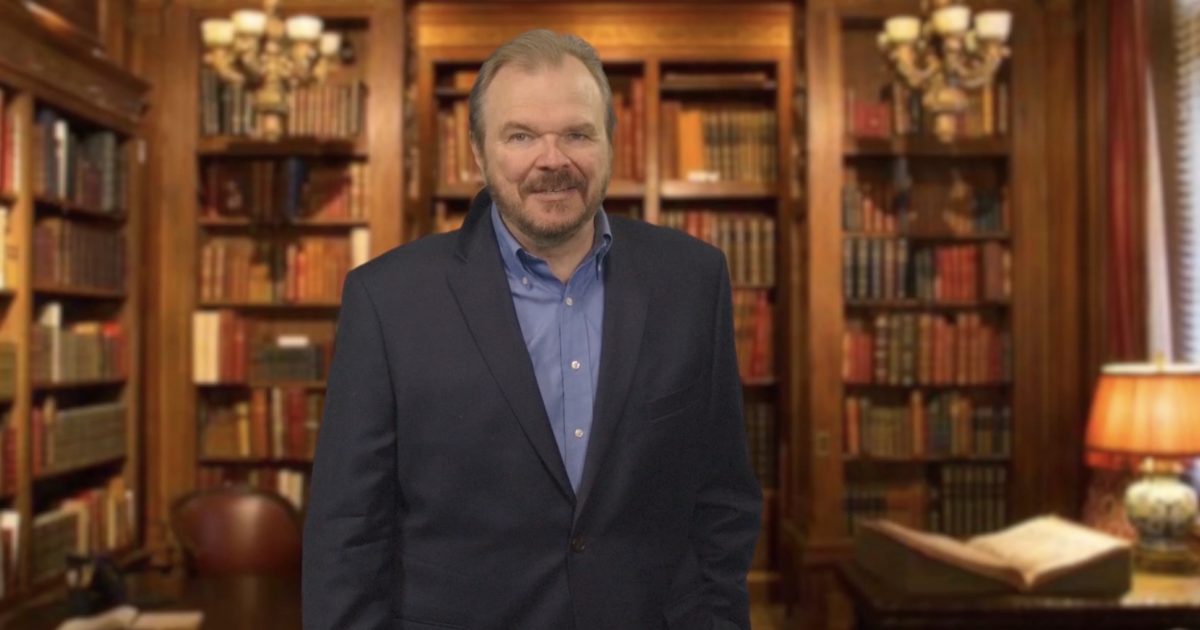
Robert J. Marks
Photo: Robert J. Marks, via Discovery Institute.

Study Evolution’s Information Problem with Engineer Robert Marks — and Save Over 50 Percent!

How does information theory challenge Darwinian evolution? And how can the methods of probability be used to assess key evolutionary claims? Read More ›
Big Bang
Image source: spirit111, via Pixabay.

Bernoulli, Keynes, and the Big Bang

In analysis of fine-tuning, No Free Lunch Theorems, and conservation of information, Bernoulli’s PrOIR is foundational. Read More ›
How_proteins_are_made_NSF

The Information Enigma: Going Deeper

To provide a deeper understanding of the theoretical underpinnings of information-based arguments, I will delve into the underlying mathematics. Read More ›
Swamidass Axe 2

Retirement ≠ Repudiation

My position here hasn’t changed. I’ve beefed up specified complexity and developed it further over the years. Read More ›
Claude Shannon
information theory
Photo: Claude Shannon, by DobriZheglov [CC BY-SA 4.0], via Wikimedia Commons.

Trends in Philosophy of Science: What Does “Semantic Information” Mean?
Theorists hope to alleviate a deficiency in Shannon information theory, which dealt only with the structure of a communication, not its semantics. Read More ›
Coquina_variation3

Population Genetics: What It Is and Why It Matters
Some have claimed that for humans the coalescence to one (or first coalescent) does not happen for well over a million years back in time, calling into question the idea of a single-couple human origin. Read More ›
robot
Cambrian explosion
Image credit: EinGefangenerMoment, via Pixabay.

A Cambrian Explosion…of Robots?

According to Wired, a new epoch has begun, and it is driven by intelligent design. Read More ›
bee and flower

Conservation of Information and Coevolution: New BIO-Complexity Article by Ewert and Marks

Biologists often claim that coevolutionary interactions, as with bees and flowers, can alter the fitness landscape to drive evolutionary changes. Read More ›
bill-with-american-dollars-on-table-stockpack-adobe-stock-76595814-stockpack-adobestock
Bill With American Dollars On Table
Image Credit: Andrey Popov - Adobe Stock

William Dembski and Robert Marks Publish (Another) Peer-Reviewed Scientific Paper Supporting No Free Lunch Theorems

A peer-reviewed scientific paper published in 2010 by William Dembski and Robert Marks of the Evolutionary Informatics Lab supports no free lunch theorems. Published in Journal of Advanced Computational Intelligence and Intelligent Informatics and titled “The Search for a Search: Measuring the Information Cost of Higher Level Search,” the paper’s abstract states that unless one has information about a target, search engines often fail: “Needle-in-the-haystack problems look for small targets in large spaces. In such cases, blind search stands no hope of success.” Their principle of Conservation of Information holds that “any search technique will work, on average, as well as blind search.” However, in such a case “[s]uccess requires an assisted search. But whence the assistance required for a Read More ›

in-silico-drug-modeling-with-3d-molecule-visualisation-on-co-1064730310-stockpack-adobestock
In Silico Drug Modeling with 3D Molecule Visualisation on Computer Screen Close up of Scientist s Hands Manipulating Complex Molecule Model with Background of Floating Graphs and Chemical Data
Image Credit: Intelligent Horizons - Adobe Stock

Winston Ewert, William Dembski, and Robert Marks Publish Mainstream Scientific Paper Exposing Flaws in Avida Evolution Simulation

Darwinian evolution has no prior knowledge about the search target, but Avida's programmers have intelligently designed Avida by smuggling in "active information." Read More ›

© Discovery Institute