
Science and Culture Today Discovering Design in Nature
Topic

search

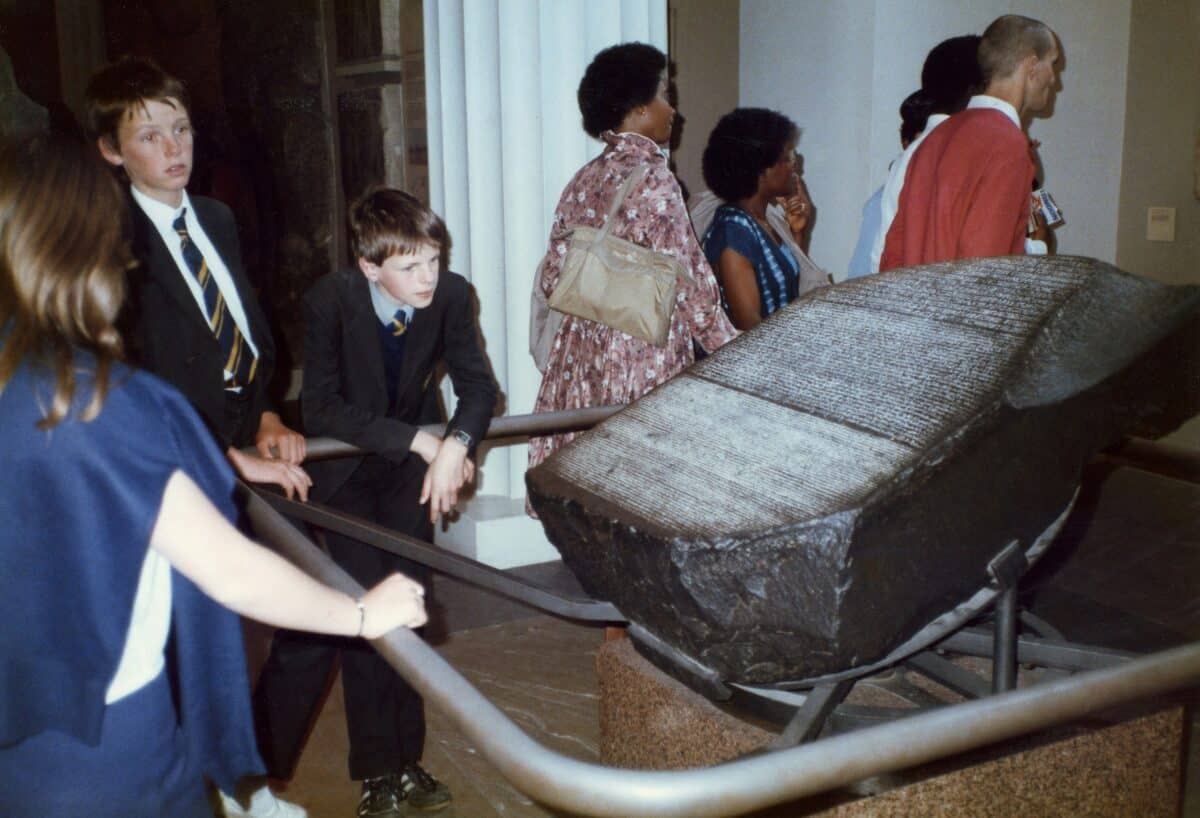
2560px-Rosetta-stone-display-in-1985
Photo: Rosetta Stone, by RickDikeman, CC0, via Wikimedia Commons.

Conservation of Information: The History of an Idea

Conservation of information” is a term that appears in both the physics and the computer science literature. Read More ›
weasel
Photo: METHINKS IT IS LIKE A WEASEL, by loren chapman, via Flickr (cropped).

Conservation of Information — The Theorems
We’ve seen active information before in the Dawkins Weasel example. The baseline search for METHINKS IT IS LIKE A WEASEL stands no hope of success. Read More ›
Charles Darwin
Charles Darwin
Photo: Charles Darwin in 1855, by Maull and Polyblank, Literary and Scientific Portrait Club, via Wikimedia Commons.

Axe: Why “No Free Lunch” for Darwin?

That there is a design to life is intuitive, but most of us, if challenged on it, would want to be able to defend our intuition persuasively. Read More ›
david-clode-swtg-ahmGzY-unsplash

No Escape from Intelligent Design: Brian Miller Explores Coevolution

“Coevolutionary processes cannot drive macroevolution,” explains Dr. Miller. “Again it requires intelligent design.” Read More ›
David Baker

On Protein Design, Don’t Be Fooled by Biochemist David Baker’s Claim

If designing proteins is difficult for us, it is great big wall for random bumbly evolution. Read More ›
chessboard

Top Ten Questions and Objections to Introduction to Evolutionary Informatics

An evolutionary program whose goal is to master chess will never evolve further and offer investment advice. Read More ›
bill-with-american-dollars-on-table-stockpack-adobe-stock-76595814-stockpack-adobestock
Bill With American Dollars On Table
Image Credit: Andrey Popov - Adobe Stock

William Dembski and Robert Marks Publish (Another) Peer-Reviewed Scientific Paper Supporting No Free Lunch Theorems

A peer-reviewed scientific paper published in 2010 by William Dembski and Robert Marks of the Evolutionary Informatics Lab supports no free lunch theorems. Published in Journal of Advanced Computational Intelligence and Intelligent Informatics and titled “The Search for a Search: Measuring the Information Cost of Higher Level Search,” the paper’s abstract states that unless one has information about a target, search engines often fail: “Needle-in-the-haystack problems look for small targets in large spaces. In such cases, blind search stands no hope of success.” Their principle of Conservation of Information holds that “any search technique will work, on average, as well as blind search.” However, in such a case “[s]uccess requires an assisted search. But whence the assistance required for a Read More ›

in-silico-drug-modeling-with-3d-molecule-visualisation-on-co-1064730310-stockpack-adobestock
In Silico Drug Modeling with 3D Molecule Visualisation on Computer Screen Close up of Scientist s Hands Manipulating Complex Molecule Model with Background of Floating Graphs and Chemical Data
Image Credit: Intelligent Horizons - Adobe Stock

Winston Ewert, William Dembski, and Robert Marks Publish Mainstream Scientific Paper Exposing Flaws in Avida Evolution Simulation

Darwinian evolution has no prior knowledge about the search target, but Avida's programmers have intelligently designed Avida by smuggling in "active information." Read More ›
colorful-file-folders-and-books-on-shelves-in-office-stockpa-1274662276-stockpack-adobestock
Colorful file folders and books on shelves in office
Image Credit: afif - Adobe Stock

William Dembski and Robert Marks Publish Mainstream Scientific Paper on Conservation of Information

Is there a "magic bullet" mechanism by which blind and unguided search engines can find rare, isolated targets? Read More ›

© Discovery Institute