































Science and Culture Today Discovering Design in Nature
Topic

philosophy

computer
Photo credit: John Schnobrich via Unsplash.

On Intelligent Design, Is AI Teachable?

Can large language models rise above the biases of sources like Wikipedia to help level the playing field for intelligent design? Read More ›
SydneySweeneyatBerlinale2023
Photo credit: Elena Ternovaja, CC BY-SA 3.0 <https://creativecommons.org/licenses/by-sa/3.0>, via Wikimedia Commons.

With Sydney Sweeney’s “Great Genes,” Plato Exacts His Revenge

If I had no sense of humor whatsoever about the whole thing, I would point out that the nature of “genes” is the subject of a fascinating scientific dispute. Read More ›
Augustine
Photo credit: Armin Kleiner, CC BY-SA 4.0 <https://creativecommons.org/licenses/by-sa/4.0>, via Wikimedia Commons.

An Ancient Argument for the Soul

Sixteen hundred years ago, Augustine tells a friend about a dream a skeptical local doctor had, where a sharp youth asked him some pointed questions. Read More ›
ellipses-mj-a47fe22bef18_0
ellipses geometric simple colors three nexus --chaos 25 --ar 16:9 --sref https://s.mj.run/_5kOl2XYNXE --v 8.2 Job ID: 24e7ecbd-3f85-42ca-afd0-a47fe22bef18
Generated via Midjourney

Plantinga on Where the Conflict Really Lies
Anyone interested in the dialogue between science and religion needs to read Alvin Plantinga's new book. Read More ›
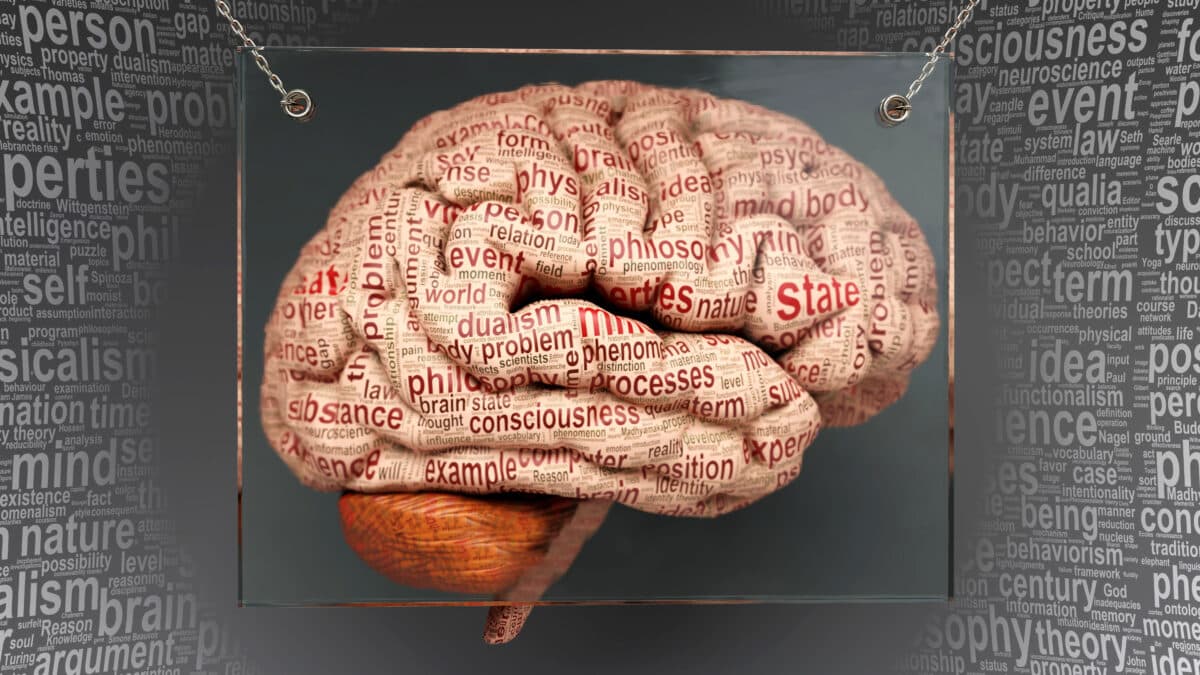
brain
Image credit: GoodIdeas - Adobe Stock

Another Reason to Doubt the Relevance of Jeffrey Shallit

Materialist mathematician Jeffrey Shallit has a post on an article in the Globe and Mail about philosophy and the immateriality of the mind. Shallit’s post is titled “Another Reason to Doubt the Relevance of Philosophy”. Shallit doesn’t think much of philosophy: If philosophers think the view that “The brain is not an organ of consciousness. … The brain has no cognitive powers at all” deserves anything more than a good horselaugh, this simply shows how irrelevant philosophy has become … Our future understanding of cognition will come from neuroscience, not from Wittgenstein. Philosophy is plainly irrelevant to Shallit, which is the problem. Wittgenstein may not inform Dr. Shallit’s understanding of cognition, but Descartes, Kant, Hume, James, Skinner, Block, the Churchlands, Read More ›

© Discovery Institute