






































Science and Culture Today Discovering Design in Nature
Topic

neuroscientists

brain
Photo credit: David Matos via Unsplash.

Can Self-Organization Theory Account for Consciousness?

One difficulty is that many humans produce a “self” with split brains, a brain missing key components, or half a brain. That’s not consistent with materialism. Read More ›
lab mouse
Photo credit: Rama, CC BY-SA 2.0 FR <https://creativecommons.org/licenses/by-sa/2.0/fr/deed.en>, via Wikimedia Commons.

How Brains Use Data Compression to Get Things Right
A recent experiment with mice showed data compression at work when the mice were making decisions about how to get a reward. Read More ›
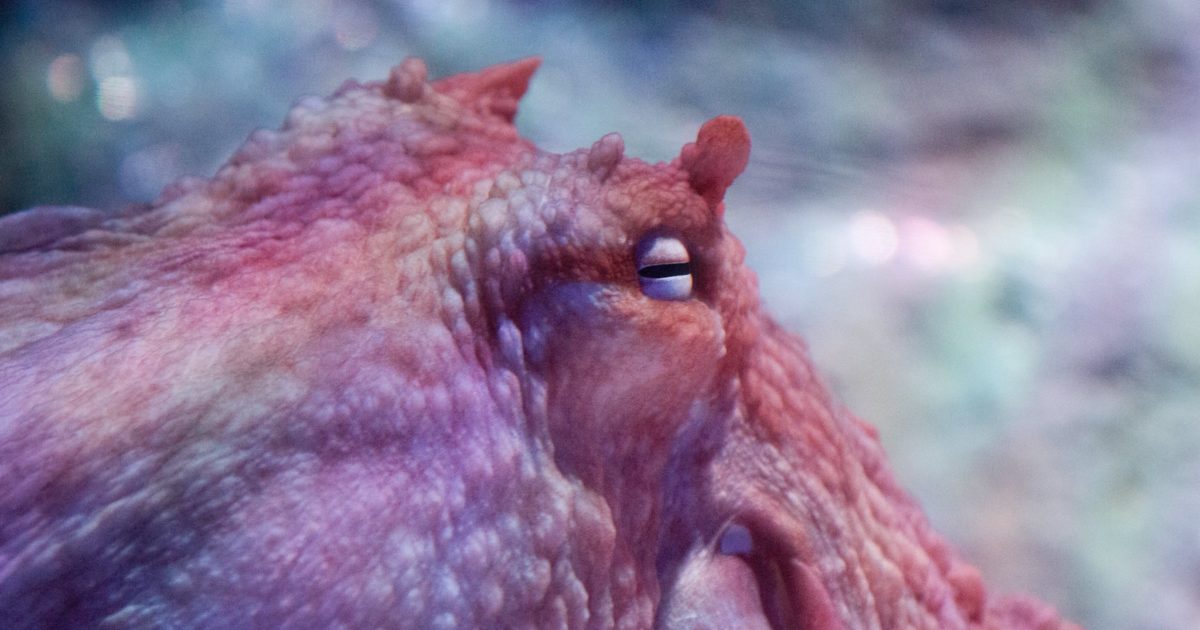
octopus eye
Photo credit: Nathan Rupert, via Flickr (cropped).

Engineering-Based Models Better Explain the Pattern of Nature than Does Common Ancestry

Eyes with lenses are believed to have evolved independently multiple times, but all evolutionary scenarios face insurmountable barriers. Read More ›
human brain
Image credit: Ars Electronica, via Flickr (cropped).

Dualism and Materialism in Modern Neuroscience
Wilder Penfield concluded that free will is not in the brain — it is an immaterial power of the mind.  Read More ›
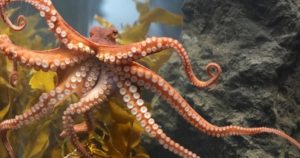
octopus
Photo credit: Pseudopanax at English Wikipedia [Public domain], from Wikimedia Commons.

Octopuses Get Emotional About Pain, Research Shows

The smartest of invertebrates, the octopus, once again prompts us to rethink what we believe to be the origin of intelligence. Read More ›
brain
Photo credit: David Matos via Unsplash.

Why a “Budding” Neuroscientist Is Skeptical of Brain Scans

A major thrust of neuroscience has been the use of fMRI to correlate brain activity with thinking and to draw conclusions about the physical basis of the mind. Read More ›
brain

Stifle Your Nausea: Ready for a Dish-Grown Brain?

"We have already genetically engineered babies, the march toward three- (or more) parent human embryos, and radical proposals for creating novel family forms." Read More ›
the-searcher-belfast
A life-size C.S Lewis statue called The Searcher.

Science, Scientism, and Magic

The scientific culture of the 19th and early 20th century produced three great wizards — Charles Darwin, Karl Marx, and Sigmund Freud. Read More ›
Zeta-Ophiuchi-1

Between Sapientia and Scientia — Michael Aeschliman’s Profound Interpretation

Science, the dominant way of knowing of our age, now finds itself caught between a rock and (very) hard place. Read More ›

© Discovery Institute