







































Science and Culture Today Discovering Design in Nature
Topic

agency

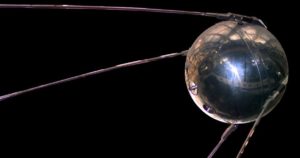
Sputnik 1
chance
Photo: A reproduction of Sputnik 1, an artificial satellite, National Air and Space Museum, by NSSDC, NASA [Public domain], via Wikimedia Commons.

Crying “Chance, Chance” When There Is No Chance

Note the artfully deployed passive voice. One-way traffic “was finally counteracted by the launch of the first artificial satellites.” Who counteracted it? Read More ›
Wilder Penfield
Photo: Wilder Penfield in 1911 as a student at Princeton, by Bain News Service [Public domain], via Wikimedia Commons.

Neurosurgeon Wilder Penfield on Free Will

Materialists claim that neuroscience has demonstrated that free will is an illusion. Read More ›
Scott Turner
Scott Turner

Scott Turner’s Darwin-Skeptical Purpose and Desire Wins Praise from the New York Times

A “notable” addition to the Darwin literature, a “good read and a strong pitch” – agreed, though we’d go further. If Turner is right, his argument would change everything. Read More ›

Radical Environmentalist Admits that Humans Are Exceptional

The New York Times often publishes articles and columns denigrating the idea that human beings have an exceptional status. Read More ›

Neil deGrasse Tyson Says Chances of Intelligently Designed Universe “May Be Very High”

But of course he was referring to the odds that the universe is an artificial computer simulation by advanced aliens. Read More ›
the-very-smart-dog-studying-old-books-in-library-stockpack-a-134696057-stockpack-adobestock
The very smart dog studying old books in library
Image Credit: Igor Normann - Adobe Stock

What Can We Hope to Learn About Animal Minds?

If we can't even define our own consciousness, can we say whether a different type of life form has consciousness or a mind? Read More ›
sign-at-the-railroad-station-at-the-edge-of-the-platform-loo-328615672-stockpack-adobestock
sign at the railroad station at the edge of the platform looking toward the tracks warning you to watch the gap
Image Credit: Rosemarie Mosteller - Adobe Stock

This Weekend in California, Paul Nelson Will Speak on the "God of the Gaps" Challenge and the Explanatory Superiority of Design

You've heard the objection: The theory of intelligent design is nothing but a "God of the Gaps" argument. Read More ›
a-person-walking-on-a-road-that-splits-into-two-paths-one-pa-955355655-stockpack-adobestock
A person walking on a road that splits into two paths one paved with gold and the other leading to an open field, symbolizing life choices, 3D render, deep shadows
Image Credit: Attaphol - Adobe Stock

Jerry Coyne Is Determined to Deny Free Will

The deterministic view is that our choices are entirely determined by our current physical state (neurochemistry, gene expression, etc.) and our natural history. Read More ›

Intelligent Design and the Artist’s Soul (Part 3)

Editor’s Note: This is crossposted at Professor Scot McKnight’s Beliefnet blog, Jesus Creed. The first post in this series is found here, and the second here.

The Origin of Beauty

Benjamin Wiker and Jonathan Witt’s masterful book A Meaningful World: How the Arts and Sciences Reveal the Genius of Nature gives the following illustration of how modern scientific reductionists treat nature and the arts:

Imagine hearing the following account of one of Wolfgang Amadeus Mozart’s symphonies: ‘We have been able to prove that this particular symphony is actually reducible to a series of notes that happen to be played both at the same time in chords and one after another, creating a string of disturbances in the air caused by different frequencies. We realize, of course, that these disturbances cause further disturbances in the audience, due in part to the presence of Earth’s particular atmosphere and in part to the effect such disturbances have on the apparatus of the ear as transmitted by neurons to the brain–so disturbing, in fact, that some break into voluntary tears, remarking that they seemed to be hearing the very harmonies of heaven. Happily, we now know that there is nothing more to Mozart’s work in particular and to music in general than mere notes, themselves reducible to waves disturbing air.’

When Christian intellectuals hear such things, their general response is to think that they can have their Darwinian cake and merely scrape off the reductionist icing. But Darwinism, if I may continue the strained metaphor, is, it turns out, a layered cake with icing all throughout.

Read More ›

© Discovery Institute