Science and Culture Today Discovering Design in Nature
Topic

A Fortunate Universe
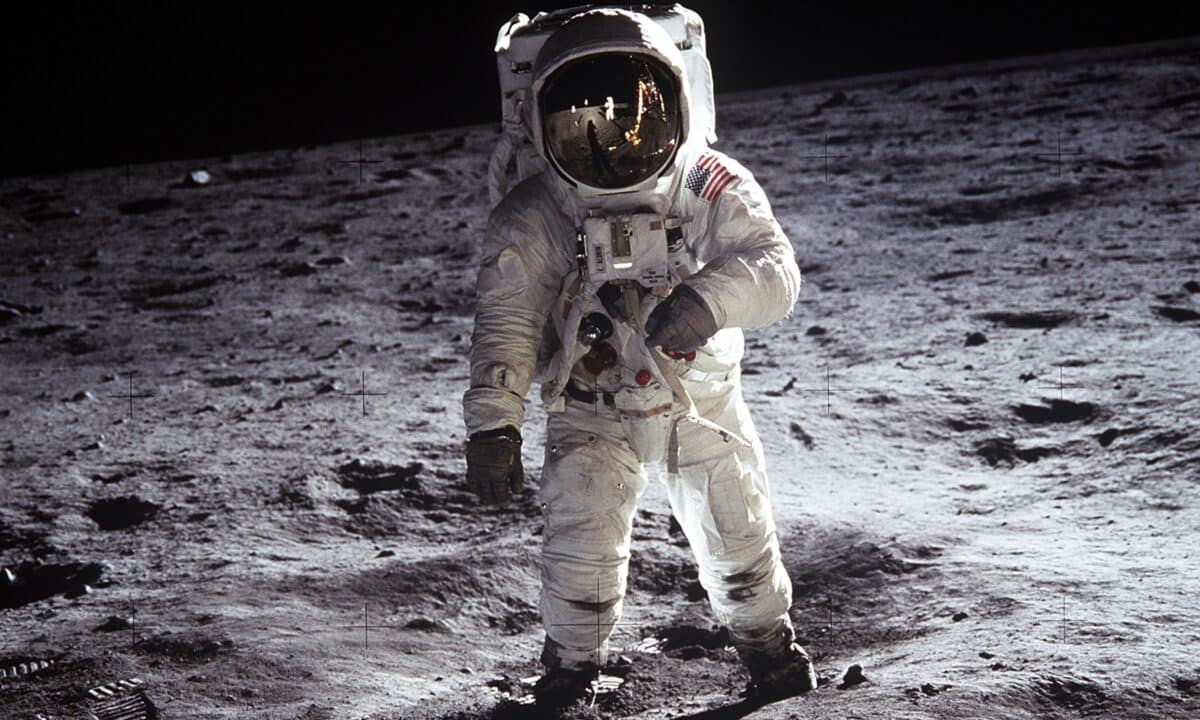
AldrinApollo11
Photo credit: Neil A. Armstrong, Public domain, via Wikimedia Commons.

The Forces that Shape our Universe: Gravity
One of the most remarkable aspects of our universe is the discovery that just four fundamental forces of nature govern interactions among all particles. Read More ›
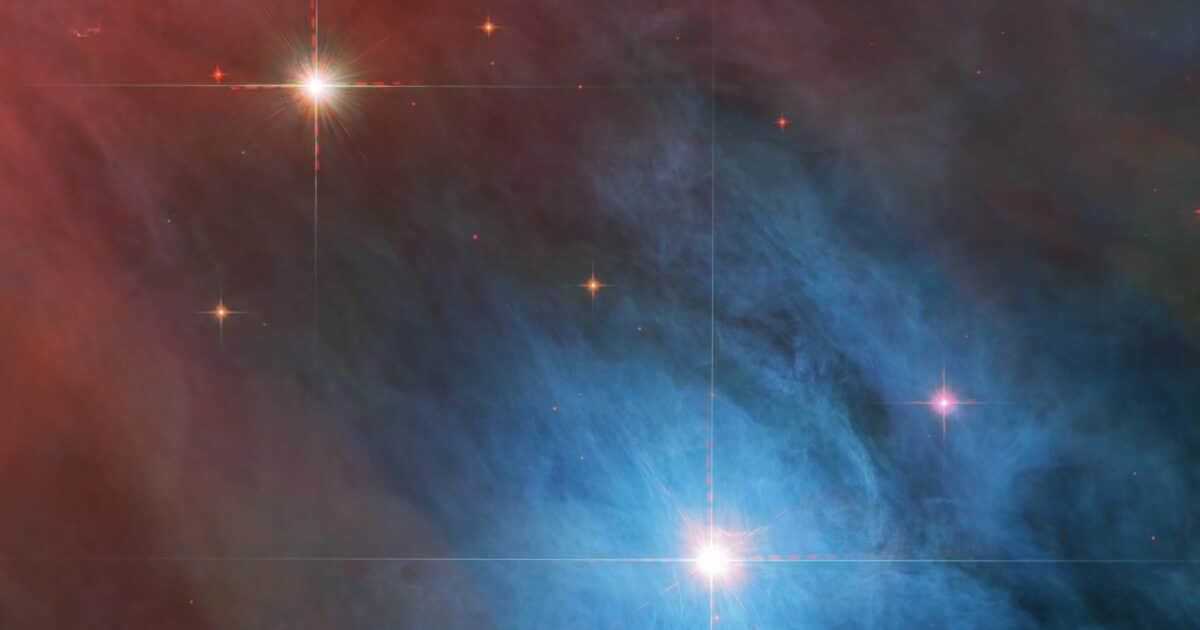
Orion Nebula
Photo: Orion Nebula, by ESA/Hubble & NASA, J. Bally, M. Robberto.

Aliens in the Garbage

Some people — whether they would put it in so many words or not — believe that certain types of answers are simply off-limits in a scientific inquiry. Read More ›
ocean
Photo source: Illustra Media.

Salt of the Earth Regulates Habitability
A planet needs more than location in a habitable zone. It needs the right ingredients, and salt has a surprising role. Read More ›
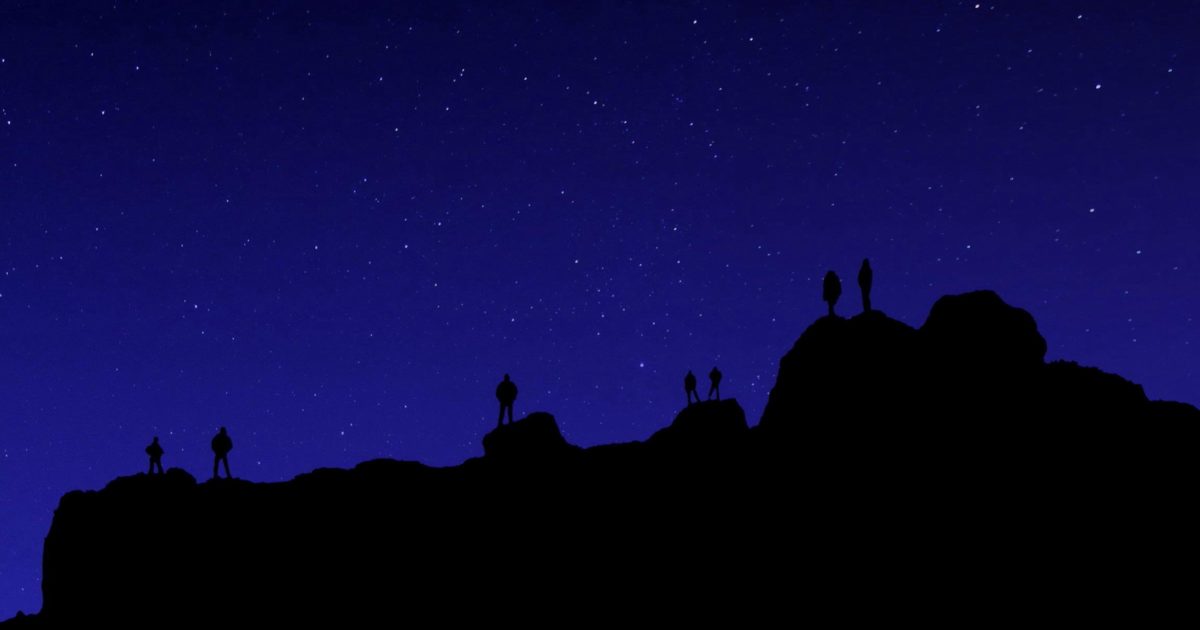
Stargazers-BlueSky-West 2
Photo: Stargazers, by David Coppedge.

Intelligent Design and Cosmic Fine-Tuning

In combination, the factors mentioned here and in my last two posts constrain the “cosmic habitable age” to narrower dimensions. Read More ›
Jupiter-2048x1075

Book Excerpt: The Big Bang and the Fine-Tuned Universe

What can we infer about the cause of the universe, about what brought it into being? Read More ›
A new composite image of the Crab Nebula features X-rays from Chandra, optical data from Hubble, and infrared data from Spitzer.
A new composite image of the Crab Nebula features X-rays from Chandra (blue and white), optical data from Hubble (purple), and infrared data from Spitzer (pink). Chandra has repeatedly observed the Crab since the telescope was launched into space in 1999. The Crab Nebula is powered by a quickly spinning, highly magnetized neutron star called a pulsar, which was formed when a massive star ran out of its nuclear fuel and collapsed. The combination of rapid rotation and a strong magnetic field in the Crab generates an intense electromagnetic field that creates jets of matter and anti-matter moving away from both the north and south poles of the pulsar, and an intense wind flowing out in the equatorial direction.

Recommended Reading: A Handbook of the Big Bang
Perhaps the publisher, Cambridge University Press, thought the title might help sales with a younger, hipper generation. Read More ›
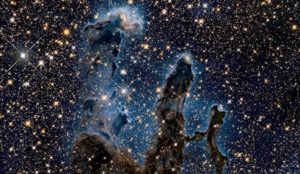
New view of the Pillars of Creation — infrared
Photo: Pillars of Creation, Eagle Nebula, by NASA, ESA/Hubble and the Hubble Heritage Team.

Are Cosmic and Planetary Fine-Tuning Constant?

The stability of atoms, stars, and people depends on finely tuned physical laws and constants in the local universe. But are they fixed throughout space and time? Read More ›
Freeman_dyson

Freeman Dyson: The Passing of an Iconoclastic Physicist
Dyson was careful to take an open-minded approach: not fully endorsing design, yet not rejecting it either. Read More ›
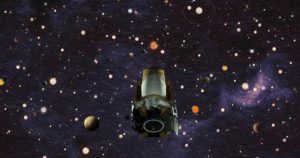
Kepler spacecraft

Uncommon Earth: Kepler Supports Denton

It sound like an anachronistic political endorsement, but it’s true: the Kepler spacecraft is supporting Michael Denton’s fine-tuning campaign with large contributions of data. Read More ›

© Discovery Institute