







































Editor’s note: With the 25th anniversary of 9/11 coming up, the new Discovery Institute Press thriller, Oppenheimer’s Demon, is a tense and timely reminder to recall that terror-borne catastrophe. John Zmirak wrote a fantastic review of the book for Chronicles, kindly giving us permission to republish it.
One of the dreariest habits characterizing the right is that of marinating in the complaint that the arts are against us and that the creative professions have been purged of anyone with normal sensibilities, much less conservative worldviews or Christian faith. There are many explanations for this demoralizing state of affairs, and I have no intention here of analyzing all of them in depth. But one true cause, we must confess, is our own failure as consumers to rally around and reward the rare outliers that attempt to buck the system and offer us something better.
For example, I wish more people had flooded the theaters (and said so at the time) to watch A Great Awakening. This film beautifully renders the story of English evangelist George Whitefield who prepared the soil for the American Revolution, as seen through the eyes of his unlikely friend and quasi-Deist, Benjamin Franklin. The film was a modest success and is well worth streaming at home. But if everyone who went online to argue about The Odyssey had turned up for A Great Awakening, we’d likely be seeing more worthwhile offerings from other aligned filmmakers of skill.
A Tightly Crafted Thriller
As with film, we’d also be wise to support works in other genres that skillfully depict fictional worlds infused with a truthful worldview. To that end, I recommend the novel Oppenheimer’s Demon, by Geoffrey Simmons. It’s a tightly crafted thriller about an urgent national security threat posed by a terrorist conspiracy that threatens millions of Americans. A scarred and disfigured survivor of the Hiroshima bombing, who later became a nuclear physicist, decides to close out his life with an act of vengeance on America for the deaths of his family and friends. He plans to launch tactical nuclear weapons in Chicago, whose famous university was the site of key research by Robert Oppenheimer that made the Manhattan Project possible.
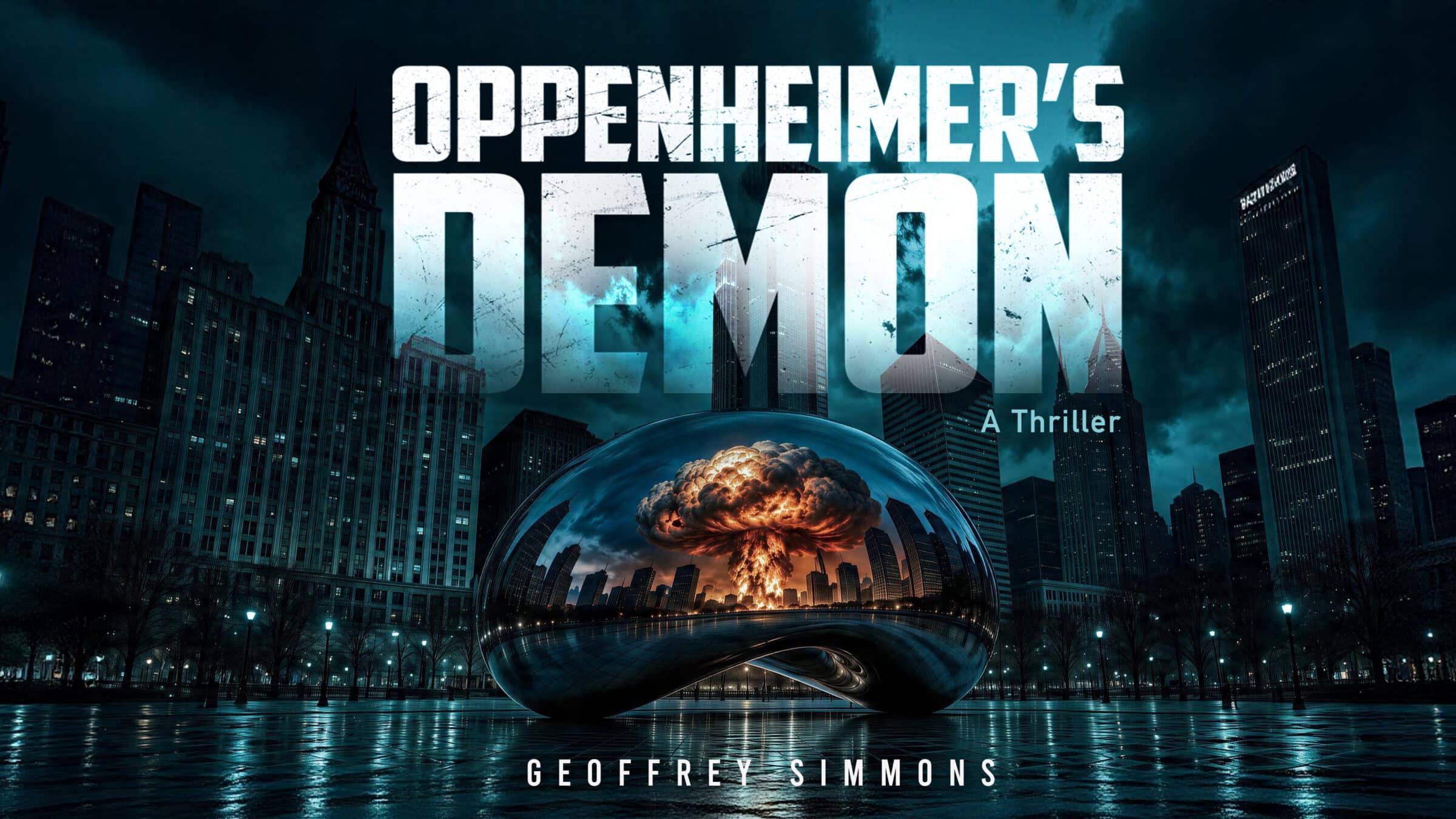 Image source: Discovery Institute Press.
The hero is Glenn Winders, a Chicago District Attorney and emergency manager who gets wind of the plot and tries to stop it. Helping him is a biomedical researcher who has pioneered a way of using artificial intelligence to recover images and memories from a damaged, living human brain — the brain of the one witness to the conspiracies who knows where the missiles are and where they are aimed.
Author Simmons is a physician specializing in emergency medicine, with a background in disaster preparedness. The novel reflects the richness and detail of his professional knowledge, giving the story enough verisimilitude to render it genuinely menacing. He’s also deft at drawing flawed but three-dimensional, relatable characters; even the vengeful terrorist comes across as fully human with comprehensible motives.
If Hollywood Were Healthier
A well-executed page-turner story of the kind Michael Crichton used to write is itself nothing to sneeze at. (I wish I knew how to write one.) The story is compelling enough that if Hollywood were healthier, I’d expect the book’s cinematic rights to be snapped up posthaste, and the story to end up on screen with Michael Fassbender or Ryan Gosling as the protagonist.
But what compels our deeper interest in this book is its engagement with moral and philosophical issues, especially as they affect our use of emerging technologies. Oppenheimer’s Demon doesn’t shy away from the vast human misery inflicted by the use of atomic bombs to end World War II, and it engages the still-live debate over whether strategic bombing of civilians violates the principles of Just War.
The book centers on the lingering ripples of one Promethean leap into a new technological era: the nuclear age. But crucial to the plot’s resolution is a new, extremely powerful but deeply menacing technological breakthrough: AI. The only way the team trying to locate and neutralize the rogue missiles threatening millions of Americans can track them down is to “read” the brain of an unconscious witness to the plot. They do that using an interface that can access old memories and sensory impressions, using AI to animate them and provide crucial clues. If there’s one technological breakthrough arguably more unsettling than nuclear weapons, such a device would surely qualify, if it existed.
An Addictive Summer Read
The author delves into the ominous implications of using AI to enhance or access the mind through the brain. In fact, the two lead characters (both physicians) end up debating whether the mind transcends the brain as a soul, or whether the mind is simply an epiphenomenon of sparks shooting through meat. They consider the implications of near-death experiences — tens of thousands of which have been amply documented by medical researchers who are completely unable to explain them — for this critical question about our human nature.
The novel also grapples with the theory of intelligent design as a more plausible explanation for the wondrous complexities of nature than the current, sputtering scientific materialism. Since the author has published non-fiction works on the subject and is a fellow at Discovery Institute, he lays out this debate informatively, without a heavy-handed or preachy approach.
Anyone searching for an addictive end-of-summer read and who wants, at the same time, to engage more deeply with questions about man’s nature and his future will find Oppenheimer’s Demon very much worth his time.