






































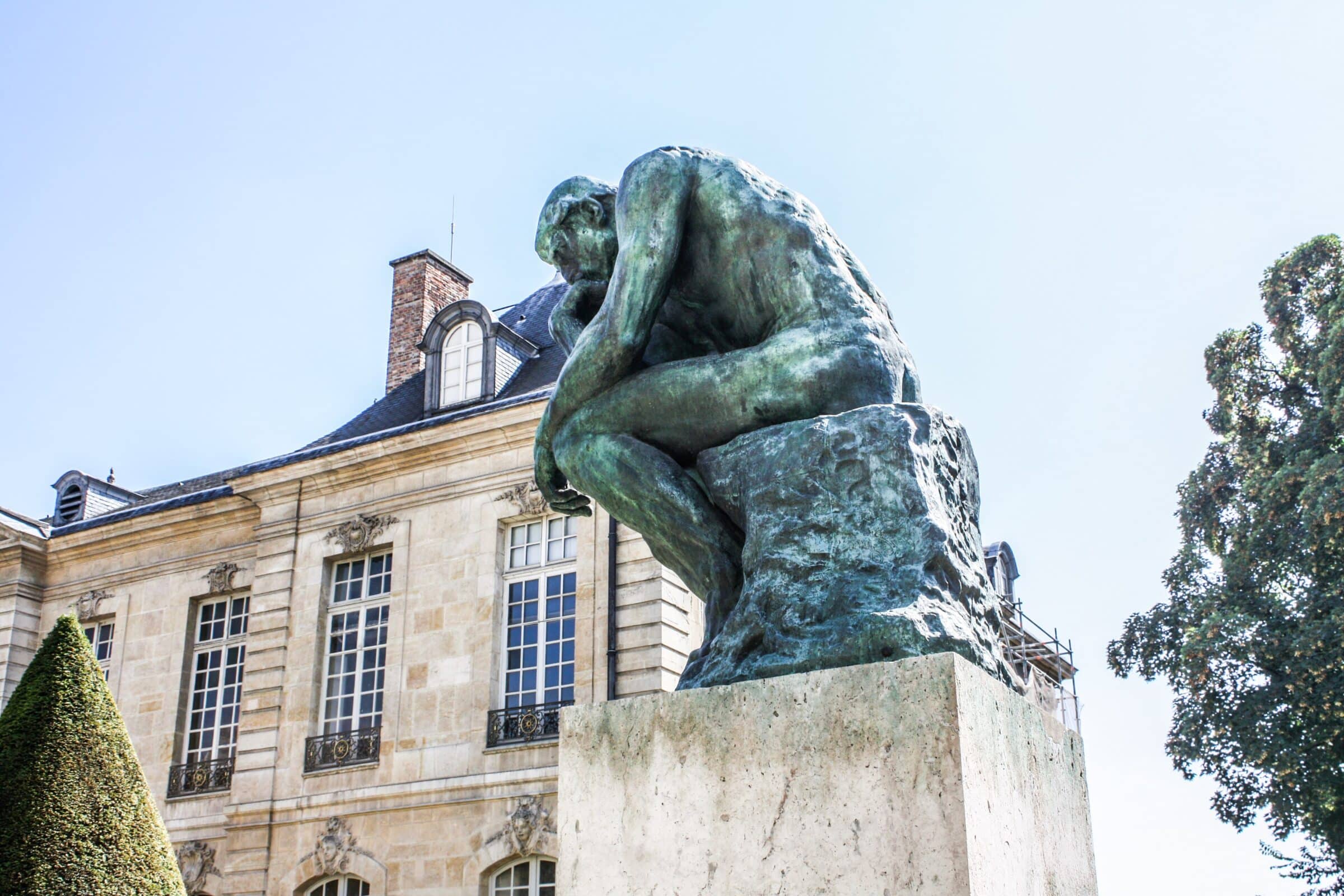
Before we can ask whether the universe is designed, we should first ask if we can trust the minds we’re using to investigate it. On a new episode of ID the Future, I welcome to the show science teacher and writer Rebekah Valerius to discuss an essay she recently penned unpacking the argument from reason and its implications for Darwinism, materialism, and atheism.
This is Rebekah’s first conversation on ID the Future. She has a BS in biochemistry and a Master’s in apologetics. She teaches advanced chemistry, biology, and apologetics at a classical Christian school in the Dallas area. Rebekah is also an editor and contributing writer with Shadowlands Dispatch, an online journal dedicated to Christian apologetics.
A Logical Basis for Trusting Thought?
In Part 1 of the conversation, Valerius discusses the argument from reason and its conflict with philosophical naturalism. If human thoughts are merely the result of blind physical processes, such as moving ions and chemical reactions in the brain, then there is no logical basis for trusting our own minds. Drawing on the work of C. S. Lewis, Valerius argues that the ability to perform rational inference suggests that the universe is saturated with a cosmic rationality instead of being a causally closed system of matter.
But the naturalist is prohibited from the possibility of a cosmic rationality. For the naturalist, cognition is just neurons firing based on blind, physical events. What does that mean for intentionality? Knowledge? Truth? Valerius reveals the difficulties in maintaining such a position. As an example, she mentions American philosopher and cognitive scientist Daniel Dennett, a vocal atheist, who described naturalism as a “universal acid” that eats through all our concepts of mind and meaning. But even Dennett had to make certain of his ideas exempt from this universal acid, which illustrates just how hard it is to live out the implications of a materialistic worldview. As Valerius reminds us, scientific inquiry itself relies on a foundation of reason that naturalism cannot adequately explain.
Download the podcast, listen to it, or watch it here. This is Part 1 of a two-part conversation.
Dig Deeper
- Read Rebekah Valerius’s essay on the argument from reason in full here.
- Follow her work at Shadowlands Dispatch.