






































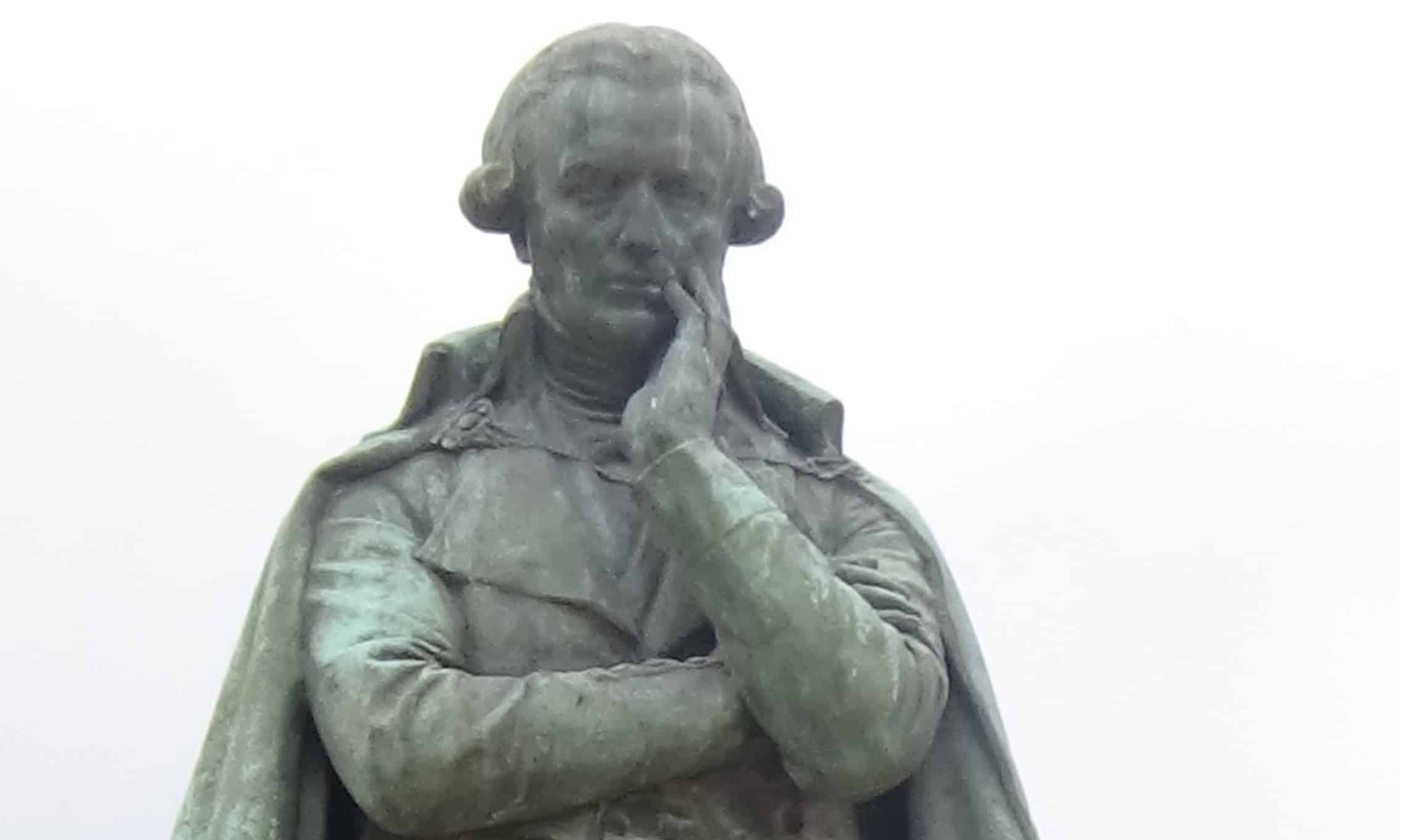
Apparently, a controversy has arisen between Jerry Coyne, the perennial know-it-all Darwinian, and Skeptic Magazine contributor George Levine. The debate was sparked by Levine’s laudatory review of Jessica Riskin’s book The Power of Life, a re-evaluation of Jean-Baptiste Lamarck’s contribution to evolutionary thought. While I have not read Riskin’s book (Coyne hasn’t either), I’ll have to take much of what Levine says at face value. So, when Levine says that Darwin himself subscribed to a form of neo-Lamarckian evolution with his pangenesis theory, he is right. This is hardly controversial. Peter J. Bowler in his sweeping (pro-Darwinian) history, Evolution: The History of an Idea, writes, “Darwin’s lifelong commitment to a limited amount of Lamarckism and to what was later called blending inheritance (the mixing of parental characters) were integral parts of his worldview.”
His Usual Obstreperousness
Coyne, with his usual over-confident obstreperousness, insists that “Lamarck got what drove evolution completely wrong.” He argues this on two counts: first, that Lamarck insisted there was a teleological drive towards complexity in the organic world; and second, that he believed “inheritance of acquired characteristics” — that is, organisms adapt to their own environment and those adaptations (or at least some of them) are carried forward into the next generation — explains evolutionary adaptation. Now Darwin’s pangenesis was certainly a variation on that theme, so by Coyne’s own measure even Darwin was at best as half-wrong as Lamarck. Of course, this probably wouldn’t bother Coyne one bit since this was all supposedly “corrected” in the neo-Darwinian synthesis of the 1930s and ’40s (another subject for another time).
Overall, Coyne’s defense of Darwin against Lamarck seems a bit dated, the kind of thing you’d expect from the likes of Ernst Mayr some thirty or forty years ago. Today the work of Eva Jablonka and Marion Lamb has done much to bring the eighteenth and early-nineteenth century French naturalist and evolutionary theorist back to center stage1, 2. An interesting historical tour on the subject is available in Laurent Larson’s “Epigenetic inheritance and evolution: a historian’s perspective” (2021).
The Issue of Teleology
But Coyne’s first “point” (if one wants to call it that) regards the issue of teleology. Is it “wrong” to argue that a teleological (purposeful) drive is inherent in all living organisms? Yale botanist and geneticist Edmund Ware Sinnott thought not. He wrote the following in 1954:
Whatever our philosophy, however, the fact of the organizing, self-regulatory character of protoplasmic systems cannot be denied. Whether one is a mechanist, a vitalist or an organicist, tough-minded or tender-minded, determinist or indeterminist, he may legitimately recognize it, I think, as the common basis of phenomena as diverse as regeneration, homeostasis, instinctive regulation and conscious purposiveness. It is one of those unifying concepts that is capable of bringing many facts into harmony with each other. Teleology in a very real sense may be regarded as the core and essence of biology. The frequent misuse and oversimplification of this idea, which we rightly deplore, should not prevent our recognition of it as fundamental.
There are other philosophical implications of this concept that the regulatory, directive, goal-seeking character of living systems is the basis of man’s mental life, and that biology and psychology grow from the same protoplasmic roots. The ancient problems of the relation of mind to body, of motivation, of the basis of personality, of the antithesis between determinism and freedom, and of the genesis of values, all are biological problems in the last analysis, and all of them, I believe, can be illuminated, at least to some degree, by this idea. The biologist cannot solve them, to be sure, but the facts and concepts which he is able to offer will certainly prove to be of the greatest importance to philosophy in its difficult task of trying to understand man and the universe he lives in3.
Philosophical and Metaphysical Questions
Sinnott’s second paragraph suggests some broad-ranging philosophical and metaphysical questions that the whole issue of teleology may be able to answer. He pursued those in two books that still repay reading4,5. For Sinnott, the materialist’s answer was far too simplistic and it belies what we know about the nature of humankind. “If there arises in living stuff,” he writes, “a goal, an image, a longing — call it what you will — which comes to expression in a noble deed, or a great poem, or a new insight into nature, does not this tell us something more profound than present scientific knowledge can do about that remarkable process which at its lowest level goes by the prosaic name of biological organization?”5
More recently physiologist Scott Turner has pursued Sinnott’s question to the fullest and agreed that teleology is indispensable to the science of life. His book Purpose and Desire6 is a thorough and thoughtful dive into the question of teleology. Interestingly, Turner recognizes Darwin’s own Lamarckian inclinations and here he adds the French creationist and naturalist Cuvier into the mix.
Rehabilitating Lamarck
Turner points out,
This makes Lamarck and Cuvier more of a challenging proposition to the Darwinian narrative and not so easily dismissed with amusing stories of the long necks of giraffes [as Coyne does]. Even more uncomfortable is the light this shines on Darwin’s own thinking, which puts Lamarck, Cuvier, and Darwin into a coherent and seamless alternative narrative of evolutionary thought — one driven not by blind mechanism, but by purpose and desire, and marked not by the differences between the three men, but by their similarities.
The rehabilitation of Lamarck and the important work of leading scholars of the past (i.e., Sinnott) and present (i.e., Turner) suggest a more interesting conclusion than that highlighted in this dispute over Riskin’s book. In the end, I cannot pronounce either Levine or Coyne the “winner” of the debate, but the survival of the fittest in evolutionary thought appears to be teleology!
Notes
- Jablonka, E. and M. J. Lamb. Evolution in four dimensions. Cambridge, MA: MIT Press, 2005.
- __________. Transgenerational epigenetic inheritance. In Evolution — the extended synthesis, M, Pigiucci, G. B. Müller. Cambridge, MA: MIT Press, 2010.
- Sinnott, Edmund W. Biology and teleology. Bios 25, no1 (Mar. 1954): 35-43.
- __________. The biology of the spirit. New York: Compass Books, 1957.
- __________. Cell and psyche: the biology of purpose. New York: Harper Torchbook, 1961.
- Turner, J. Scott. Purpose and Desire: What Makes Something “Alive” and Why Modern Darwinism Has Failed to Explain It. New York: HarperOne, 2017.