







































__nedited

Inherit the Wind at Christianity Today

William Dembski on BioLogos and Theistic Evolution at Patheos

Who Misrepresented Who? A Response to John Farrell

Skeptic Magazine Unskeptical about Miller-Urey Experiment
Skeptic Magazine shows no skepticism towards the Miller-Urey experiment, instead claiming the experiment simulated the early earth’s atmosphere. Recently I went to a local bookstore and found myself perusing the latest issue of Skeptic Magazine, “A Perspective on the Nature and Origin of Life.” The cover story was on the origin of life, and written by chemical engineer Paul F. Deisler Jr. (Vol. 16, No. 2). While the article admits that “[c]urrent scientific detection technology and exploration have not yet found traces within the transition period to show how non-life became life,” it nonetheless puffs the weak evidence for the origin of life. In particular, it promotes the Miller-Urey experiment without any mention of the fact that there are severe Read More ›

Explore the New Features at Evolution News & Views

New Peer-Reviewed Paper Challenges Darwinian Evolution
Over recent months, papers challenging key elements of Darwinian theory — the kind of papers which are supposed not to exist — have increasingly been slipping through the net and finding their way into the peer-reviewed literature. One such paper, “Is gene duplication a viable explanation for the origination of biological information and complexity?,” authored by Joseph Esfandier Hannon Bozorgmeh and published online last week in the journal, Complexity, challenges the standard gene duplication/divergence model regarding the origin of evolutionary novelty. The abstract reports, All life depends on the biological information encoded in DNA with which to synthesize and regulate various peptide sequences required by an organism’s cells. Hence, an evolutionary model accounting for the diversity of life needs to Read More ›

Peer-Reviewed Research Paper on Plant Biology Favorably Cites Intelligent Design and Challenges Darwinian Evolution
A new original research paper on mutagenesis comprising 240,000 plants in the journal Floriculture and Ornamental Biotechnology favorably cites to “intelligent design proponents,” including Michael Behe, William Dembski, Jonathan Wells, and Stephen Meyer, as advocating one of various legitimate “scientific theories on the origin of species.” The paper was authored by Wolf-Ekkehard Lönnig, a recently retired biologist from the Planck Institute for Plant Breeding Research in Germany who investigates the origin of certain features of flowering plants, or angiosperms. Citing to skeptics of neo-Darwinism such as Behe and “the almost 900 scientists of the Scientific Dissent from Darwinism,” the paper notes that: Many of these researchers also raise the question (among others), why — even after inducing literally billions of Read More ›

William Dembski and Robert Marks Publish (Another) Peer-Reviewed Scientific Paper Supporting No Free Lunch Theorems
A peer-reviewed scientific paper published in 2010 by William Dembski and Robert Marks of the Evolutionary Informatics Lab supports no free lunch theorems. Published in Journal of Advanced Computational Intelligence and Intelligent Informatics and titled “The Search for a Search: Measuring the Information Cost of Higher Level Search,” the paper’s abstract states that unless one has information about a target, search engines often fail: “Needle-in-the-haystack problems look for small targets in large spaces. In such cases, blind search stands no hope of success.” Their principle of Conservation of Information holds that “any search technique will work, on average, as well as blind search.” However, in such a case “[s]uccess requires an assisted search. But whence the assistance required for a Read More ›
In Which I Answer Tantalus Prime’s Queries About Abortion
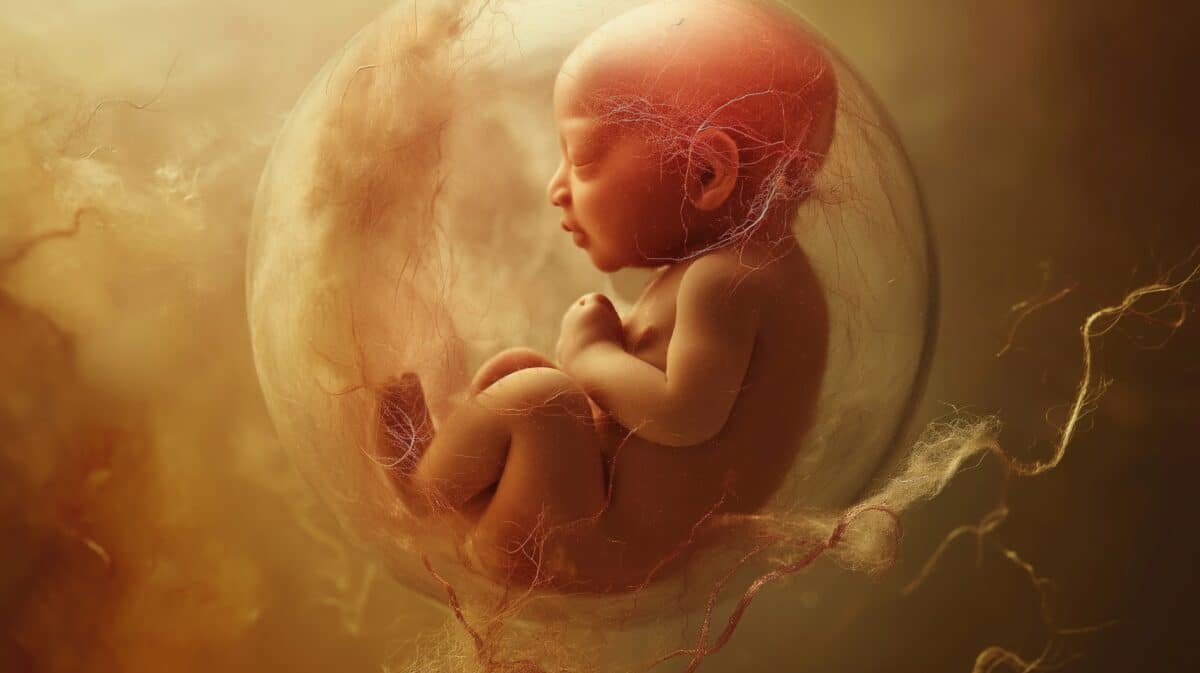
Tantalus Prime is a graduate student in neuroscience. He’s been following my debate about abortion with Joshua Rosenau of the NCSE. He asks some questions about my views on the right to life that are worth answering. Tantulus: Egnor asserts that humanity is a discrete, not a continuous variable. If so, then would he kindly point to the exact point at which the human begins? After all, fertilization itself is a multi-step process. So, where is it? When the sperm breaches the oocyte membrane? Formation of the pro-nuclei? Initial DNA replication? Degeneration of the pro-nuclei membrane? Formation of the mitotic spindle? Fusion of the chromosomes? Division of the chromosomes and formation of the first daughter cells? This really should be Read More ›