Earthset Type post Author Kyle Dillon Date July 22, 2026 CategoriesFaith & ScienceIntelligent Design Tagged , aesthetic criteria, Albert Einstein, Anthony O’Hear, Artemis II, Arthur Eddington, beauty, Brian Greene, coherence, controversy, disinterested, Earthset, empirical fit, existential, fauna, fittingness, flora, fruitfulness, Guillermo Gonzalez, Jay Richards, John Frame, Mare Orientale, mathematical beauty, Michael Keas, Milky Way, Moon, Nobel Prize, normative, oughtness, philosophers, pleasure, Science and Beauty (series), scientific theories, Serge Brunier, situational, solar eclipse, Steven Weinberg, subatomic particles, The Elegant Universe, The Evidential Power of Beauty, The Privileged Planet, theoretical virtues, Thomas Dubay, triperspectivalism Science and Beauty: The Lens of Triperspectivalism Rev. Kyle A. Dillon July 22, 2026 Faith & Science, Intelligent Design 8 To the non-scientist, it may come as a surprise that scientists would appeal to aesthetic standards in evaluating the validity of scientific theories. Read More ›
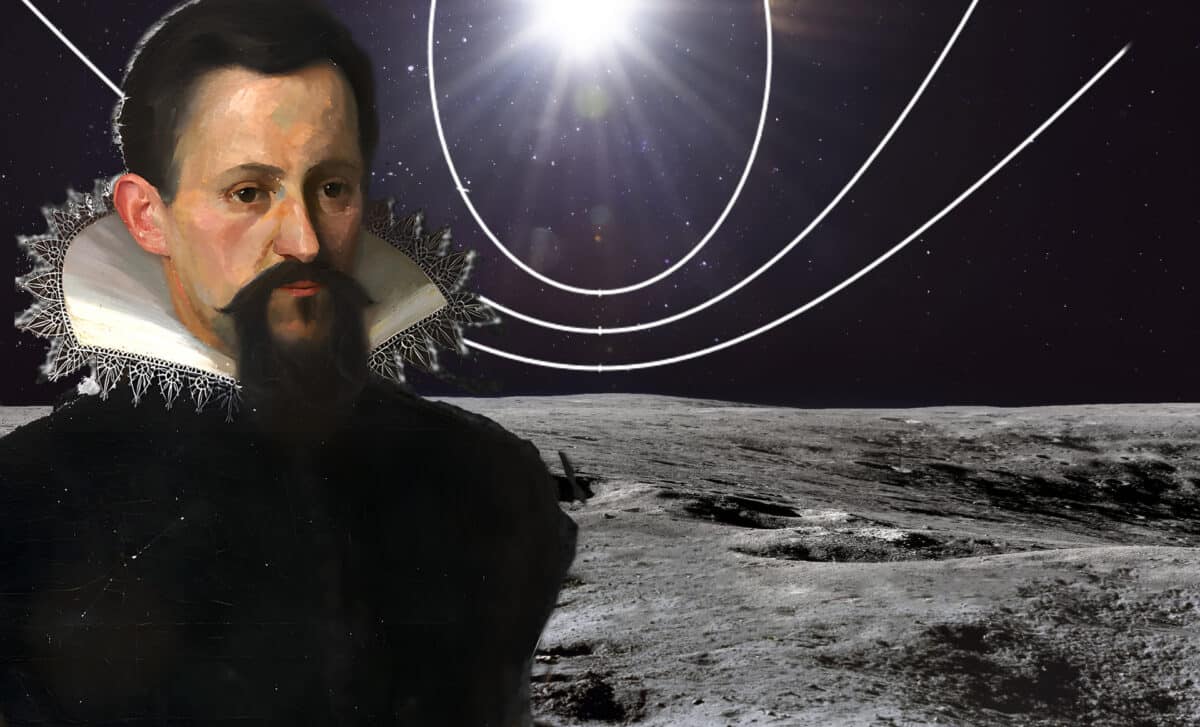
JohannesKeplerwithSunandMoonandhisellipticalorbits Type post Author Kyle Dillon Date July 21, 2026 CategoriesFaith & ScienceIntelligent Design Tagged , __featured1, adaequatio intellectus ad pulchrum, adaequatio intellectus ad rem, Alvin Plantinga, Artemis II, astronomers, astronomy, beauty, Emmanuel Kant, First Law of Planetary Motion, geocentric model, Harmonice Mundi, Harmonies of the World, heliocentric model, Henri Poincaré, Holy Grail, Johannes Kepler, Justice Potter Stewart, mathematical formulas, Mortimer Adler, NASA, Nicolaus Copernicus, science, Science and Beauty (series), scientific revolution, Supreme Court, theology, Thomas Aquinas, universe, Where the Conflict Really Lies Beauty and Science: Canvas of the Great Creator Rev. Kyle A. Dillon July 21, 2026 Faith & Science, Intelligent Design 8 When Johannes Kepler discovered that his mathematical formula perfectly matched his experimental observations, he was euphoric. Read More ›