






































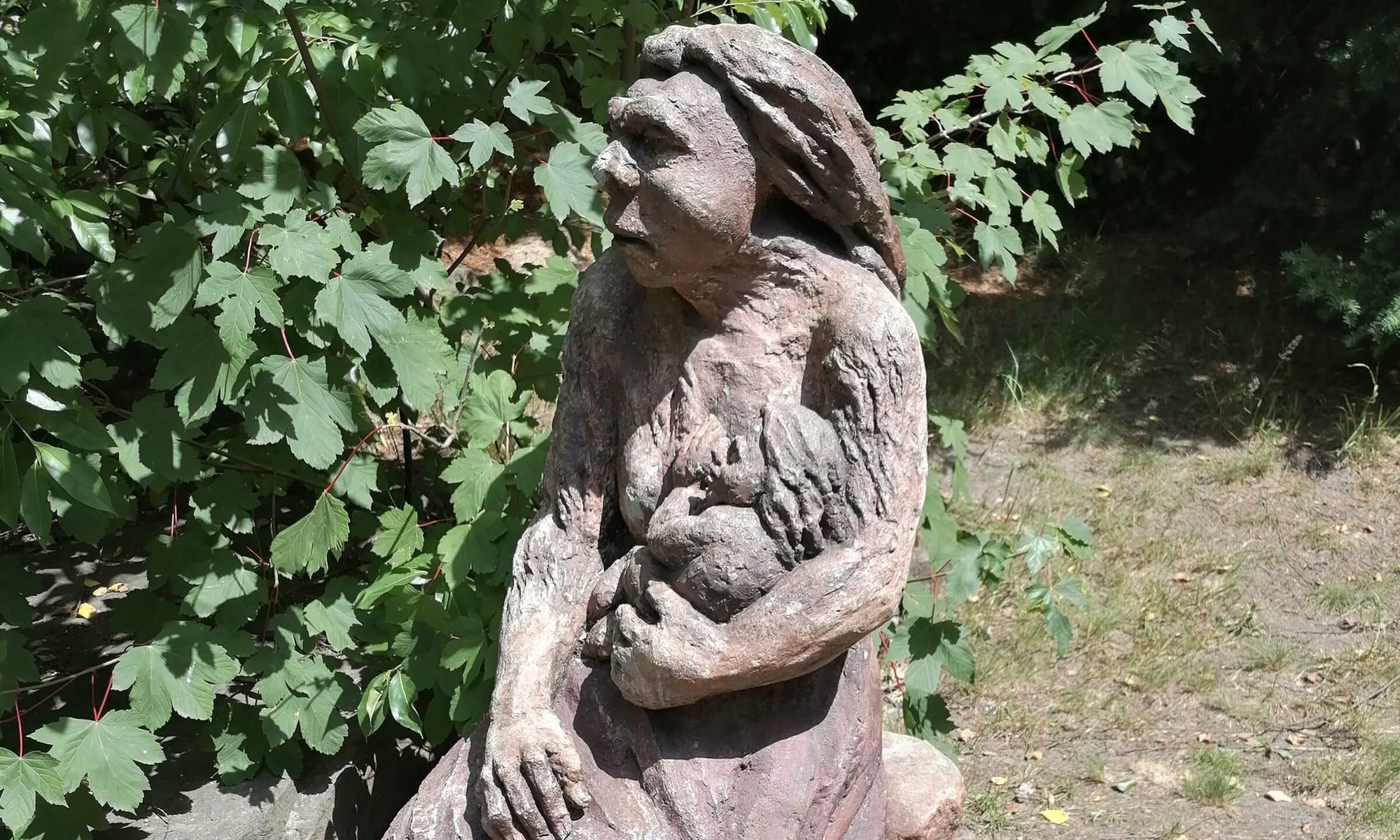
A new paper in Royal Society Open Science, “Early development of Neanderthals revealed through virtual microanatomy,” reports that fetal and infant development in Neanderthals was highly similar to modern humans of a similar age:
fetal bone patterning is similar to modern humans with some areas of advanced growth, indicating that the growth trajectory for this Neanderthal perinate was broadly equivalent to that of modern humans
What makes this study significant is that it was from a Neanderthal infant, of which we have very few remains. A press release from Friedrich-Alexander University in Germany asks, “Were Neanderthals really so different from us?” It similarly states that “New fossil finds indicate that early childhood development was surprisingly similar to that of modern humans,” and further observes:
Were Neanderthals fundamentally different from us modern humans from the very beginning? Researchers have pondered this questions for decades. A new study on unusually rare remains of Neanderthal infants from the Sesselfelsgrotte cave in Lower Bavaria now delivers significant new insights. The results, to which FAU researchers also contributed, suggest that Neanderthals and modern humans were considerably more similar in their earliest childhood development than had been assumed to date.
One of the primary authors, Professor Dr. Thorsten Uthmeier, is quoting as saying, “Our results suggest that both human forms went through remarkably similar stages of growth, at least during the later stages of pregnancy.”
The press release finds that “the key conclusion of the study: There do not appear to be any fundamental differences in the biological programs of Neanderthal and Homo sapiens in the earliest stages of their development.” The paper, using more technical language, says much the same: “Using non-invasive micro-CT, we found that all bones showed broad microanatomical patterns consistent with modern human fetal growth in the final trimester of pregnancy approaching eight–nine months, which agrees with the prior macroscopic measurements.”
Don’t miss the words of Professor Uthmeier: “both human forms.” What he’s saying is that both Neanderthals and modern humans were “human forms” — and this study provides yet more evidence to back up that idea.