






































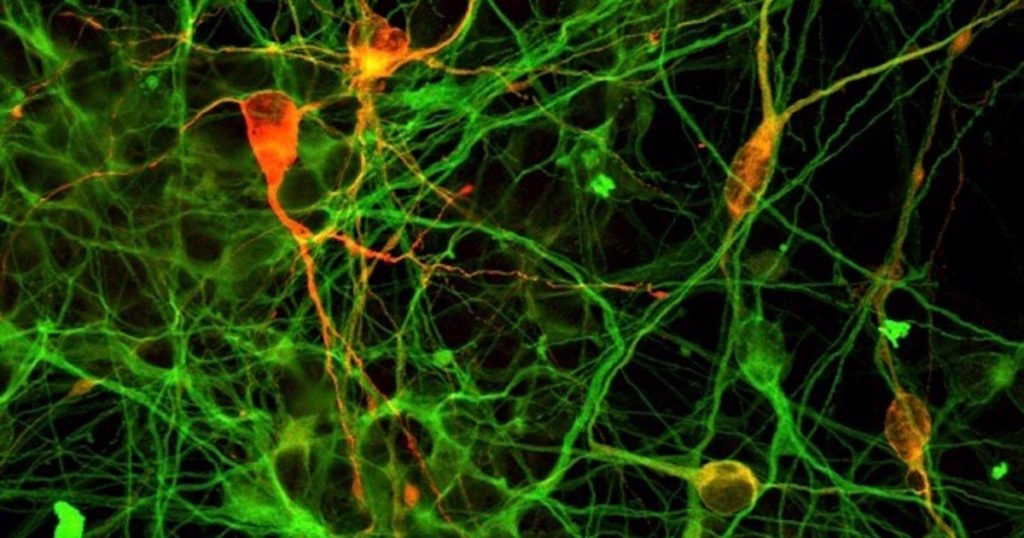
The advance of ethical stem cell research continues exponentially. Neurons made from induced pluripotent stem cells (IPSC) – which were, in turn, made from skin cells – have relieved Parkinson’s symptoms in monkeys. From the Nature story:
[Jun] Takahashi’s team transformed iPS cells derived from both healthy people and those with Parkinson’s into dopamine-producing neurons. They then transplanted these cells into macaque monkeys with a form of the disease induced by a neuron-killing toxin.
The transplanted brain cells survived for at least two years and formed connections with the monkey’s brain cells, potentially explaining why the monkeys treated with cells began moving around their cages more frequently.
Crucially, Takahashi’s team found no sign that the transplanted cells had developed into tumours — a key concern with treatments that involve pluripotent cells — or that they evoked an immune response that couldn’t be controlled with immune-suppressing drugs.
Human trials may begin within a few years. Two points about this; well, three:
First, this study validates the prediction, when the federal government placed mild limitations on embryonic stem cell funding, that scientists would be able to find ethical means of furthering regenerative medicine without using embryos.
Second, contrary to the assertion that embryonic stem cells were the “only hope,” as so many funding-policy opponents claimed, embryonic stem cell research has not advanced nearly as far as research on adult stem cells and IPSC has.
I keep bringing this up because of the mendacious campaign of hype and outright lies about the potential and timing of treatments from embryonic stem cell research, as “The Scientists” and others poo-poohed the potential of alternative methods. But they were wrong.
In other words, just because the Science Establishment says something, that doesn’t make it so. Sometimes “The Scientists” are wrong, or they conflate ideology with science, properly understood.
Third, contrary to animal rights ideologues and others, primate research is absolutely essential to furthering medical science. None of the potential we are seeing in this study could be known without testing on animals before humans.
So, let’s hope that IPSCs and adult stem cells continue to advance in the clinical setting. They not only provide hope for efficacious treatments – let’s not say cures – but they offer a bridge across ethical divides that have roiled the research field.