Science and Culture Today Discovering Design in Nature
Topic

PNAS

bacterial flagellum
Kenneth Miller
Image source: Revolutionary: Michael Behe and the Mystery of Molecular Machines, via Discovery Institute.

With Kenneth Miller, Behe’s Would-Be Nemesis, History Repeats Itself

The Brown University biologist is still out there, reassuring the world that unguided “evolutionary mechanisms” comfortably explain the wonders of biology. Read More ›
trilobite
Photo credit: Mike Peel [CC BY-SA 2.0 uk], via Wikimedia Commons.

New Paper Confirms the Trilobite Explosion

It’s important to note that the “true tempo of early animal evolution” exists in evolutionists’ imaginations, not in the rocks. Read More ›
language
proteome
Photo by Annie Spratt via Unsplash.

Proteome Is Analogous to Language

A paper likens the proteome to a language with a “quasi-universal grammar” possessing the minimum complexity necessary to function as a cell. Read More ›
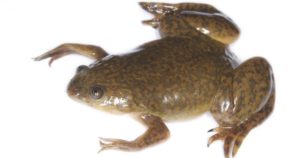
Xenopus laevis
Swamidass
Photo: Xenopus laevis, by Brian Gratwicke [CC BY 2.0], via Wikimedia Commons.

From Swamidass on Chloroquine Resistance, a Response that Doesn’t Respond
Swamidass’s response doesn’t address our main arguments, but he indicates he is impressed by what Darwinian mechanisms accomplished in generating chloroquine resistance. Read More ›
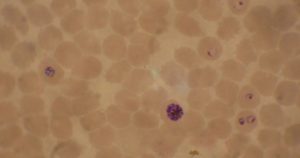
Plasmodium falciparum
Nathan Lents
Photo: Plasmodium falciparum, by Lukas.S at English Wikipedia (Original text: Lukas 05:24, 5 October 2006 (UTC)) [Public domain], via Wikimedia Commons.

On Chloroquine Resistance, Nathan Lents Severely Misrepresents Behe’s Arguments

If you’re going to engage with an individual you disagree with, it’s important to know what that person argues and to state it accurately. Read More ›
body design
intelligent design
Photo credit: Vidar Nordli-Mathisen via Unsplash.

Appreciate Your (Un-Evolved) Body

Things you probably didn’t even know about should arouse awe as we go about our tasks each day, and sleep each night. Read More ›
PNAS
PNAS
Photo: Albert Einstein Memorial, National Academy of Sciences, Washington, D.C., by G0T0 [Public domain], via Wikimedia Commons. 

When It Comes to Origins Science, Is PNAS Really “Ready When You Are”?

Kevin Williamson imagines that scientists are free to “slug it out” in journals and other academic settings, so that the truth reliably emerges. Read More ›
Behe Mac
Photo: Lehigh University biochemist Michael Behe at the launch of Discovery Institute-Mackenzie at Mackenzie Presbyterian University, São Paulo, Brazil, 2017.

Michael Behe’s Darwin Devolves — When You’re Ready to Think for Yourself

The idea that scientists are like tribal elders, to be respected and never questioned, much less smirked at (God forbid), is one possible perspective. Read More ›
Grand Prismatic Spring
epigenetics
Photo: Grand Prismatic Spring, Yellowstone National Park, by Brocken Inaglory [CC BY-SA 3.0 or GFDL].

Genetics and Epigenetics — New Problems for Darwinism
Scientists watched microbes inherit extreme acid resistance in Yellowstone hot springs not through genetics, but through epigenetics. Read More ›
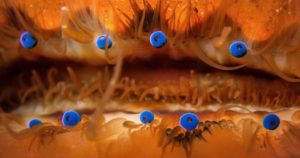
scallop eyes
Photo: Scallop eyes, by Matthew Krummins [CC BY 2.0], via Wikimedia Commons.

Can You Say That in Nature? Dobzhansky’s Evolution Cliché Is Becoming Passé

“Nothing in biology makes sense except…” Go ahead; complete that sentence yourself, with a yawn.  Read More ›

© Discovery Institute