







































National Academy of Sciences
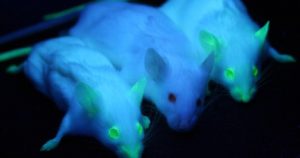
Genetic Engineering with “Strict Guidelines”? Ha!

Slam Dunk? Once Again, It’s the “Evolution Is a Theory” Thus “Overwhelmingly Supported” Fallacy

Test Your Evolutionary Storytelling Skills

Princeton Historian: Falsifiability Not a Requirement of Science
National Academy of Sciences Admits “Thinking Evolutionarily” Means Accepting “Fundamental Randomness”

How Do We Know Intelligent Design Is a Scientific “Theory”?
The Caterpillars Who Came to Dinner (and Lunch and Breakfast): An Interview with Lad Allen, Director of Metamorphosis
NAS’s Draft “Framework for Science Education” Ignores Critical Thinking When Teaching Evolution
The National Academy of Sciences (NAS) is drafting a “Conceptual Framework for New Science Education Standards” which contains guidelines and standards on how to teach evolution. As we’ve noted before here on ENV, science education authorities often laud the importance of using critical thinking when teaching science, but then they completely ignore or eschew such educational approaches when it comes to teaching evolution. They single out evolution as the topic where scientific critique or critical analysis is carefully avoided. The NAS’s public preliminary draft “Framework for Science Education” (warning: large 6.8 Mb PDF file) uses exactly this approach. Having perused the proposed draft framework and found some dogmatic statements about evolution, a few noteworthy points emerge. While some of the Read More ›
The Facts about Intelligent Design: A Response to the National Academy of Sciences’ Science, Evolution, and Creationism
I have written an extensive response to the National Academy of Sciences’ new anti-ID booklet, Science, Evolution, and Creationism. The full response, The Facts about Intelligent Design: A Response to the National Academy of Sciences’ Science, Evolution, and Creationism, can be read online here or downloaded as a PDF. Permission is freely granted to reproduce the document for educational use. Below are some excerpts from the rebuttal: IntroductionA 1982 poll found that only 9% of Americans believed that humans developed through purely natural evolutionary processes. Two years later, the U.S. National Academy of Sciences (NAS) issued its first Science and Creationism booklet, stating that science and religion occupy “separate and mutually exclusive realms.” Public skepticism of evolution remained high–a 1993 Read More ›