Science and Culture Today Discovering Design in Nature
Author

Emily Reeves

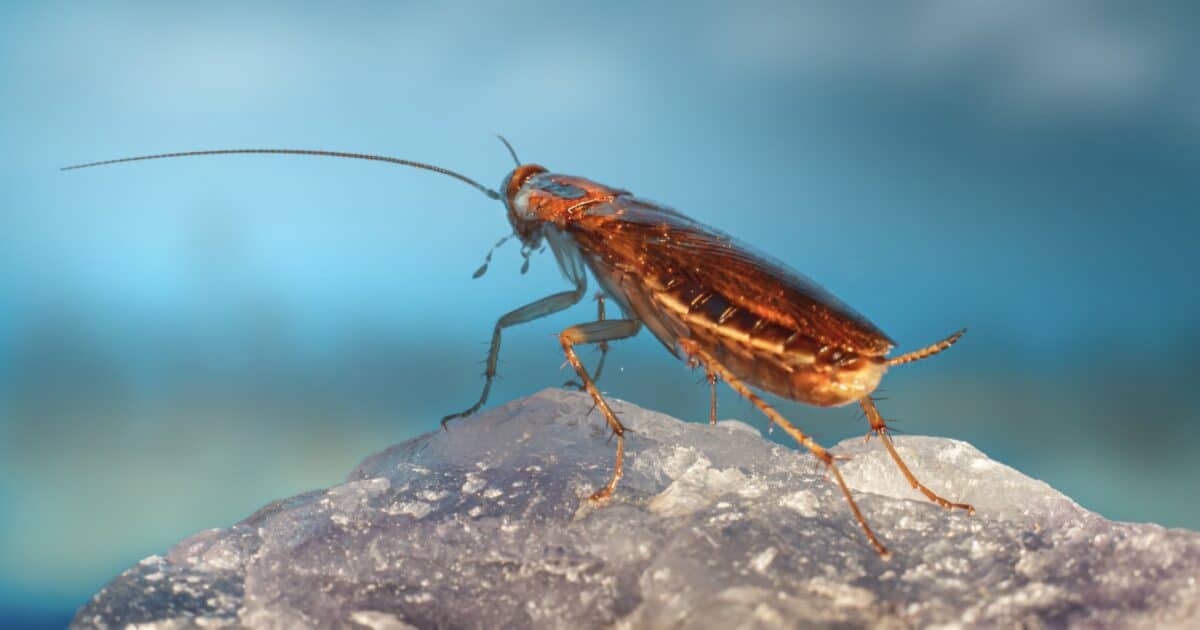
cockroach
Photo credit: Erik Karits via Unsplash.

Paper Digest: A Robot Is Built Using Cockroach Biomimicry

The understanding of what it takes to build complex systems sheds light on the causal hurdles that would be necessary for evolutionary processes to overcome. Read More ›
heart
Photo credit: camilo jimenez, via Unsplash.

Paper Digest: Biomimicry Uses the Design of Biological Organisms to Improve Human Technology

Throughout this paper, Stuart Burgess emphasizes the supremacy of natural systems over human-engineered ones. Read More ›
COVID-19
COVID-19
Image: COVID-19, by CDC, via Unsplash.

Paper Digest: What Mutation Accumulation Tells Us About Evolution

Though more than a decade old, this work caught my attention for its possible relevance to our current experiences with COVID-19. Read More ›
cells
Image credit: Arek Socha via Pixabay.

Paper Digest: The Cell as an Embedded Computing System

This paper is an important illustration of how intelligent design theory can be applied at a high level in the academic setting. Read More ›
Mustang
Image credit: Photos by Clark, via Flickr (cropped).

Paper Digest: Application of Animal Forms in Auto Styling

The preeminence of design in nature and the utility of mimicking natural designs is a concept championed by the intelligent design community. Read More ›
Icefish
Photo credit: (c) Marrabbio2, via Wikimedia Commons.

Blood Viscosity and Freezing Temperatures — A Titanic Problem

Blood viscosity is the technical reason why Jack froze in less than 23 minutes, but icefish can survive for 15 years in water of a freezing temperature. Read More ›
ICU
Photo credit: Mufid Majnun, via Unsplash.

New Book Puts Richard Dawkins’s “Selfish Genes” in the ICU

Dr. Jarvis lays out numerous pieces of evidence that jeopardize Dawkins’s view that genes are selfish and act as the units of selection. Read More ›
Respiratory Complex I
Image source: Emily Reeves, UCSF Chimera.

An Engineering Marvel: Uncovering the Mechanism of Respiratory Complex I

Complex I is involved in the electron transport chain, which is part of the biochemical process by which we create ATP, the energy molecule of life. Read More ›
Icefish
Photo credit: (c) Marrabbio2, via Wikimedia Commons.

Without Hemoglobin, How Do Icefish Survive the Cold? By Design

Icefish, aka the family Channichthydiae, survive at 0oC in the Southern Ocean by maintaining blood viscosity at the set point of 3.27 centipoise. Read More ›
gibbon
Photo credit: Linda Tanner, via Flickr (cropped).

Let’s Do Assumption-Free Science! Some Concluding Thoughts on Gutsick Gibbon’s Challenge

What ID proponents are encouraging in the greater scientific community is honesty about the fact that both design and ancestry can create genetic similarity. Read More ›

© Discovery Institute