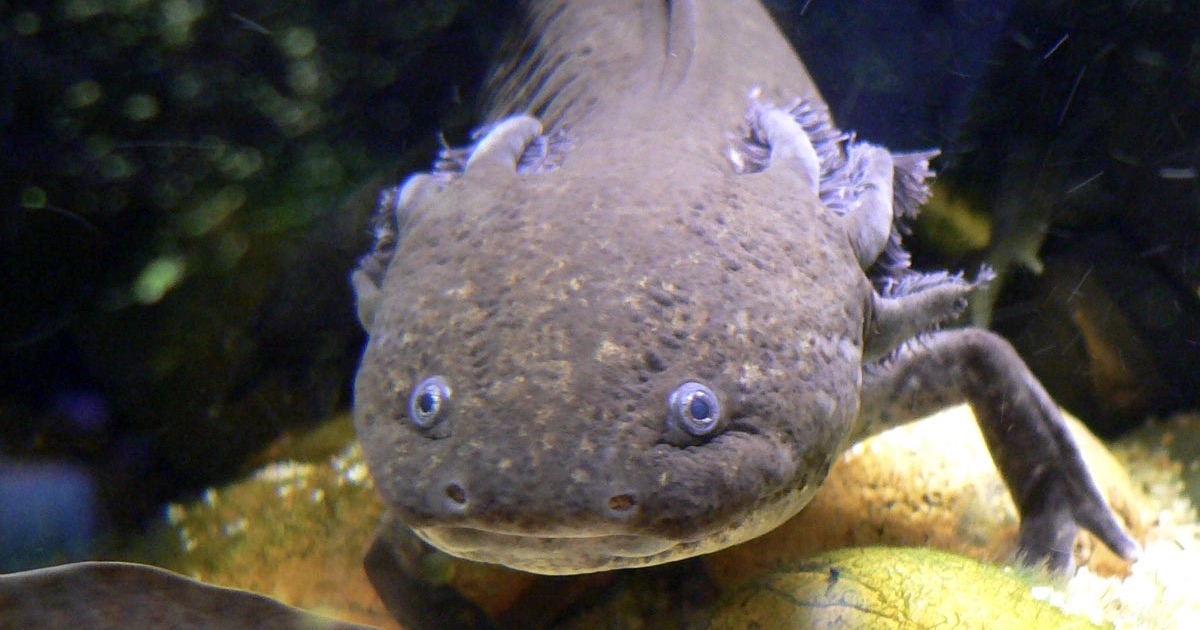
axolotl Type post Date October 19, 2020 CategoriesAnatomyEngineeringEvolutionIntelligent Design Tagged , 3D printing, amoeba, beetles, crabs, Darwinism, Douglas Axe, embryonic development, eukaryotes, evolution, functional whole, Harvard University, Hydra, Illustra Media, information, intelligent design, liver, Michael Levin, morphogenesis, octopuses, paramecium, The Scientist, Tufts University, Undeniable (book) Morphogenesis: Coding for Shape Science & Culture October 19, 2020 Anatomy, Engineering, Evolution, Intelligent Design 10 How do you get a 3-D shape from a linear code? That is the puzzle of morphogenesis. Read More ›
frog eggs Type post Author Jonathan Wells Date June 1, 2018 CategoriesIntelligent Design Tagged , __cedited, carbohydrates, cell membrane, cells, central dogma, complex specified information, cortex, development, DNA, embryo, eyes, Francis Crick, glycans, ion channels, Jacques Monod, James Watson, limbs, Michael Levin, molecular biology, Neo-Darwinism, nucleotides, proteins, RNA, Stephen Meyer, sugar code, tail, William A. Dembski Life Exponential: Life Exhibits Intelligent Design at Many Levels Jonathan Wells June 1, 2018 Intelligent Design 10 Complexity (such as we see in a pile of autumn leaves) can arise spontaneously from unguided natural processes, but complex specified information cannot. Read More ›