






































We’ve been covering the 2026 PBS Evolution series here at Science and Culture Today. The fifth and final episode is “On the Run.” Like the other episodes, it was pretty bland and full of lots of assertions and not a lot of hard evidence. It grossly oversimplified the complexity of the systems and organisms whose origins it was discussing. But what stuck out to me the most was not what it said, but what it didn’t say: Imagine producing a series about evolution, and mentioning Cambrian animals, and giving zero discussion of the Cambrian explosion. That’s PBS’s 2026 Evolution series in a nutshell: Dumbed down, hyper-simplified, and censoring any evidence that challenges its narrative.
Dumbing Down Muscle Contraction
The theme of the fifth episode is the origin of animal movement. It starts by covering stationary sessile animals which lived during the Ediacaran period, just prior to the Cambrian. But then, muscles arose or “developed” and that “allowed” animals to move. We’re told: “The development of muscle allowed animals to take an evolutionary leap that would change them forever.” The narrator even offers this little just-so-story to explain what happened:
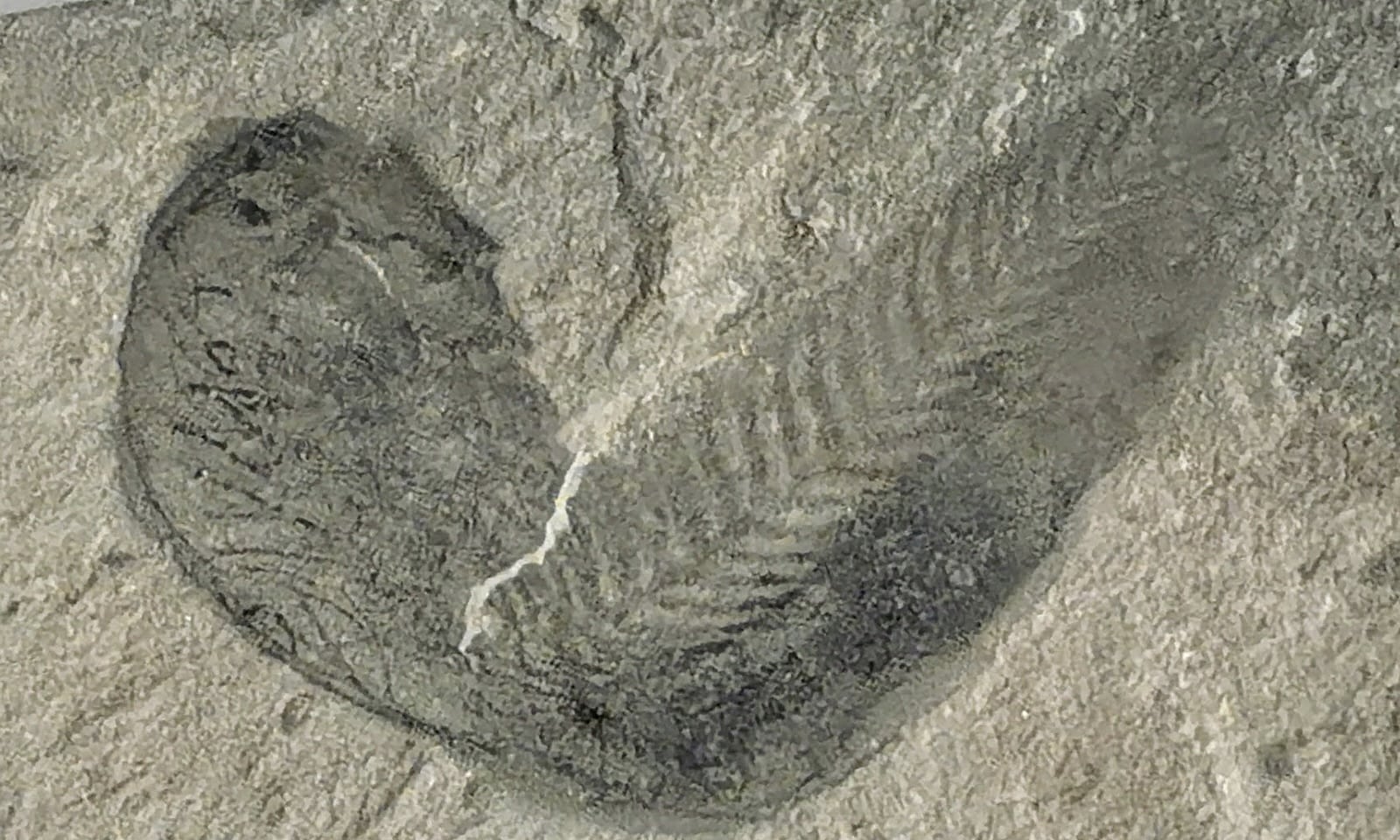
Some scientists think the story of this fossil went like this: These animals are stuck to the Ediacaran sea bed and feed on particles that drift through the water. But now, the currents have changed, carrying the stream of food just out of reach. Unable to feed, the only option for this stationary population is to sit and wait for their luck, and the currents, to change. Otherwise, they might starve. But this animal is different. This tiny, fragile creature can do something that others can’t. Using its muscles to create a ripple of contraction throughout its entire body, it launches itself forward and slowly moves across the sea floor. One small shuffle for an anemone-like blob, one giant leap for animal kind.
And there you have it — voilà! — movement has evolved in “one giant leap.” Things get slightly better when the narrator then at least gives a little bit of insight into the molecular machinery involved in muscle contraction:
The evolution of muscle led to a movement revolution. Despite the variety of movement it unleashed, all muscle depends on just one simple mechanism: contraction. … And this contraction relies on an ancient protein that has existed for more than a billion years: myosin. Myosin is what we call a motor protein. Its job is to generate movement. … But at least 560 million years ago, some myosin was put to novel use in a new type of animal cell.
I was glad (and even a bit surprised) that they mentioned myosin and called it a “motor protein” but then they demean muscle contraction as “one simple mechanism” which, plain and simple, “was put to novel use.” How? Notice the passive verb (“was put”), which allows the speaker to avoid specifying what process or mechanism was responsible. It’s an easy dodge, and they offer no details. And muscle movement is far more complex than PBS lets on. In Nature’s Destiny, in a section titled “Muscles and Movement” (p. 245), pro-ID medical doctor and PhD biochemist Michael Denton explains some of the complexity of muscle movement:
Each basic working component in the muscle cell is an individual protein molecule consisting of a long tail and short head rather like an elongated tadpole, known as a myosin motor. Movement comes about as a result of a sequence of three conformational changes. First, the myosin head attaches itself to another long fibrillar molecule known as actin… Second… the head bends suddenly — the power stroke — and this bending causes the myosin molecule and the actin to move in opposite directions. Third… the head unbends and attaches itself again to the actin [several nanometers further along the actin fiber]. The sequence is repeated again, and gradually, via a series of small steps, the two molecules slide past each other.
Muscle contraction is thus a fine-tuned mechanism, requiring multiple coordinated parts (“motor proteins”) that must be scaled precisely in order to work. In other words, it’s arguably irreducibly complex. PBS barely hints at the complexity of muscle movement, instead asserting that it simply appeared in “one giant leap.” That’s not just an oversimplification: it’s a whitewash.
Censoring the Cambrian Explosion
The narrator continues tells us that after the Ediacaran, “over the next 40 million years, evolution gallops on” as “animals with muscle take over the oceans.” There is a mention that “By the Cambrian, animals are slithering, scuttling, and swimming.” One unnamed species that looks very fishlike is depicted as the narrator states:
And in the Cambrian seas, it is a similar system that pumps oxygen and nutrients around the body of this early swimmer. It has a primitive backbone, so when its muscles flex, its body bends. And this undulation thrusts it forward.
Just to be clear, this PBS episode on evolution is talking about Cambrian animals. Sounds like a good time to mention the Cambrian explosion, when the vast majority of the major animal body plans appear abruptly. But no, PBS Evolution makes zero mention of the Cambrian explosion. It’s not as if this was an unimportant event in the history of animals. Consider what Roger Lewin wrote in Science:
Described recently as “the most important evolutionary event during the entire history of the Metazoa,” the Cambrian explosion established virtually all the major animal body forms — Bauplane or phyla — that would exist thereafter…
Despite the fact that PBS Evolution mentions the “Cambrian seas,” it fails to mention “the most important evolutionary event during the entire history of the Metazoa” — the Cambrian explosion. Why would they leave that out? Perhaps it’s because the Cambrian explosion poses a challenge to their evolutionary narrative. Consider what a 2009 paper in BioEssays (written from an evolutionary perspective) stated:
One of the most interesting challenges facing paleobiologists is explaining the Cambrian explosion, the dramatic appearance of most metazoan animal phyla in the Early Cambrian, and the subsequent stability of these body plans over the ensuing 530 million years. … [A]s explained on an intelligent-design t-shirt:
“Fact: Forty phyla of complex animals suddenly appear in the fossils record, no forerunners, no transitional forms leading to them, ‘a major mystery,’ a ‘challenge.’” The Theory of Evolution – exploded again. (idofcourse.com)”
Although we would dispute the numbers, and aside from the last line, there is not much here that we would disagree with. Indeed, many of Darwin’s contemporaries shared these sentiments, and we assume — if Victorian fashion dictated — that they would have worn this same t-shirt with pride.
It would be hard to imagine a pattern from the fossil record that is more strikingly at odds with what we expect from an evolutionary history of life. Unfortunately, viewers PBS Evolution have no opportunity to grapple with this “most important evolutionary event.”
More Whitewashing
And what of the “early swimmer” that PBS Evolution mentioned as living in the “Cambrian seas”? The illustration shown in the episode could be Pikaia (an early chordate), but the only swimmers with a “backbone” I’m aware of from the Cambrian explosion are various species of vertebrate fish (see also here) — strikingly complex organisms which are indeed found in the Cambrian explosion. The images shown in the episode could also easily be these Cambrian explosion vertebrate fish. PBS Evolution doesn’t say for sure. In fact, it never explicitly acknowledges that vertebrate fish are found in the Cambrian period — instead trying to frame this vaguely identified “swimmer” as a “simple creature.” Here’s what the narrator says:
But to keep its muscles moving, the supply of energy needs to be regular and reliable. … Some muscle cells specialized, and were able to better coordinate those vital contractions independently of the nervous system. They’re known as pacemaker cells. … Around 500 million years ago, this innovation helped pump oxygen and nutrients around this animal providing its muscles with a continuous supply of energy and allowing it to swim farther, faster, and for longer than its competitors. This simple creature has a pulse. [Emphasis added.]
So this creature — a swimmer with muscles, a backbone, a heart, and a circulatory system — is “simple”? Hardly, as again PBS Evolution is trying to demean the complexity of the systems its discussing. In many key respects this “swimmer” had to be virtually as complex as many other vertebrates alive today. But PBS Evolution apparently doesn’t want viewers to realize that a highly complex organism like a vertebrate fish appeared abruptly in the Cambrian explosion without any evolutionary precursors. Again, that wouldn’t fit the narrative.
What Is a Fish?
Lastly, while we’re discussing fish, consider this curious comment in the final episode from Brooke Flammang, a biologist and professor at the New Jersey Institute of Technology:
The truth is, lobe-finned fishes are everywhere. All of us. You and I, your pet dog, your favorite horse, every terrestrial vertebrate you can think of that walks on land, or flies, or climbs is really a fish. A lobe-finned fish.
This is evolutionary cladistics at its most bizarre. Because all terrestrial vertebrates are said to be part of a monophyletic clade that traces back to some lobe-finned-fish ancestor that lived hundreds of millions of years ago, therefore we are all said to be “lobe-finned fish.” I took plenty of evolutionary biology in school. I get the logic, I really do. But I’ll just say that any scientific model that can’t tell you apart from a lobe-finned fish really has some very serious problems and should be treated with extreme suspicion.
And yet, if you ask other evolutionary biologists, you might get an equally absurd but different view of fish. In her book Naming Nature (pp. 7-8), science journalist Carol Kaesuk Yoon explains that evolutionary biologists do not believe fish exist as a taxonomic group:
Here was the mother of all clashes: cladists declared that the proper evolutionary ordering of life revealed that the group ‘fish’ did not exist. … No fish? It was a ridiculous idea, one that pushed the limits of scientific credulity, for here was a conflict between scientific classification and what would appear to be the obvious truth, if ever there was one.
She continues (p. 8):
Yet, as ridiculous as the idea might appear to be, the death of the fish turns out to be scientifically and logically unassailable. If one orders living things based strictly on their evolutionary relationships — as Darwin long before decreed taxonomists should — it turns out that to do this properly, one must create and define groups in a new and very particular way. For a group to be legitimate, it has to include all the descendants of a single ancestor and nothing else.
Evolutionary biology can’t get its story straight. From one evolutionary vantage, every terrestrial vertebrate is a lobe-finned fish. From another evolutionary vantage, “fish” don’t exist as a group. And each of these views are, in Carol Kaesuk Yoon’s words, in direct “conflict” between what evolutionary biology claims and what we know is “obvious truth.” If you met someone in the street who told you he was a fish, or claimed that fish don’t exist, you would assume he was insane. Yet completely sane evolutionary biologists make these same claims with impunity.
PBS Evolution has shown no interest in exploring any of these controversies, absurdities, or scientific weaknesses that stem from an evolutionary viewpoint. Instead, it ignores contrary evidence, reframes complex features as “simple,” while simultaneously offering highly inadequate, hyper-oversimplified explanations for the origin of complex features. For those of us who watched PBS’s 2001 Evolution series, none of this is surprising. It’s how evolution is presented to the public, and it does a great disservice to scientific literacy and the public’s understanding of science. Of course, teachers will also soon be showing it to students, if they haven’t been showing it already.
The way to restore science to sanity is for people to recognize that we live in a highly complex, orderly, and designed universe. Once we adopt that paradigm, we’ll finally have the freedom to acknowledge the existence of the taxonomic category of fish, and also tell the difference between you and a fish.