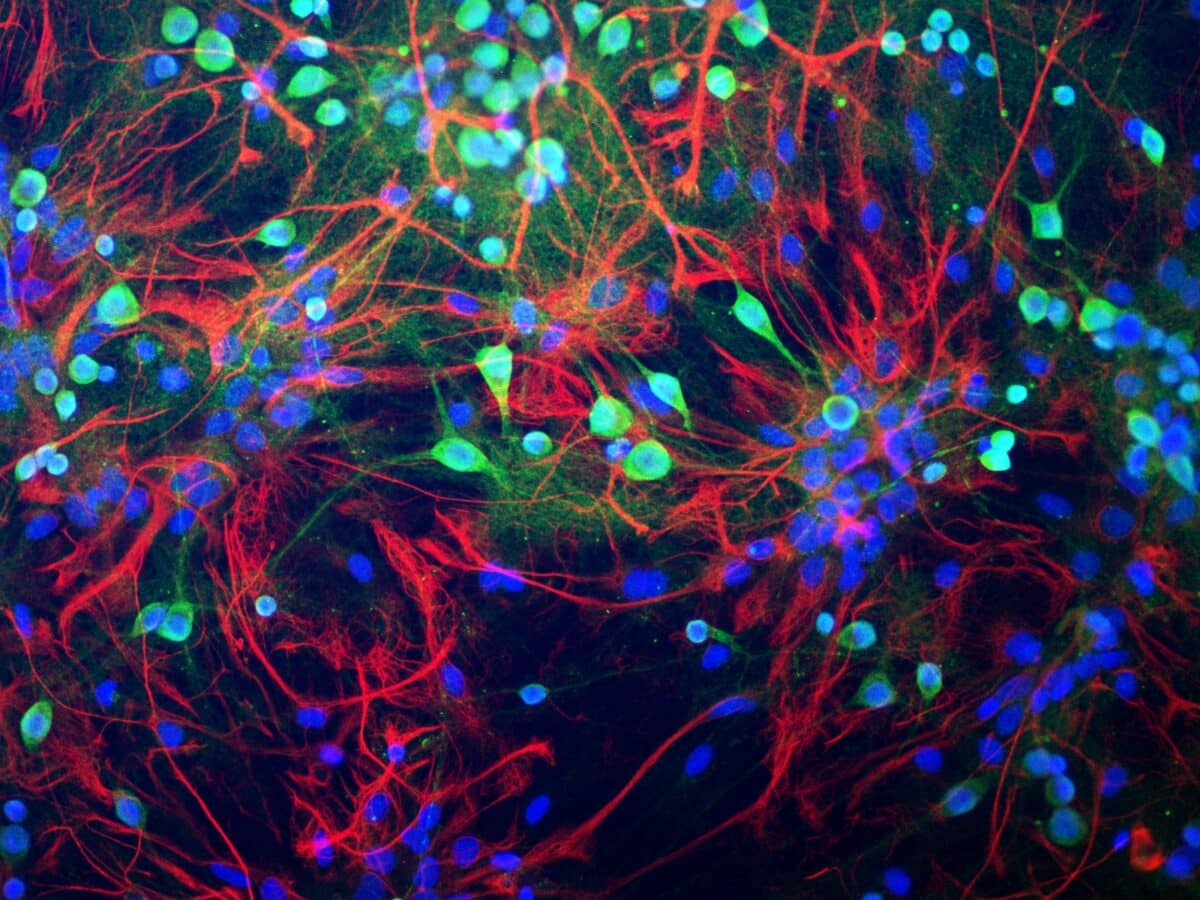
Chk-UCH1-GFAP-20X-1 Type post Author Jonathan McLatchie Date February 26, 2025 CategoriesBiologyEvolutionIntelligent Design Tagged , BioCosmos, carbohydrates, cell adhesion, complexity, dGRNs, endoplasmic reticulum, evolution, glycans, glycosylation, glycosyltransferases, Golgi apparatus, intelligent causes, intelligent design, kidney cells, nerve cells, probabilistic resources, proteins, signaling, stochastic processes, University of Georgia New Paper Examines How the Complexity of Glycan Structures Points to Intelligent Design Jonathan McLatchie February 26, 2025 Biology, Evolution, Intelligent Design 7 "This is, of course, important in order for a kidney cell to be and function as a kidney cell, a nerve cell to function as a nerve cell, and so forth." Read More ›
E. coli bacteria Type post Author Jonathan McLatchie Date July 25, 2023 CategoriesBiologyEvolutionIntelligent Design Tagged , amino acids, bacteria, bacterial cell division, cell wall, evolution, foresight, glycosyltransferases, intelligent design, Irreducible Complexity, natural selection, penicillin, peptides, self-replication Irreducibly Complex, Bacterial Cell Wall Manufacture Is an Evolutionary Enigma Jonathan McLatchie July 25, 2023 Biology, Evolution, Intelligent Design 10 Evolutionary processes cannot select for some future utility that is only realized after passing through a maladaptive intermediate. Read More ›