


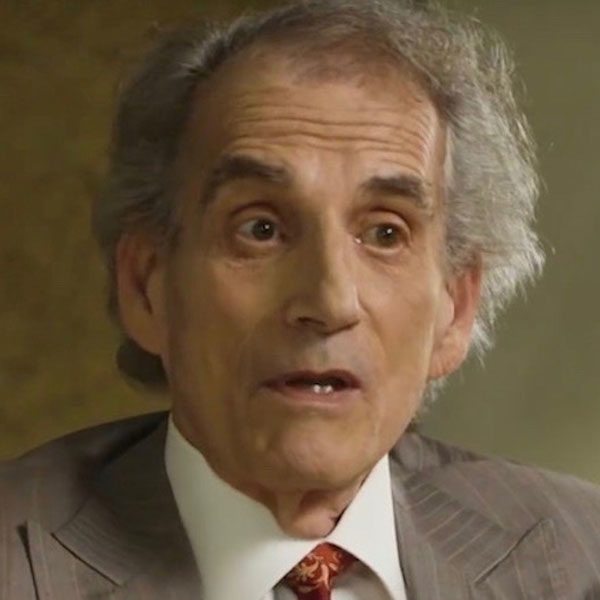

























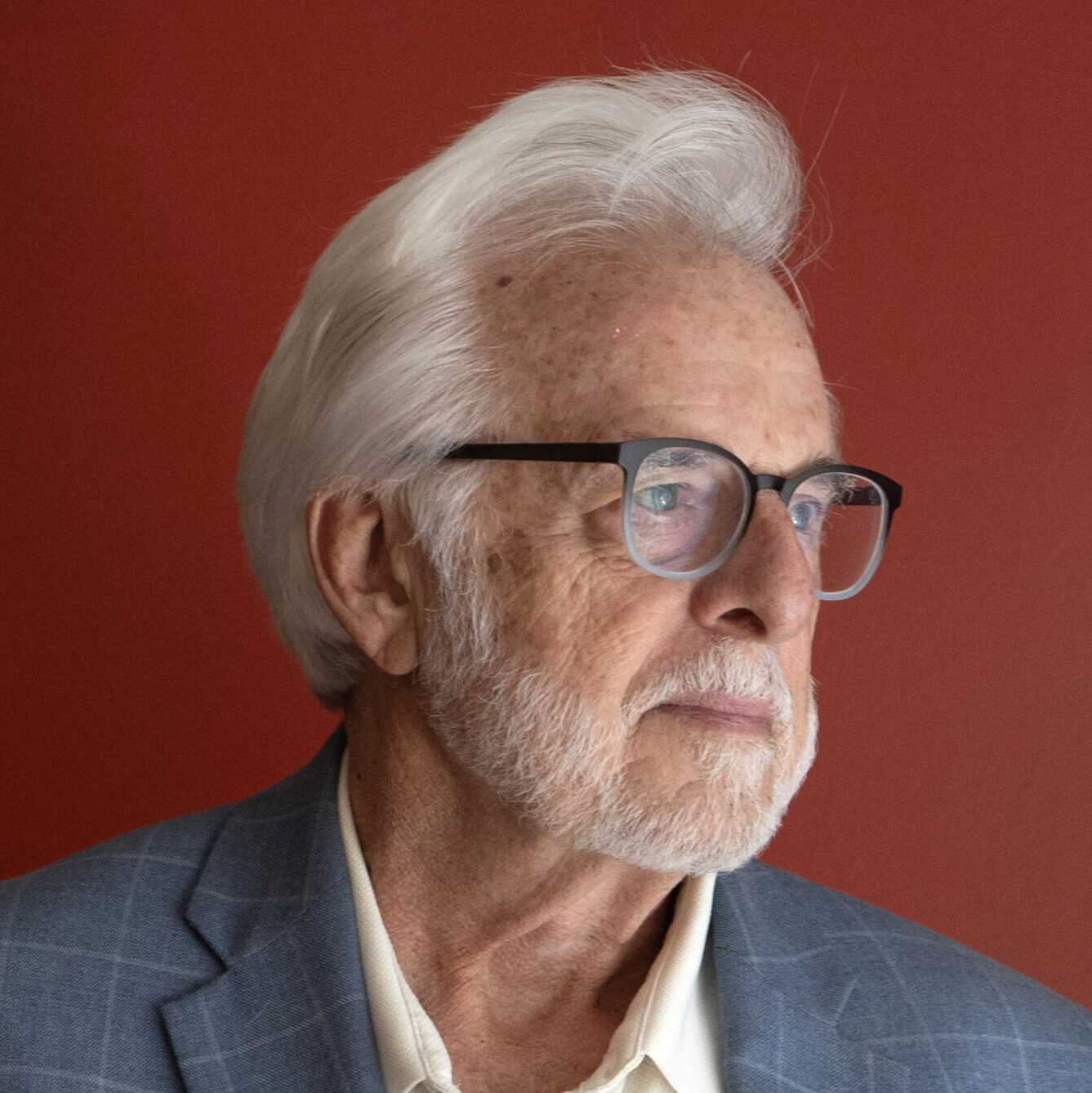


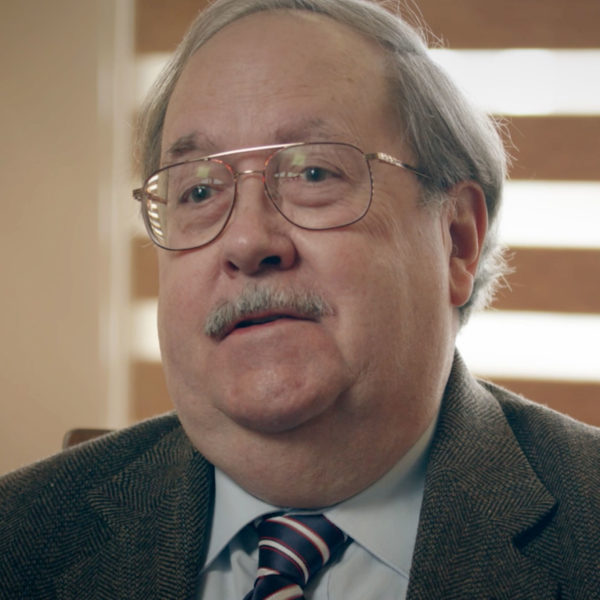



“A little mutation here, a little mutation there. That’s how evolution works.” So says chirpy evolutionary biologist Peter Girguis from Harvard in last night’s third episode of the new NOVA PBS documentary series, Evolution. If that sounds to you like it’s a bit too easy, you’re right.
In the episode, as in the early ones, much of the hard work is done by verbs, the more opaque the better.
No Purposeful Inventor or Intelligent Creator
A favorite verb is “allowed.” It’s as if an inventor were waiting offstage for some barrier to his or her inventiveness to come down, “allowing” the creativity to go forward — though of course in this presentation there is no purposeful inventor or intelligent creator:
- “It was a mutation that allowed cells to stick together.”
- “This was a turning point in the evolution of life, because it allowed for the explosion of shapes that we see on Earth today.”
- “Gills were one of the major evolutionary novelties in the history of animal evolution on Earth, because it allowed animals to get more oxygen.”
- “They allowed for much, much more easy energy capture, which fueled faster, bigger, stronger bodies.”
- “Gills allowed animals to grow bigger, more complex bodies than ever before.”
- “And eventually lungs, that not only helped them survive, but allowed them to do something extraordinary — leave the water and live on land.”
Biological novelties “arrive” or “appear” as if they had been ordered from DoorDash:
- “The age of bodies has arrived.”
- “Until, after millions of years, one of the most unusual bodies in the animal kingdom arrives.”
- “But this little worm has something special. Not all structures, when they appear, are brand new.”
- “This remarkable air-gulping ability first appeared around 400 million years ago, as a backup system.”
“Perhaps It’s Just Lucky”
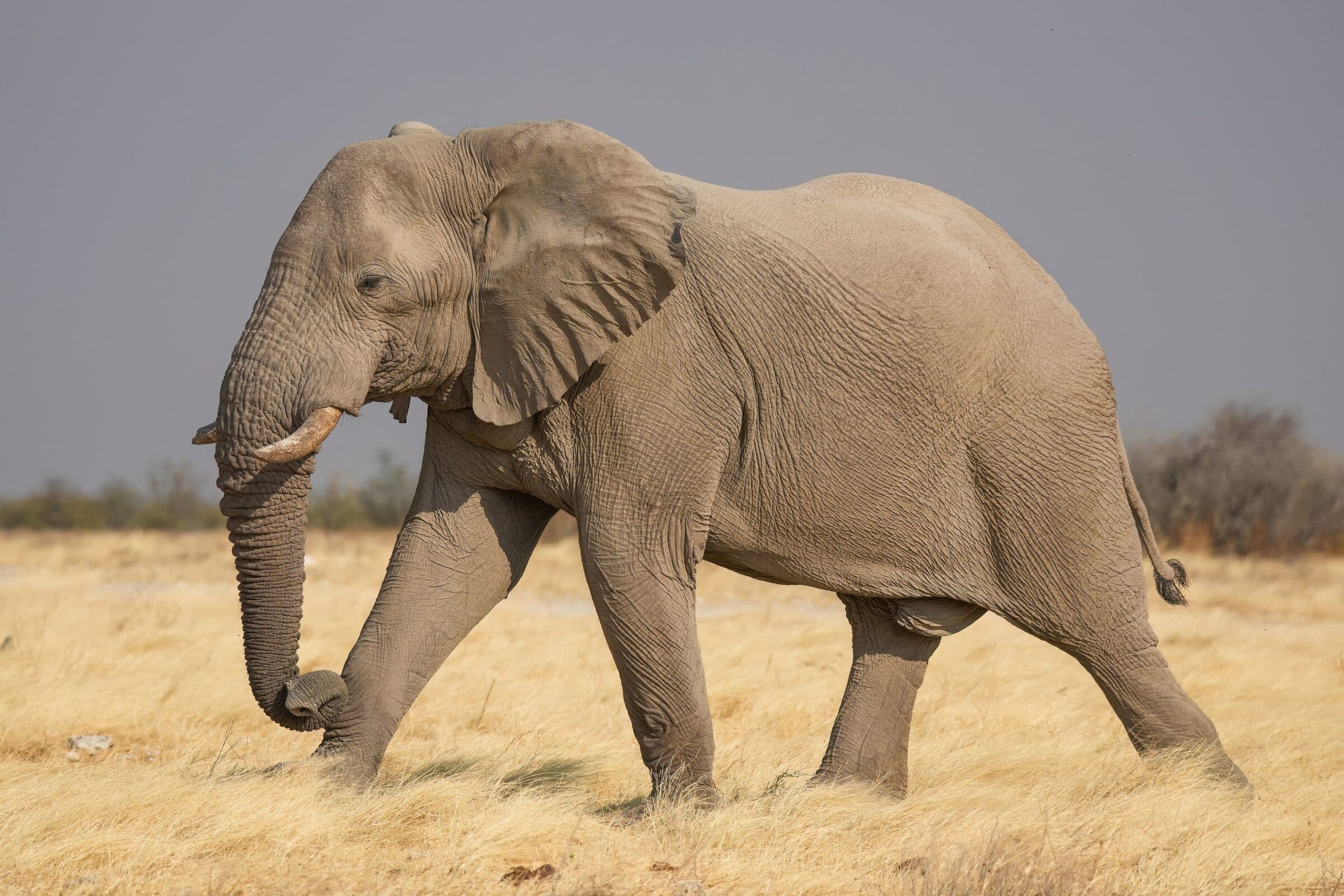
The episode, “Evolution: Body Builders,” tries to explain the transition from LUCA, the hypothetical “last universal common ancestor,” to Earth’s greatest land mammal, the African savannah elephant.
Never is it acknowledged that LUCA is hypothetical, with this ancestor having formed somehow when “the early Earth was hostile to life,” as the narrator admits. “Scientists don’t know for sure how LUCA’s lineage survives. Perhaps it’s just lucky.”
Evolutionary biologist Richard Buggs watched the parallel version of the same series, with presenter Chris Packham on the BBC. On his blog, Dr. Buggs brilliantly dismantles the discussion of LUCA:
I think the BBC Evolution series tends to present science as a collection of facts that can be strung together to tell a true story. Acknowledgement of uncertainty, and accurate descriptions of the evidential support for hypotheses (and the presuppositions underlying them), are scanty throughout. The section on LUCA and the origin of life is a case in point.
Packham describes LUCA as if it was simply a fact, not a hypothesis arising from evidence. In his highly positive review of the series in the Financial Times, Prof. Adam Rutherford offers a mild corrective, calling LUCA a “hypothetical but necessarily real organism”. Although slightly oxymoronic, this statement at least expresses something about epistemology.
It is unfortunate that Packham does not use the word “hypothetical” (or a word with similar meaning), but repeatedly presents LUCA as a simple fact. This means that many viewers may end up thinking that LUCA is evidence for evolution, whereas in fact, evolution is evidence for LUCA.
Chris Packham introduces the concept of LUCA with an elephant behind him, saying:
“In fact, we can trace this chain of [elephant] cells back over unimaginable periods of time through many long-lost extinct species until remarkably it converges at a single point: a single-celled organism that’s connected to every living thing, every branch on the tree of life, a common ancestor that lived billions of years ago.”
When he refers to tracing back cells, I understand him to be talking about phylogenetic analysis. This is a commonly used approach in evolutionary biology that examines similarities and differences between existing life forms (especially in DNA), using them to build a tree-like structure converging in an ultimate single “trunk”.
Phylogenetic analysis assumes a tree-like structure and it assumes a single origin. The main question the method seeks to answer is “What is the ordering of the branches?”. The existence of the tree itself, and its single starting node, is not part of the question, it is a presupposition.
Packham’s description seems to reverse this. He claims that it is remarkable that the tracing back of the elephant cells “converges at a single point”.
It is not “remarkable”, it is an assumption of the methodology. There is nothing surprising about the convergence to a single point because it was the starting presupposition.
The Whole Pseudoscientific Method
Eliding key details, failing to identify presuppositions, is the whole pseudoscientific method here. Though the AI animations are impressive at first glance, they contribute to the problem. As Buggs observes, “On a visual note, I found it a pity that, despite Packham’s words describing the complexity of cells, the BBC animations do not attempt to convey this complexity. LUCA is depicted by CGI as a simple bag-like structure containing a few blobs.”
LUCA was, assuming such a single ancestor existed, anything but simple:
A study published in Nature Ecology and Evolution in 2024 says: “Phylogenetic reconciliation suggests that LUCA had a genome…encoding around 2,600 proteins, comparable to modern prokaryotes. Our results suggest LUCA was a prokaryote-grade anaerobic acetogen that possessed an early immune system.” They say “We find strong support for the presence of ATP synthase”, which is a highly complex rotary motor.
Where did all this come from? We’re not told. The answer, if there is one, isn’t even hinted at.
Arrival of the Elephant
The narrative flies by until we arrive at the elephant. If you were going to try to explain anything about elephants, it wouldn’t just be their great size but their most remarkable feature, the trunk. Paleontologist Mary Droser from UC Riverside is right to be enthusiastic: “It is the ultimate evolutionary multi-tool. So, you’re using your trunk to breathe, you’re using it to pick up things from the ground and bring it to your mouth — it’s amazing.”
It is amazing. But she goes on, “And it is this extraordinary example of how evolution works.” Is it? On the contrary, as David Coppedge explained here this week, the elephant’s trunk poses a conundrum for evolution:
What do these animals have in common: a squid, a snake, an elephant, a chameleon, and an octopus? They belong to vastly different taxons, but each of them possesses a remarkable structure called a muscular hydrostat. These elegant, “beautiful,” and highly functional structures, exemplified by octopus arms and elephant trunks, are the subject of a fascinating Primer by Noel Naughton in Current Biology….
Naughton has diagrams of the musculature inside the elephant trunk. Figure 2B shows a cross section of the trunk, with muscle groups that “run longitudinally along their length, are arranged in the cross-section with a transverse, circular, or radial organization, or lie obliquely along a helical path.” What’s astonishing is that the same design is found in octopus arms, squid tentacles, and lizard tongues! This compounds the difficulty for evolutionists to explain the independent origins of muscular hydrostats with similar capabilities in unrelated organisms….
How does Naughton explain this baffling similarity? He invokes the fallacy that a physical constraint compels natural selection to create a solution:
“This similarity perhaps reflects the limited ways a one-dimensional muscle contraction can be translated into the three-dimensional deformations of bend, twist, extension, and shortening that a muscular hydrostat can perform.”
“How evolution works,” as both Mary Droser and Peter Girguis put it — and how the NOVA Evolution series works — is to skip over all such difficulties, telling a smooth story with mostly smiling scientists urging it on. The question of how bodies are actually built remains as unclear at the end of these 54 minutes as it was at the beginning.