






































We continue our journey looking at Christoph Adami’s book, The Evolution of Biological Information. Box 5.2 in the book is titled, “Evolution of New Genes.”The evolution of new genes is crucial to the success of evolutionary theory. If the theory can explain the evolution of new genes then evolution can be a successful explanation. But if evolutionary theory struggles to account for new genes, then it cannot account for the biological complexity we find in life today.
Adami says, “Over the years, molecular biologists have collected many examples of the evolution of new functionality” and he cites a review by Long et al. from 2003. This sentence caused me a little trepidation. Did this review contain a list of examples of observed evolutionary adaptations that challenge my assessment of the abilities of Darwinian evolution?
One Gene in Particular
The 2003 paper is titled, “The Origin of New Genes: Glimpses From the Young and Old,” and it does not, in fact, discuss any observed examples of evolution. Rather, it describes genes inferred to have come into existence millions of years ago and described processes inferred to have been involved in their origins.
Both the paper and Adami’s book focus on one gene in particular, Jingwei. The gene appears to have arisen within Drosophila, that is fruit flies, approximately 2.5 million years ago when two genes were spliced together. After that there appears to have been a series of mutations optimizing the gene in some way.
From a design perspective, such a scenario is possible and not that surprising. Combining two halves of functional genes will sometimes produce a new functional gene. The functionality and information are already there; they are just being combined in a new way. It is far easier to combine existing functional components than to come up with those components in the first place.
Effective but Limited
Crucially, while recombining functional parts in new ways is effective it is also limited. There are only so many ways to recombine those parts. In order to account for the myriads of genes in living things we need to move beyond such simple recombinations.
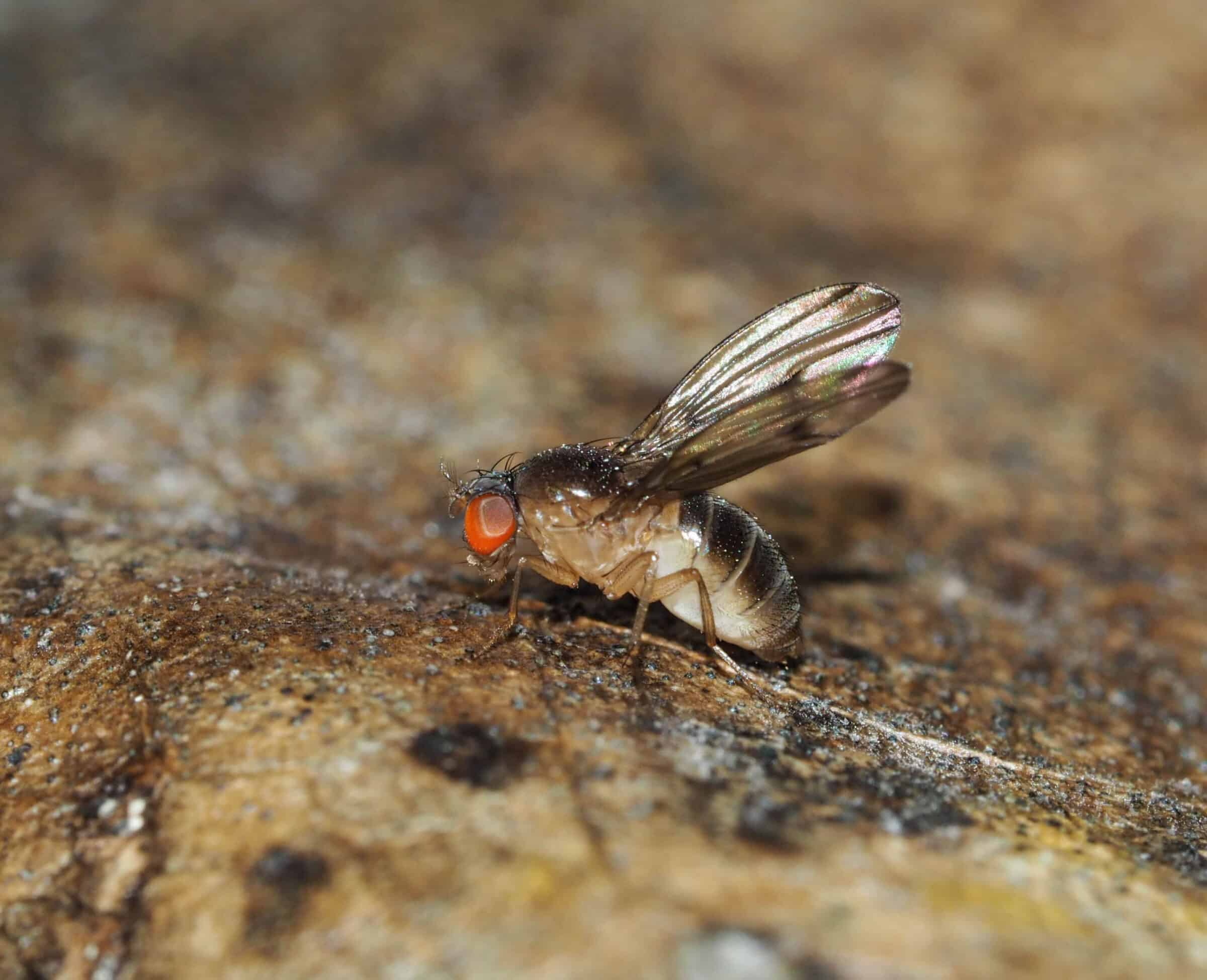
But there is an additional problem for evolutionary theory. This gene is inferred to have arisen 2.5 million years ago in fruit flies. Fruit flies have 20 to 25 generations per year and an enormous population. Evolutionary processes have an enormous number of opportunities to try out different combinations and mutations. Such a situation is relatively ideal for the evolutionary process.
And what do fruit flies have to show for such evolutionary power? Some genes produced by simple recombinations of existing parts? If that is all evolution can accomplish there, it is going to struggle with more difficult scenarios such as large animals with long generation times and small populations.