






































Abuses of the concept of natural selection abound not only in science news articles but in research papers in major scientific journals as well. It’s time for a remedial course.
At best, natural selection allows the fortunate to continue existing. I say fortunate, because a mindless process could not care what exists or not, and there is no guarantee that survivors will represent an improvement over what existed before; the survivors might be lucky bums. At worst, natural selection (hereafter NS) commits the fallacy of personification, ascribing the power of choice to impersonal happenstance. This makes as much sense as speaking of “natural voting.” NS doesn’t care who wins. NS is not a person. Extinction is just as valid an outcome of “selection” as innovating a new organ, eye, or wing. Other blatant cases of personification can be found in descriptions of NS as a “blind watchmaker” or a “tinkerer” or a “driver” and in Dawkins’ concept of “selfish genes.”
Before continuing, clear your mind of any idea of foresight, plan, or purpose as we consider what natural selection means and does not mean. Notice I do not call NS a process. The word “process” carries with it the baggage of programming or an algorithm. NS has neither.
Useless vs Useful Selection
Let us first dispense with certain notions of selection that are of no use to evolutionists. If they want to explain the vast diversity of life with NS, it must be capable of adding new functional information to a genome, body plan, or population. None of the following kinds of “selection,” therefore, will help:
- Artificial selection. By definition, this can only be done by intelligent design. Darwin was notorious for analogizing human breeding into an argument for natural selection. As Robert Shedinger shows in his book Darwin’s Bluff, Darwin never corrected this fallacy even when it was pointed out to him. Artificial selection includes so-called “directed evolution” experiments that employ random variations, because the “selector” is a human with foresight.
- Negative selection. This only eliminates information or weeds out the “unfit.”
- Purifying selection, stabilizing selection, and balancing selection. These only remove harmful variations or preserve existing information.
- Conservation. Genes that have been “conserved” over time imply that nothing has evolved.
- Hybridization. This combines existing information but does not add information.
- Introgression. This inserts existing information from another source. Same with horizontal gene transfer.
- Genetic drift. This is neutral variation without innovation, foresight or purpose. As geneticist John Sanford has shown, the accumulation of non-lethal mutations leads to genetic entropy, which trends toward extinction.
- Polyploidy and gene duplication. These events merely copy existing information.
- Subfunctionalization. Splitting functions of a gene into two genes adds no information.
- Co-option. This is a question-begging concept wrapped in personification. It portrays organisms borrowing existing information and repurposing it for another function.
Evolutionists sometimes claim that items in the above list, particularly 5 through 9, help the theory because they create opportunities for evolution. This is like saying that duplicating a dictionary, or splitting it in half, allows for new words with new meanings to “emerge.” Such question-begging is unlikely to convince a critical thinker.
Does Positive Selection Exist?
The only kind of selection useful to evolutionists is positive selection, the preservation of alleged “beneficial variations” (usually genetic mutations, which are overwhelmingly deleterious). Sometimes this is called “directional selection” (assuming the direction progresses up the tree of life). Think of the upward steps required to get from bacteria to brain. Evolution needs progress up the tree of life, and for that, it needs voluminous instances of innovation or novelty that might help the organism climb another step on Mount Improbable. Can accidents produce new organs, tissues or body types? Such wishful thinking works in Spiderman and Mutant Ninja Turtles but does not belong in science.
Examples of positive selection, unfortunately for evolutionists, are hard to come by. As Michael Behe shows in Darwin Devolves, cases put forth as examples of positive selection usually involve loss of information that might permit continued existence in certain environments, but do not add new functional information. This is like throwing cargo overboard to survive a storm at sea. Blind cave fish can survive and reproduce without eyes, and flightless cormorants can survive on the Galápagos, but those hardly count as progress.
The positive selection Darwinists need are innovations that trend upward. All scientists — even the most ardent creationists — accept variation within limits. Examples abound, such as color variations in flowers, wing patterns in butterflies, and size differences in theropods. Octopuses range in size and color from sea monsters to tiny blue versions that fit in your hand, but they are all clearly octopuses. Such variations within a genus or family, with individuals adapted to particular environmental niches, are not controversial. That’s why the common examples of natural selection (peppered moths, finch beaks, etc.) barely elicit a yawn from Darwin skeptics. To support their belief in the unlimited power of NS, evolutionists need to explain the “emergence” of new body plans, organs and systems requiring substantial complex specified information, such as the novel phyla that appeared in the Cambrian Explosion.
False Force
Consider that as a source of innovation, NS is not a real process (see Tom Bethell’s article from 2012). Without new genetic information organized into innovative functional systems, there is only stasis or “horizontal” variation. Hugo de Vries pointed out in 1904 that natural selection can explain the survival of the fittest, but it cannot explain the arrival of the fittest. Evolutionary theory needs useful innovations to arrive. Their challenge becomes exacerbated when considering systems of systems, such as interoception.
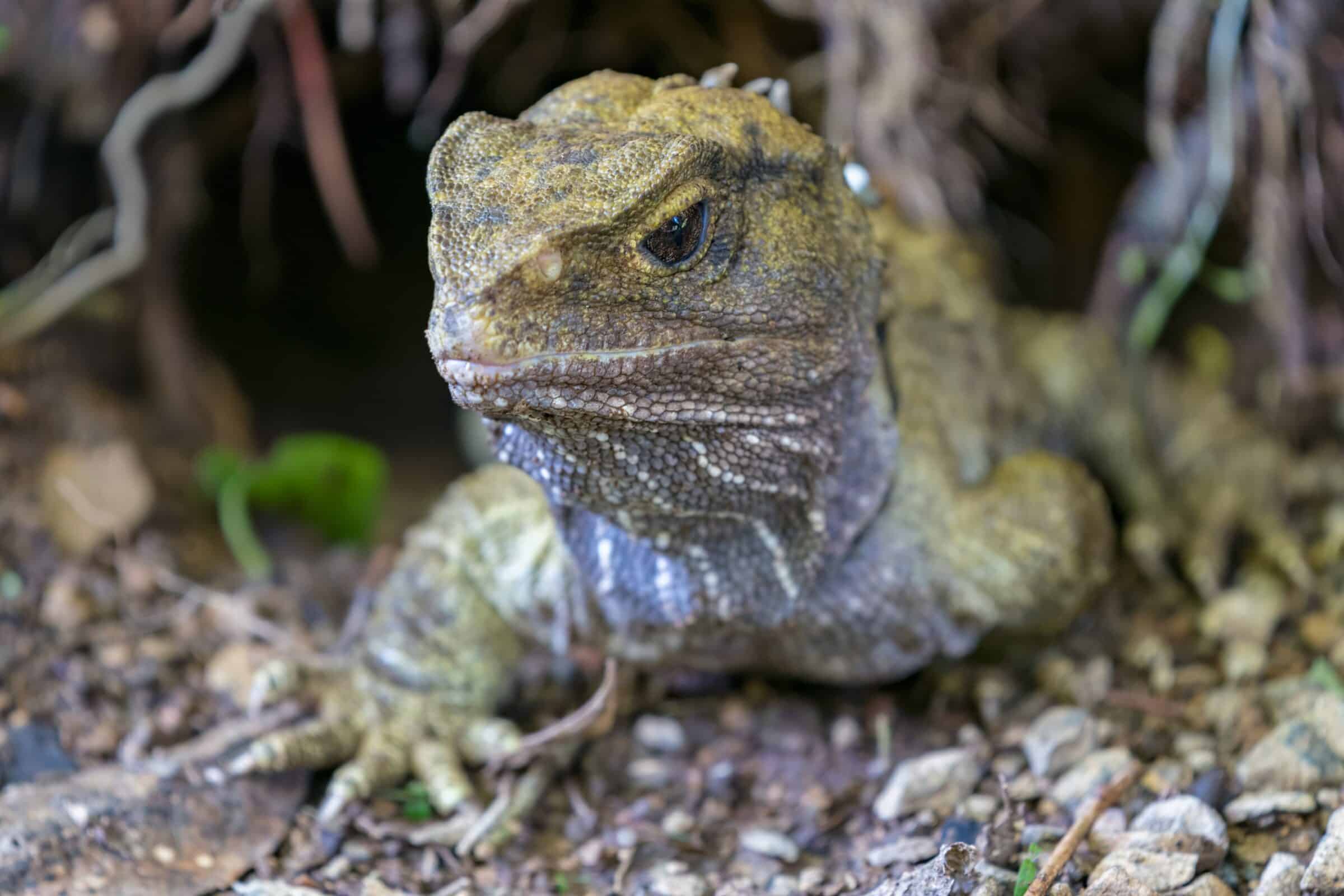
Evolutionary literature often invokes a mythical force called “selective pressure” that drives creatures up Mount Improbable. Selective pressure is a false force trying to sound like physics. It has no units. Nowhere do they describe an instrument like a barometer or select-o-meter that can give them an objective reading of selective pressure. How many kilodarwins of selective pressure does it take to convert a tuatara (like the one pictured at the top) into a pterosaur? Some evolutionists will object, saying that they do have a measurement: the dN/dS ratio (the ratio of non-synonymous to synonymous mutations). At best, this is only a proxy measurement that supports the question-begging notion that preservation of a variant implies selection. But like conservation (#4 in the list), the dN/dS is not a measure of innovation or progress.
The Witless Witness of Fitness
Many have pointed out the tautologous nature of the word “fitness” in Spencer’s term survival of the fittest, later co-opted by Darwin. We’re not talking physical fitness here, like a bodybuilder in the gym or a champion marathoner. In evolutionary lingo, if it survived, it must have been the fittest. How do you know it is fit? Well, it survived, didn’t it? In Darwinism, fitness can mean anything that leaves offspring. The fat slob on the couch is fit if he gets the girl. Matti Leisola, in his book Heretic, described the flexibility of evolutionary fitness:
The Darwinian theory of evolution is the phlogiston of our day, festooned with a myriad and growing number of patches. Evolution is slow and gradual, except when it’s fast. It is dynamic and creates huge changes over time, except when it keeps everything the same for millions of years. It explains both extreme complexity and elegant simplicity. It tells us how birds learned to fly and how some lost that ability. Evolution made cheetahs fast and turtles slow. Some creatures it made big and others small; some gloriously beautiful, and some boringly grey. It forced fish to walk and walking animals to return to the sea. It diverges except when it converges; it produces exquisitely fine-tuned designs except when it produces junk. Evolution is random and without direction except when it moves toward a target. Life under evolution is a cruel battlefield except when it demonstrates altruism. Evolution explains virtues and vice, love and hate, religion and atheism. And it does all this with a growing number of ancillary hypotheses. Modern evolutionary theory is the Rube Goldberg of theoretical constructs. And what is the result of all this speculative ingenuity? Like the defunct theory of phlogiston, it explains everything without explaining anything well. (pp 198-199)
Chance vs Science: The Fallacy of Catch-All Explanations
NS is anti-science, because it uses chance as an explanation. Scientists should explain phenomena with reference to causes. Chance is the absence of causation. I call natural selection the “Stuff Happens Law,” because NS can be applied to any outcome, including opposite outcomes, as Leisola has shown. Many evolutionists use existence itself as evidence of NS. They think, if it exists, it was naturally selected! Begging the question, anyone? Like chance, this tactic can explain anything. With a little humor, we can argue that the Stuff Happens Law is scientific:
- It is reductive: All events can be reduced to this law.
- It makes predictions: Stuff will happen.
- It is universal: Stuff always happens.
- It is normative, not just descriptive: Given matter in motion, stuff must happen.
- It is falsifiable: If nothing happens, the law has been disproved.
- It is practical: If something happens, you know you will find stuff around.
- Corollaries can be derived from it:
- Stuff happens at the worst possible time
- Bad stuff happens to good people
- Murphy’s Law: Whatever can go wrong, will.
Substitute “natural selection” for “stuff” and the list reads the same. Or make up a nonsense word like “blurk” that a shaman might say explains everything, and re-read the list with it. No less an evolutionary expert than Richard Lewontin admitted to Tom Bethell, in his book Darwin’s House of Cards, that this is a big problem in Darwinism:
For what good is a theory that is guaranteed by its internal logical structure to agree with all conceivable observations, irrespective of the real structure of the world? If scientists are going to use logically unbeatable theories about the world, they might as well give up natural selection and take up religion. Yet is that not exactly the situation with regard to Darwinism? (p. 65)
Furthermore, evolutionists cannot agree on the target of selection. Is it the gene? The tissue? The organ? The body? The kin? The group? The population? All of the above? None of the above? Two evolutionists went mystical over this quandary, claiming the target of selection is “the song, not the singer.”
NS in Action, or NS Inaction?
Surely evolutionary biologists are astute enough to avoid these blunders, right? Let’s look at three recent articles.
1. In The Conversation, Vanderbilt professor Owen D. Jones confused NS with artificial selection, claiming that “natural selection helps design antennas, cancer treatments and adhesives.” Jones practically worships natural selection:
To me, as a professor of both law and biology, that success points to a broader truth: When people harness the logic of natural selection, they can often find efficient and effective ways to solve complex problems. As I explore in my book, “Force of Nature: Understanding Evolution’s Deepest Logic – And Putting It to Use,” natural selection is the most relentless efficiency-seeking force in the history of life.
2. In news from the John Templeton Foundation, Dyna Rochmyaningsih reported on Robert Hazen’s extension of natural selection to everything in the universe. He commits the question-begging fallacy that if something exists, it must have been selected:
This process of selection applies to all matter that composes living and nonliving things in the universe, including the continuous process which connects the two worlds, or what is popularly known as “the origins of life.” Minerals did not evolve solely within their own kingdom, they crossed paths with other chemical reactions, selecting molecules suitable for life, says Hazen….
Hazen, who has published more than 25 books on mineralogy and origins of life science, contends that evolution is not exclusive to the living world. The process of selection, as a driver for increasing complexity, applies to many other worlds such as music, languages, as well as chemistry.
3. In BioEssays, Ariel Chipman appealed to NS to explain the Cambrian Explosion, granting it magical powers:
This increase in morphological complexity and disparity was facilitated by an increase in the complexity of the central nervous system, which in itself was a selective response to the ecological complexity of the biosphere, which had been increasing from the late Ediacaran. Genetic regulatory components that contributed to an increasingly differentiated and regionalized central nervous system were developmentally co-opted to increase the differentiation and complexity of additional organ systems.
From my daily perusal of the scientific literature, similar examples of natural selection as the catch-all explanation for everything could be multiplied. NS is the evolutionists’ deity, possessing magical powers. As Phillip E. Johnson often pointed out (echoed by William Dembski and Winston Ewert in The Design Inference, 2nd ed.), natural selection is the Darwinians’ “designer substitute.” Everyone, therefore, agrees that design is evident. The question is whether the designer is intelligent or impersonal (i.e., blind, operating by chance in an unguided way with no foresight, obtaining apparent design by sheer dumb luck). Believe the former, and science agrees with our uniform experience about the source of design. Believe the latter, and science regresses to magic.