






































A couple of friends made me laugh last week in telling about a Jewish class they took. The teacher at one point posed the question of whether those in the class felt that knowledge of God’s existence is innate, in the heart — or whether, for them, it’s derived from evidence “like intelligent design or the Big Bang.”
It was implied from the context that the preferred answer was the former, not the latter. Rhetorically, when given a choice like that, you can generally assume that the speaker is edging you toward the first answer as the correct one.
Almost the Very Same Question
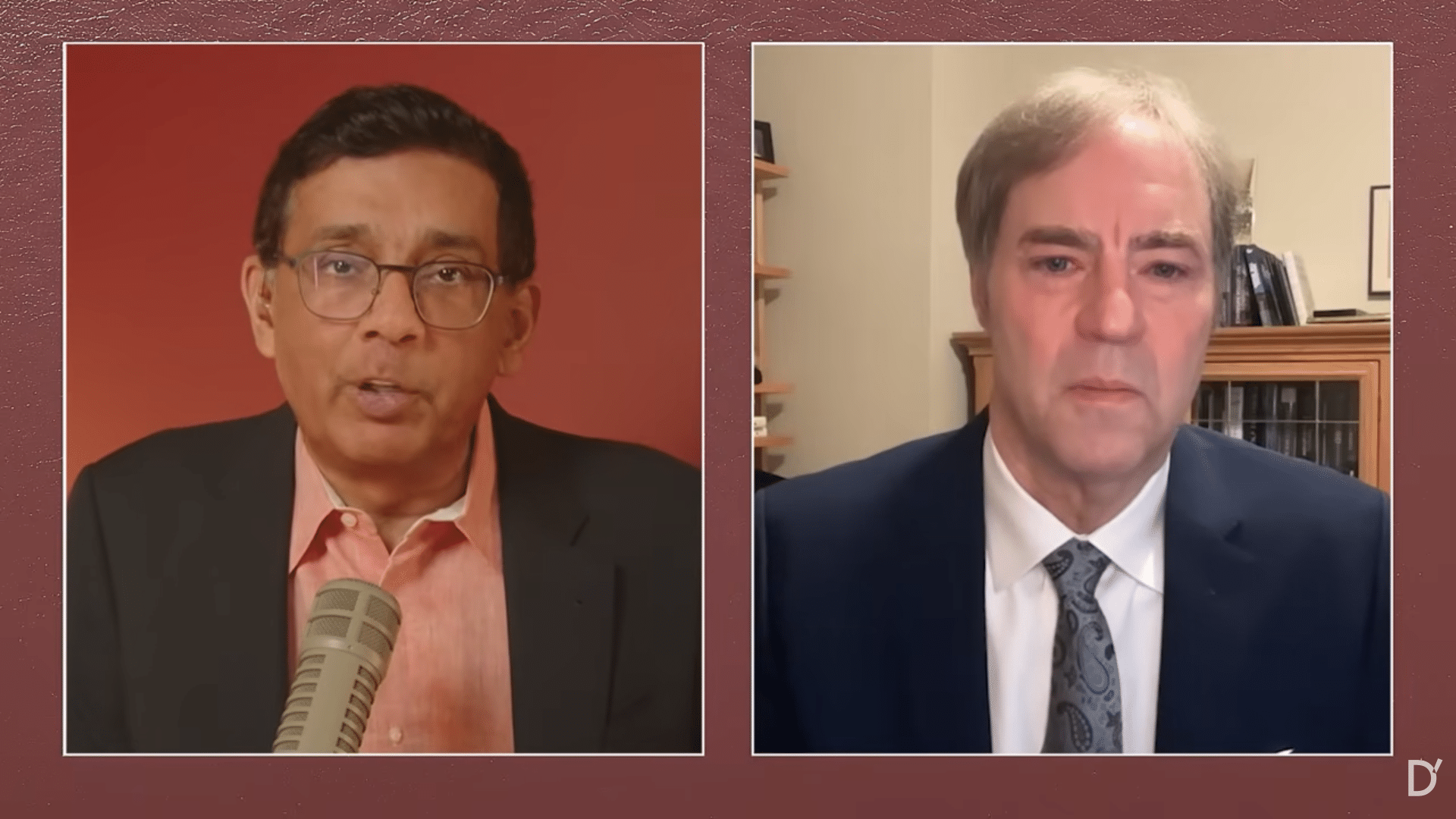
Coincidentally, in discussing The Story of Everything with Stephen Meyer, Dinesh D’Souza posed almost the very same question. The documentary is in theaters across the country from tonight through May 6, and it’s relevant here. I might have said that different people are different: some know with the heart, others need evidence, and still others are not open to either.
Meyer’s own answer is worth quoting in full:
That’s a fantastic question because you could do a whole philosophy seminar on it. Alvin Plantinga, the great theistic philosopher, argues that knowledge of God is “properly basic.” It’s something that we all have and it’s built into us. This is a very Calvinist view that there is a sensus divinitatis that we all have.
The book of Romans in the New Testament would have a lot to say about that as well. It says from the creation of the world, “God’s invisible qualities — his eternal power and divine nature” — often equated with the notion of wisdom because it’s so oftentimes affirmed in the Bible that “in wisdom thou hast created all things,” as it says in the psalm. He says “his eternal power and divine nature have been clearly seen, being understood from what has been made.” So, there is yes, maybe, a sense of the divine that we all have, but that’s reinforced by what we see, what’s been made in the world around us.
And so there is a legitimacy in a biblical view to inferring the reality of God from the effects of God’s own actions in creation. You can infer the causes from the effects. And that is also a form of scientific reasoning. It has a logical form. It’s called abduction as opposed to induction. And abductive inferences can be strengthened and justified by a move that I referred to before, by showing that you’re making an inference to the best explanation.
So in a way I think there is, yes, an intuitive knowledge of God that people have. The book of Romans goes on to say that we all suppress that in one way or another, but that God can yet still be known “from what has been made.”
And so what we’re doing I think has both theological legitimacy but also scientific legitimacy. We’re reasoning in a very properly scientific and philosophical form. When we look at the effects and we compare the possible competing explanations and then we say, well, which one is best, which one provides the best causal account of what we see, that allows us to reason from effects back to causes.
And there I think we get a very strong basis for the inference to intelligent design, or the inference even to a transcendent creator, as we’ve been talking about in the case of trying to explain the origin of everything, the origin of the universe itself.
From that, could you say in answer to the teacher’s question that in Dr. Meyer’s view, it’s not an “either/or” but a “both/and”? Perhaps.