





































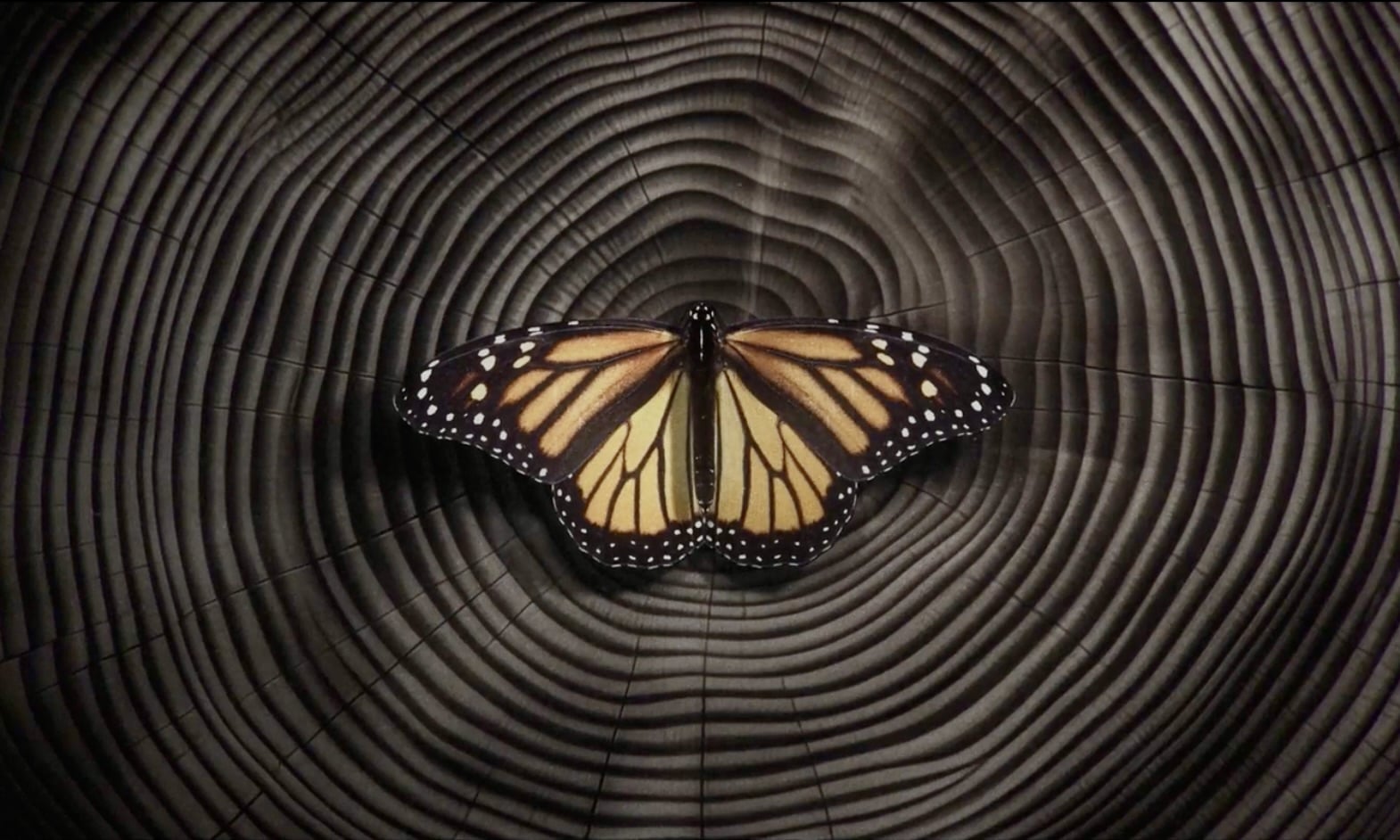
I was not prepared for what I experienced in The Story of Everything: The Science That Reveals a Mind Behind the Universe.
I’m a Senior Fellow at Discovery Institute, which partnered in the film. So as I sat down to watch a prerelease screener, I knew the film was based on Cambridge-trained philosopher Stephen Meyer’s bestselling book Return of the God Hypothesis. I also knew the film had a big budget and Hollywood talent behind it, so I expected it to look good. But I’ve worked on successful documentary films, including The Privileged Planet and Poverty, Inc., a 2014 feature-length film that won multiple prizes; I’m not easily impressed.
And yet I was.
Here’s what surprised me: the film is not only beautiful, it’s just plain watchable. Now, Stephen Meyer is a lucid communicator with a gift for storytelling. But his strong suit is chasing out every conceivable argument and counterargument as he builds a scientific case for an architect of life and the universe. It’s partly why his three volumes — Signature in the Cell, Darwin’s Doubt, and Return of the God Hypothesis — have been so successful. My concern was that the film would bog down in scientific and philosophical minutiae. It does not.
“Fighting for the Audience”
In a Q&A with the filmmakers, I learned that in post-production they kept reminding themselves to “fight for the audience” — that is, for that guy and gal showing up at the cinema for a date, popcorn and fountain drinks in hand, hoping to be informed and edified, sure, but also entertained. Director Eric Esau and his team succeeded magnificently. The nature footage is stunning. The animation — from the cosmological scale down to the Lilliputian world of molecular biological machines — is flat-out the best I have seen. And the editing to boil it all down and stitch it together is masterful.
Then there’s the archival material. The filmmakers found some great historical footage of famous scientists that I had never seen before. And I have gone digging for the stuff!
The set designs bear mentioning, too. When you make a documentary featuring so many different thinkers filmed in disparate settings, the first thing to go is a tightly unified aesthetic. But director Eric Esau and his creative team overcame this with a quirky but enormously effective mid-century set design for the various speakers.
The Imprint of Meyer’s Intelligence
As for the argument, while the film can’t chase down every significant argument and counterargument in the way that Meyer’s three big books do, what’s there bears the imprint of Meyer’s keen intelligence and his decades debating and refining the scientific case for God.
He’s joined by a cast of other brilliant thinkers, including Peter Thiel, Oxford’s John Lennox, philosopher William Dembski, distinguished physicists including Brian Keating and Frank Tipler, and life science experts James Tour, Douglas Axe, and Michael Behe.
The film’s argument in brief: At the beginning of the 20th century, the smart money in the academy was on philosophical materialism, which assumed the universe had always existed, life’s origin was a minor hurdle, and Darwin had solved the riddle of the origin of species. No God required.
But in the decades that followed, everything changed.
Remarkable Coincidences
First, the dream of an eternal, uncreated universe was exploded by the Big Bang. It became clear that our universe had a beginning — and beginnings require explanations. Then scientists began uncovering a series of remarkable “coincidences” — various ways that the laws and constants of nature are exquisitely fine-tuned to allow for advanced life. Nobel laureates began frankly confessing that that this strongly suggested divine design.
At the same time, life scientists were finding that contrary to Darwin’s understanding of the cell, even “simple” bacterial life buzzed with clever nano-technology and ultra-advanced software code.
God, it seemed, might not be on the wrong side of history after all.
The latest scientific evidence, from the cosmic scale down to the marvels of molecular biological machines — this astonishing story of everything — suggests his hand.
The film premieres in theaters April 30.