






































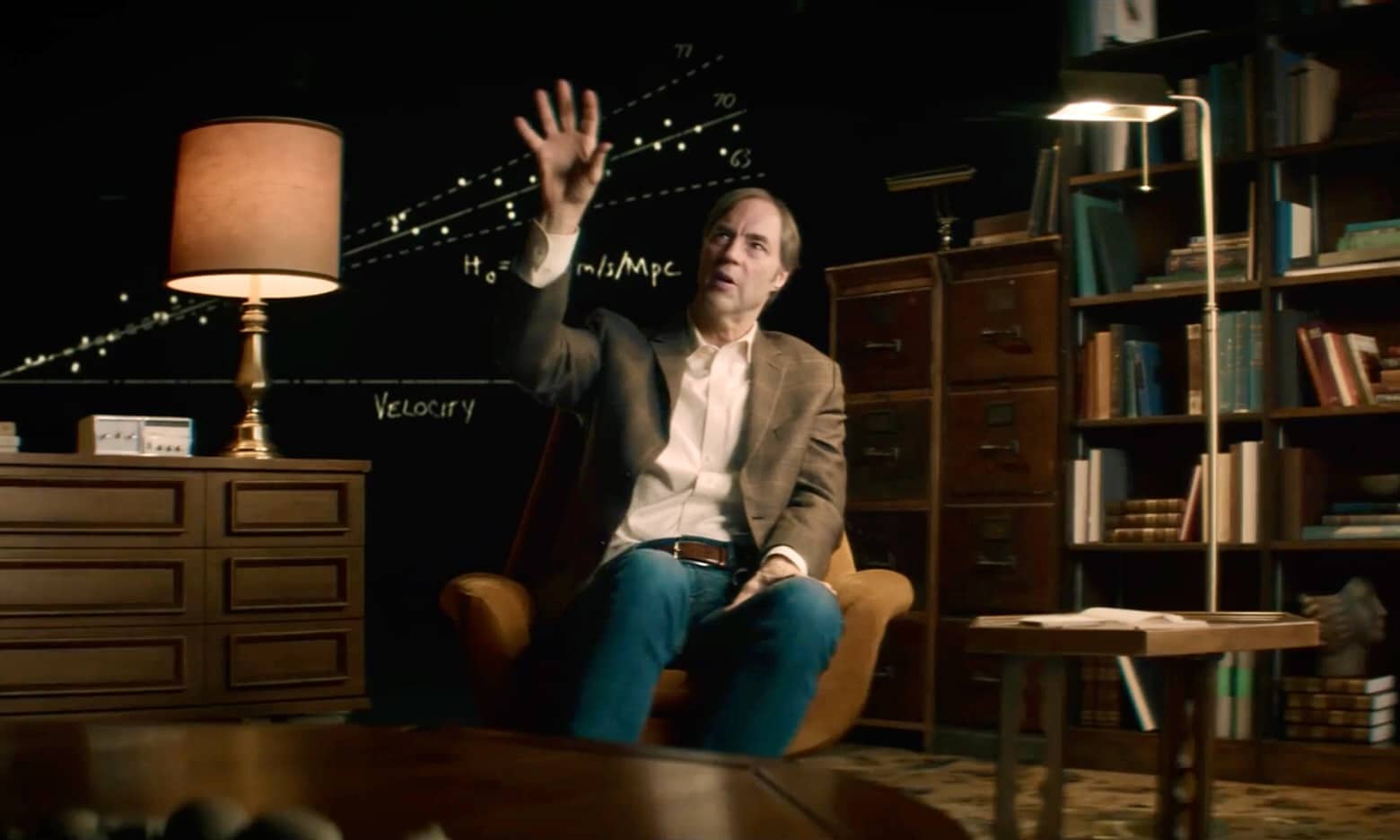
Whoa, share this with an atheist friend. Tony Bradley is editor-in-chief of TechSpective. As he states at the top of a super-thoughtful review of The Story of Everything, he’s also an atheist. He watched the new documentary based on Stephen Meyer’s Return of the God Hypothesis — in theaters across the country from tonight through May 6 — and talked with Dr. Meyer.
The result is one of the fairest, most intelligent responses to ID, from someone who doesn’t accept the design argument, that I’ve read. He says of himself, “I was a born-again Christian as a kid, read the Bible end to end more than once, and eventually landed somewhere else entirely.” About the film, he writes,
I follow the logic. But I think there’s a correlation-causation problem buried in it. The fact that every example of complex, specified information we’ve observed so far came from a mind doesn’t mean a mind is the only possible source.
AI and Model Collapse
That’s a reasonable objection, which is not to say we hadn’t thought of it. See Return of the God Hypothesis on the method of inference to the best explanation. Bradley also cites Meyer on artificial intelligence and model collapse:
The meaningful, functional information that makes large language models work traces back to conscious human intelligence. Sever that connection and the system unravels. He sees it as evidence for a broader principle: specified, functional information always originates from a mind.
“Can’t Wave It Off”
Bradley admits, “I’m not sold. But I can’t just wave it off either.” He concludes powerfully:
Meyer is not a preacher. He’s a deeply credentialed philosopher and scientist with a recall of specific facts, sources, and counterarguments that’s difficult to match. During our conversation, he cited papers, named researchers across multiple disciplines, engaged Hawking’s quantum cosmology in technical detail, and pushed back on my objections with precision rather than deflection. He’d be a formidable person to debate. But our conversation wasn’t adversarial — not remotely. He was curious, thoughtful, and didn’t try to convert me or judge me for disagreeing. He was interested in the exchange, not just in winning it. That’s rarer than it should be.
Nothing about the film or our conversation fundamentally changed where I stand. But I came away with a much clearer picture of the actual argument — not a strawman version of it — and a better understanding of why serious, intelligent people find it compelling. That’s enough of a reason to watch.
This is the kind of thoughtful ID critic I wish we had more of. It’s also a very accurate “review,” so to the speak, of Steve Meyer himself. We need to engage further with Tony Bradley. Read the whole essay at TechSpective.