






































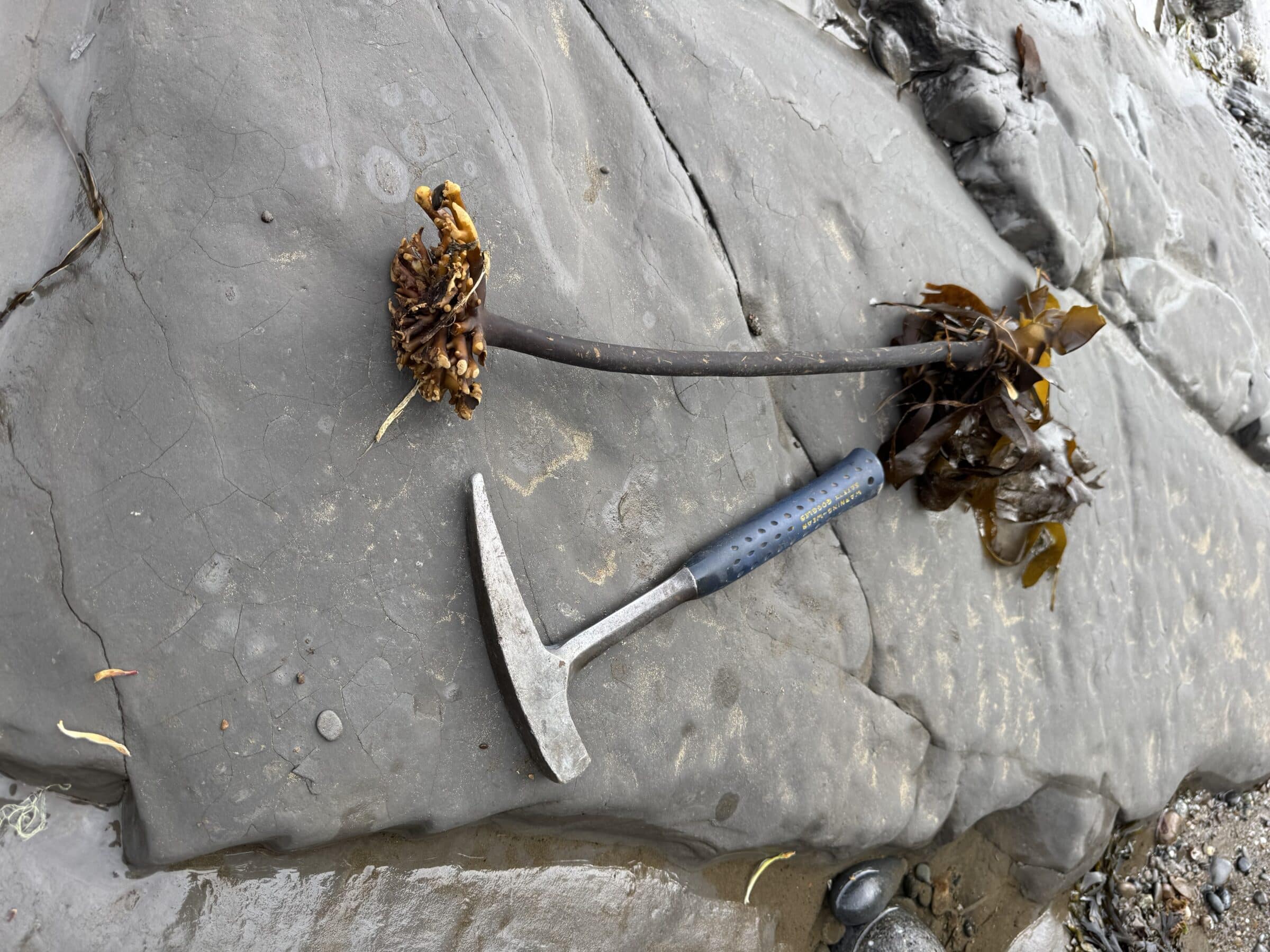
Over the past few days I’ve been discussing an important paper in the journal Science that reveals supposed Ediacaran bilaterian animal fossils (see here and here, with more to come). Meanwhile, this past weekend, I happened to go on a trip with friends here in Western Washington to do some tide-pooling, beach-combing, and fossil-hunting. We had a fantastic time enjoying the beauty of the inland-coastal Pacific Northwest.
During our excursion, I also stumbled on a few things that, with that Science paper in mind, caught my attention. In one instance I found a kelp on the beach with its holdfast still nicely attached. A photo of it is at the top (the holdfast is near the pointy “pick” end of my rock hammer). This is not an unusual find for the area, but it reminded me of the fossil in Figure 3 of the Science paper labeled “A to E” which had a “basal holdfast disc” — a fossil that the paper labeled as a “bilaterian” animal.
Obviously Not an Animal
Now the holdfast on the kelp I found is not “disc-like” and I’m in no way suggesting that what the Science paper discovered was kelp. But kelp is obviously not an animal — or a plant, it’s actually a form of brown algae that belongs to Kingdom Protista. This kelp reminds us that having something like a holdfast could easily place you as a non-bilaterian and even non-animal form.
But this kelp specimen wasn’t the was most interesting one that I found! Later, while walking along the beach, I chanced upon part of a kelp stipe (the kelp “tube” that is situated between the holdfast and the air bladder). It was slightly rotten in places with perforations that had appeared as a result of the rot. This perforated tube looked remarkably similar to the supposed “bilaterian animal fossil” that was reported in the Science paper, Figure 3:
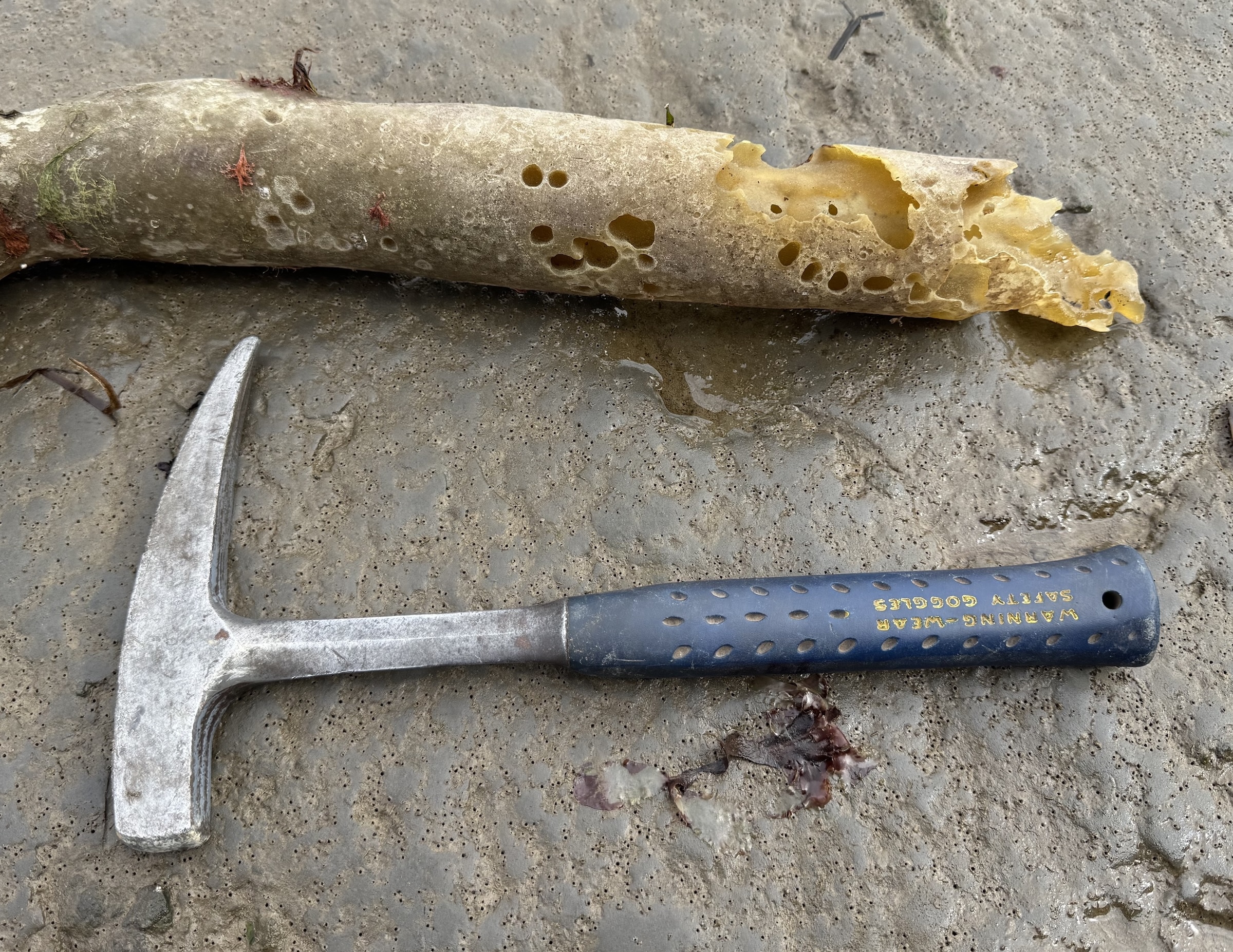
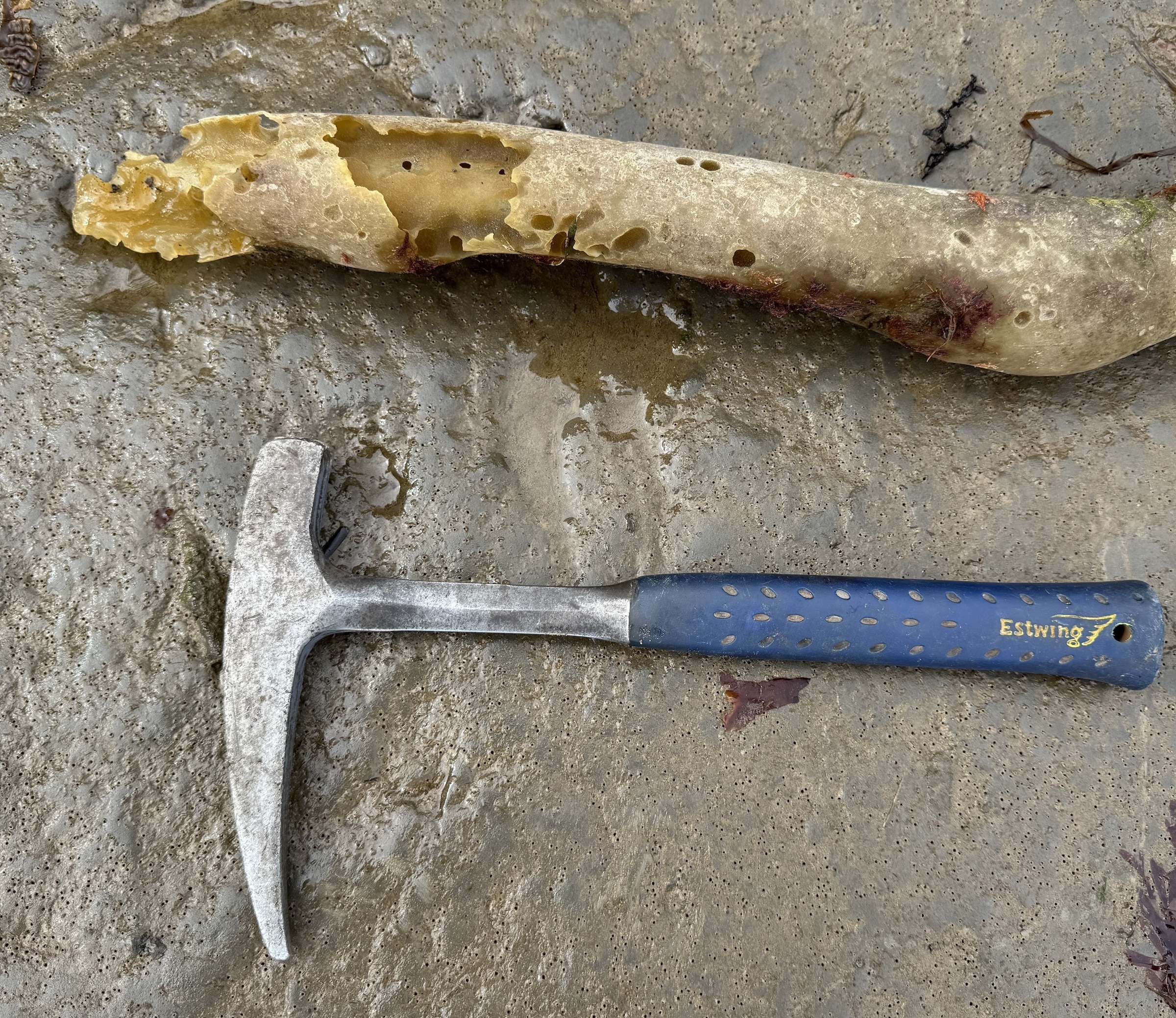
The Science paper compared this particular fossil to “the Cambrian Margaretia dorus, most recently interpreted as a dwelling tube for enteropneust hemichordate worms.” But the picture here shows that a highly similar structure can be found that has nothing to do with hemichordate worms.
Good Reasons to Doubt
Again, I’m not saying that this tubelike Ediacaran fossil they discovered is kelp. What I am saying is that we have to remember these weird Ediacaran fossils can easily be convergently similar to forms that they’re totally unrelated to. From an evolutionary view, these similarities are due most likely to chance, not common ancestry. So if this strange Ediacaran fossil can strongly convergently resemble kelp, then its similarities to the Cambrian organism Margaretia dorus might also be due to convergence and not the result of some evolutionary relationship.
Strangely, the Science paper seems uninterested in remembering or investigating how Ediacaran forms have often been found to convergently resemble later flora, fauna, or even protists (which, again, are neither plant nor animal). In their enthusiasm, the researchers went straight for the conclusion that the fossils in question are Precambrian bilaterian animals. But a simple stroll along the beach shows that there are good reasons to question that conclusion.