






































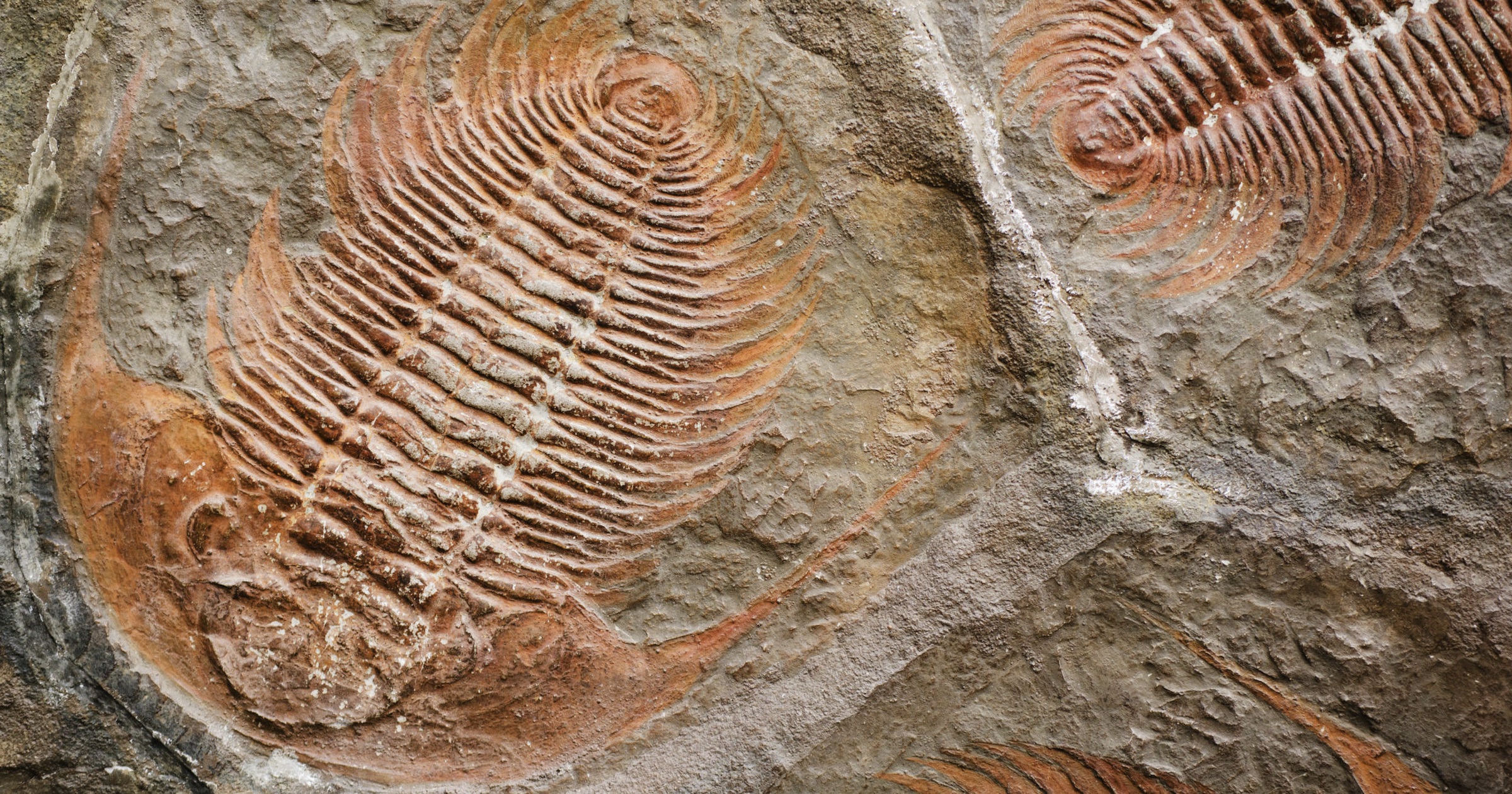
The fossil record reveals sudden explosions of new life forms followed by long periods of stasis. Is this evidence to be expected from a gradual Darwinian model? On a new episode of ID the Future, host Eric Anderson talks with Casey Luskin on location at this year’s Conference on Engineering and Living Systems (CELS). Luskin discusses three different models of the fossil record — the gradual descent model, the punctuated equilibrium model, and the explosion model. He explains why gradual Darwinian models are built on a lack of data and cannot adequately explain the patterns revealed in the record. He also shows that the sudden appearance of complex organisms and long periods of non-change are exactly what we would expect to find from a design perspective. “These organisms…are designed to change within limits,” says Luskin, “and that’s why we see stasis.” Indeed, the fossil record is consistent with the engineering-based theory of bounded adaptation, the idea that organisms are deeply designed, purposeful, and capable of adapting within their operating parameters. It’s an intriguing new way to look at the history of life on Earth. As Luskin points out: “The only way you’re going to be able to generate all the information needed to yield an organism that’s alive and functional all at once is through an intelligent cause.” Download the podcast or listen to it here.
Casey Luskin holds a PhD in Geology from the University of Johannesburg, where he specialized in paleomagnetism and the early plate tectonic history of South Africa. He serves as Associate Director of Discovery Institute’s Center for Science and Culture.
Want to dive deeper into the fascinating explosions of plant and animal life in the geologic record? Luskin recommends reading a chapter by Stephen C. Meyer and Günter Bechly (Chapter 10) on the topic, in Theistic Evolution: A Scientific, Philosophical, and Theological Critique.